
The Vanishing Horizon: The Struggle for Survival and Identity on Pulau Kera
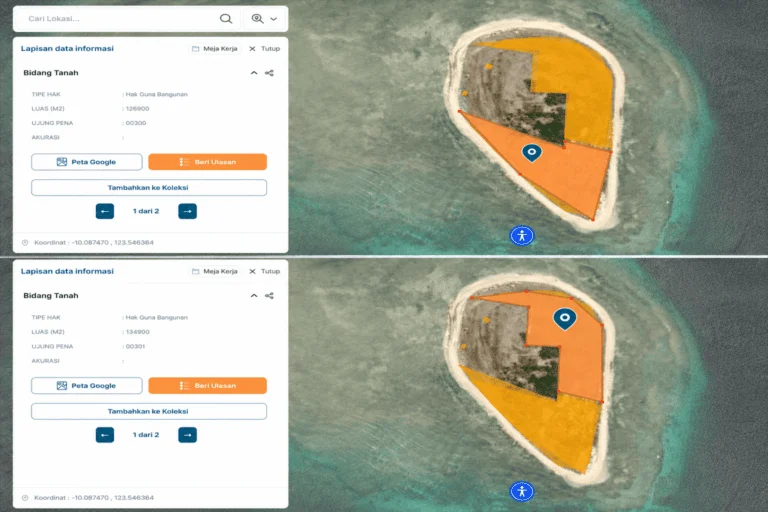
In the crystalline waters of the Kupang Bay, Nusa Tenggara Timur (NTT), a small island of 45 hectares serves as both a home and a battleground. Pulau Kera, home to approximately 500 people—mostly of the Bajo tribe who migrated from Buton and Wakatobi—has become the epicenter of a protracted conflict between indigenous maritime traditions and the encroaching machinery of modern tourism investment.
For the residents of Pulau Kera, the island is not merely a geographic location; it is an ancestral legacy. As the morning sun rises over the horizon, the rhythmic sounds of outboard motors signal the start of a daily ritual. Men like Novry, the head of the Pulau Kera Fishermen’s Union (SNPK), head out to the rumpon (fish aggregating devices) to harvest tuna, skipjack, and mackerel. Meanwhile, women like Nana tend to the shore, meticulously managing seaweed harvests and maintaining the infrastructure that supports their humble existence.
Yet, this life—a life defined by the tides and the deep, silent wisdom of the sea—is under threat. For over two decades, the community has lived under the shadow of state-mandated relocation, a policy that promises to strip them of their land, their livelihood, and their identity in the name of economic development.
A Legacy of Maritime Life: The Bajo People of Pulau Kera
The history of the Bajo people on Pulau Kera is deep and resilient. According to local community leaders like Hamdan Saba, the ancestors of the current residents, led by a figure named Jumilla, first arrived on the island in 1884, sailing from Pulau Messah to seek a life anchored in the bounty of the ocean.
For five generations, the island has been the foundation of their civilization. They have built homes, raised families, and educated their children, all through the proceeds of their daily catch. Whether it is netting octopus, diving for shells, or cultivating seaweed, the residents have mastered the art of sustainable living.
"Pulau Kera is a gift from God. The most important thing is that we can live side-by-side with the sea; that is enough for us," says Novry. His sentiment is echoed by the community, who view the island not as a resource to be exploited, but as an extension of themselves.
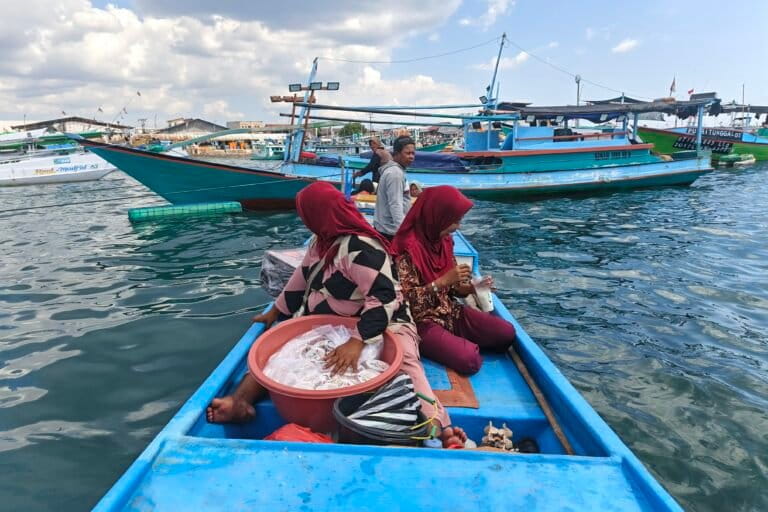
Financially, the islanders are modest but self-sufficient. A typical family earns between Rp1.5 million from seaweed and Rp2-3 million from fishing per month. While they lack the modern conveniences of urban centers—such as consistent grid electricity, piped water, or formal healthcare facilities—they have built a community infrastructure through swadaya (self-help) efforts, including a primary school and a mosque.
Chronology of Conflict: Two Decades of Uncertainty
The threat to the community is not new, but it has intensified in recent years. The central legal contention dates back to January 1993, when the government designated Pulau Kera as part of the Kupang Bay Marine Tourism Park (TWAL), via a Decree of the Minister of Forestry (No. 18/Kpts-II/1993). This designation has been the primary legal weapon used by the Kupang Regency Government (Pemkab) to classify the island as a non-residential, tourism-exclusive zone.
The timeline of pressure against the residents is as follows:
- 1993: The Ministry of Forestry designates Pulau Kera as a Marine Tourism Park.
- 2002: The Kupang Regency government first proposes the relocation of residents to islands such as Semau, Manikin, Pariti, and Pantulan.
- 2017: PT Pitoby Raya Resort extends its building permits (HGB), covering 26 hectares of the island, with an expiration date set for 2047.
- March 2025: Regent Yosef Lede renews the government’s commitment to relocating the population to Pantulan, on the mainland of Timor.
- June 2025: The community and the Alliance for the Advocacy of Pulau Kera (including WALHI NTT and AGRA NTT) hold large-scale protests in front of the Governor’s office and the Regional Parliament (DPRD) to demand their right to remain.
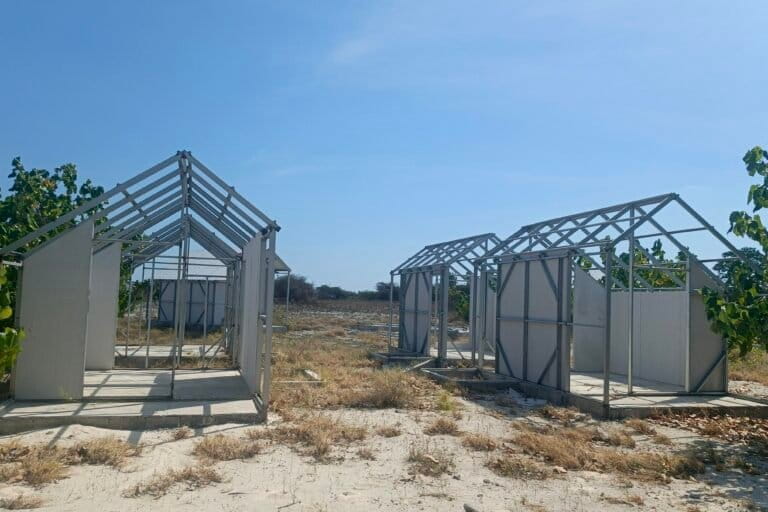
- July 2026: Tensions peak as the 12 villas built by the developer remain largely abandoned, serving as a stark symbol of the stalled development project.
The Tourism Development Paradox
At the heart of the dispute is the Pitoby Group, a private developer that claims legal ownership of 26 hectares of the island through two Hak Guna Bangunan (HGB) certificates. Bobby Thinung Pitoby, the CEO of Pitoby Group, argues that the development is a necessary step to boost the regional economy, noting that the Kupang Regency lacks high-end resort infrastructure.
"This plan is not new. We hope this will support regional economic growth from the tourism sector," Bobby stated. The company envisions a luxury complex featuring villas, restaurants, and water sports facilities like jet skis and diving centers.
However, the community sees this as a clear case of "land grabbing." The HGB certificates held by the company overlap significantly with the existing, long-standing residential areas. The residents argue that if the land was truly "vacant" or a "tourist zone" as the government claims, they would not have been living and thriving there for over a century.
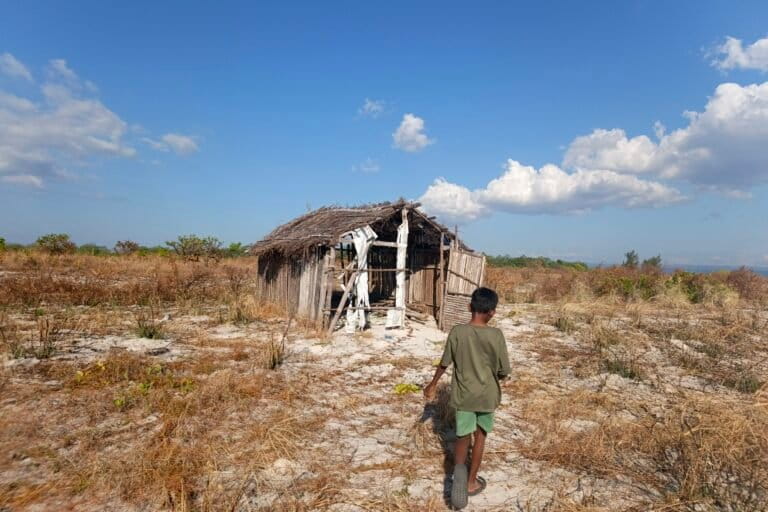
"If the Regent and the developers say we are left behind, why haven’t they built schools, provided clean water, or connected us to electricity all these years?" asks Hamdan Saba. "We have protected this island with our own abilities. Now, because these facilities don’t exist, we are being evicted?"
Legal and Ethical Implications
The situation on Pulau Kera has drawn sharp criticism from environmental and human rights groups. The Alliance for Agrarian Reform Movement (AGRA) NTT has pointed out that the government’s actions violate the spirit of Law No. 1/2014, which amends the law on the Management of Coastal Areas and Small Islands.
"This law places local communities as the primary subjects in the management of small islands. The state should protect, recognize, and empower the residents, not relocate them the moment an investment opportunity arises," says Fadly Anetong, Coordinator of AGRA NTT.
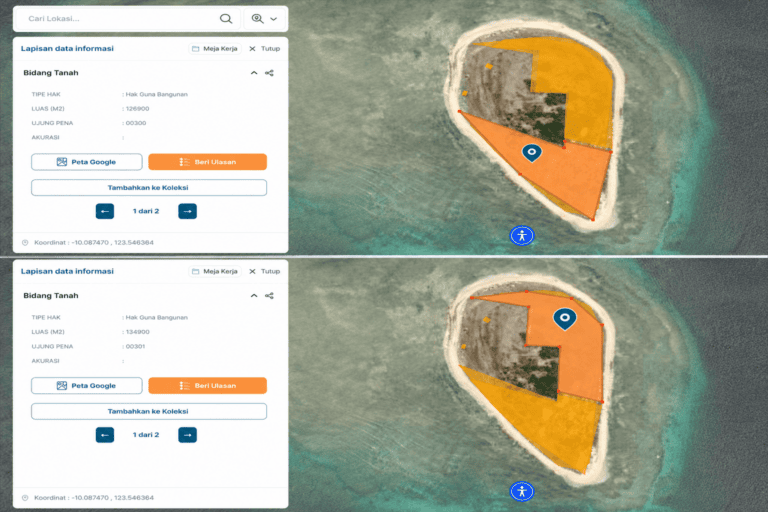
The reliance on the 1993 ministerial decree to justify the removal of people who have been there since 1884 suggests a profound disconnect between administrative bureaucracy and historical reality. The government’s argument—that the island is unsuitable for living due to a lack of services—is viewed by the community as a "manufactured" problem used to facilitate the interests of investors. By withholding basic services, the state effectively creates a rationale for displacement.
The Human Cost: Identity at Stake
For the women of Pulau Kera, the threat of relocation is existential. Biece, a local resident, articulates the fear that is shared by the entire community: "If we are relocated, we lose more than just our jobs; we lose our identity. We are the Bajo. Every activity we perform is tied to the sea. If we cannot fish, how will our families eat?"
The proposed relocation site at Pantulan, on the mainland, is seen as an alien environment. For a people whose history is written in the currents of the ocean, being moved to a land-based, agricultural, or industrial zone is not merely a change of address; it is the destruction of a culture.
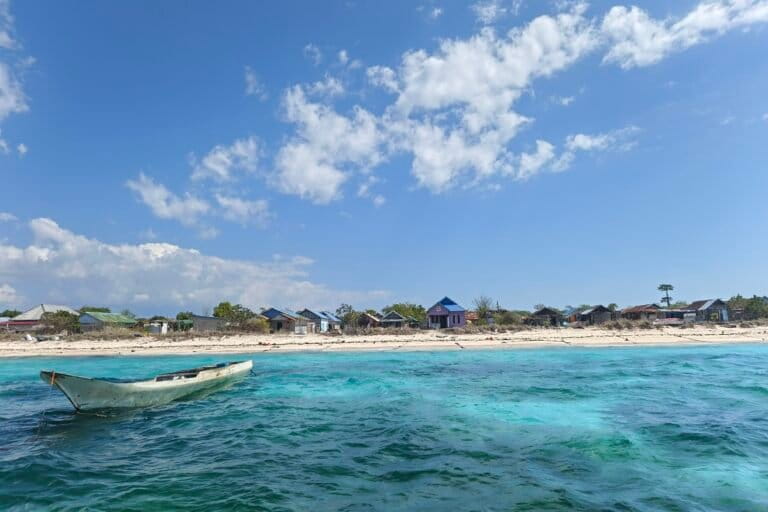
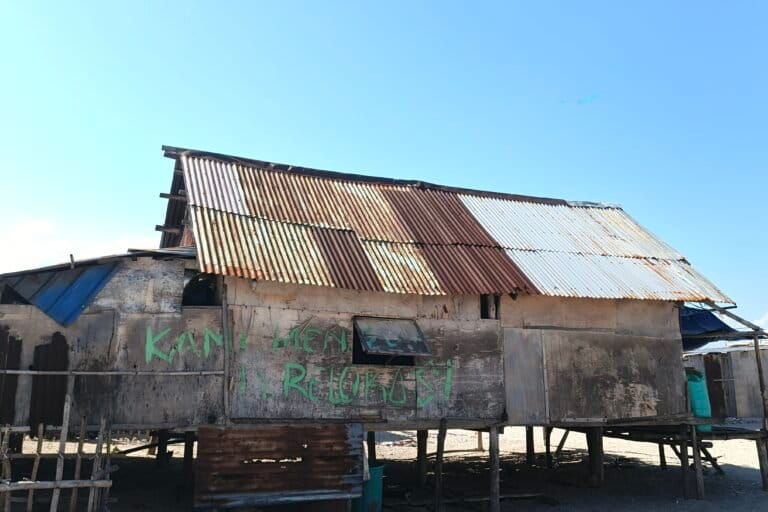
The community remains firm in its defiance. Murals and signs reading "Kami Menolak Direlokasi" (We Refuse to be Relocated) adorn the wooden walls of their homes. They are not asking for luxury; they are asking for the right to continue their way of life, with the basic support that any citizen of the nation is entitled to.
Conclusion: The Path Forward
The conflict on Pulau Kera is a microcosm of the broader tensions in Indonesia regarding land rights, indigenous sovereignty, and the role of tourism in development. As of mid-2026, the local government has remained largely silent, failing to respond to official requests for comments regarding their policy, even as the community continues its struggle.
For the residents, the sea is a provider that never leaves them, even when the state does. As the sun sets over the abandoned villas of the Pitoby Group, the people of Pulau Kera continue to mend their nets, clean their boats, and prepare for the next tide. They are not just defending 45 hectares of land; they are defending their right to exist as a people, proving that for the Bajo, the horizon is not an ending, but a continuation of their ancient, watery home.