A Sunset Symphony: Shakira’s Historic Halftime Performance at the 2026 FIFA World Cup Final
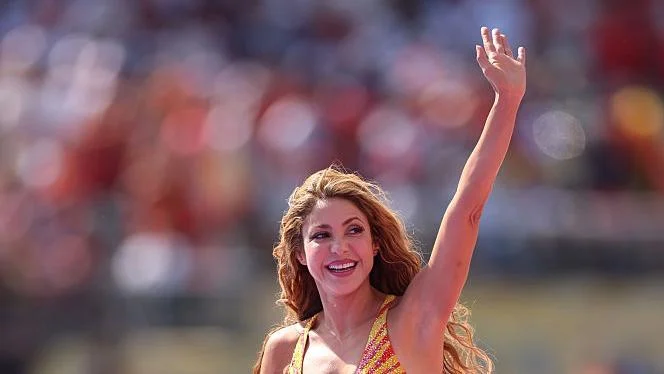
EAST RUTHERFORD, NEW JERSEY – In a spectacle that bridged the gap between sporting intensity and high-fashion artistry, the 2026 FIFA World Cup final reached a fever pitch not only on the pitch but on the stage. For the first time in the history of the tournament, the world witnessed a dedicated halftime show at the MetLife Stadium, headlined by none other than global pop icon Shakira.
The performance, which saw the Colombian superstar collaborate with Afro-fusion pioneer Burna Boy, served as a vibrant backdrop to the high-stakes clash between Spain and Argentina. While the football match provided the athletic drama, it was Shakira’s appearance—and her meticulously crafted Roberto Cavalli ensemble—that captured the world’s imagination, signaling a new era for FIFA’s entertainment strategy.
The Historic Milestone: A New Era for World Cup Spectacle
For decades, the FIFA World Cup has adhered to a traditional structure: anthems, kickoff, halftime break, and the final whistle. However, the 2026 edition, co-hosted by the United States, Canada, and Mexico, sought to redefine the viewer experience by incorporating a Super Bowl-style halftime show into the final.
Choosing Shakira to anchor this inaugural performance was a strategic masterstroke. With a career deeply intertwined with the history of the tournament—most notably her iconic performance of "Waka Waka (This Time for Africa)" in 2010—Shakira represents the bridge between football’s traditional fervor and the global pop culture zeitgeist. When the halftime whistle blew at MetLife Stadium, the stadium lights dimmed, and the opening chords of the tournament’s official anthem, "Dai Dai," echoed through the arena, marking a transformative moment for international football.
Crafting the Masterpiece: Behind the Roberto Cavalli Ensemble
If the performance was the heartbeat of the show, Shakira’s costume was its soul. Designed by Fausto Puglisi, the creative director of the legendary house of Roberto Cavalli, the outfit was more than just a stage costume; it was a feat of engineering and artistic storytelling.
The Anatomy of the Design
The ensemble consisted of a high-energy bodysuit paired with flowing, dynamic ruffles, designed to accentuate the fluid movements synonymous with Shakira’s signature dance style. The most striking element, however, was the sheer level of craftsmanship involved. The garment was encrusted with over 200,000 Swarovski crystals, each hand-applied with surgical precision. According to the atelier, the creation of the piece demanded approximately 120 hours of labor over a two-week period.

A Palette Inspired by Geography
The vibrant colorway—a blend of hot pink, electric yellow, and sunset orange—was not merely a stylistic choice. It was an homage to the urban landscapes that define the Latin American experience. Fausto Puglisi revealed that the primary inspiration was a specific corner in the La Condesa neighborhood of Mexico City.
"I have always been obsessed with the energy of Miami Beach and Mexico City," Puglisi shared in an interview with Page Six. "There is a corner in La Condesa that perfectly encapsulates the blend of hot pink, bright yellow, and sunset orange. I wanted to capture that warmth, that intensity, and that specific vibrancy that characterizes the soul of the Latin woman."
Chronology: From 2010 to 2026
To understand the weight of this performance, one must look back at the trajectory of Shakira’s relationship with FIFA. In 2010, the world fell in love with her performance in South Africa. During that era, the Roberto Cavalli brand, then led by the late founder himself, became synonymous with Shakira’s global rise as a football anthem icon.
The "Full Circle" Moment
The 2026 performance was intentionally designed to evoke nostalgia. By once again collaborating with the house of Roberto Cavalli, Shakira sought to pay tribute to the heritage of her career.
"This moment feels like a circle returning to its center," Shakira told Vogue following the show. "The colors are reminiscent of that time, yet the silhouette is entirely modern. We wanted to honor the past while looking boldly toward the future. It was about capturing the essence of that 2010 spirit—the joy, the global unity—and translating it into the energy of today."
Supporting Data: The Logistics of the Performance
The scale of the production was immense. The halftime show was not a solo endeavor; it was a choreographed military-grade operation. Shakira was joined on stage by 34 professional dancers, all of whom were outfitted in custom Roberto Cavalli attire to match the lead’s aesthetic.
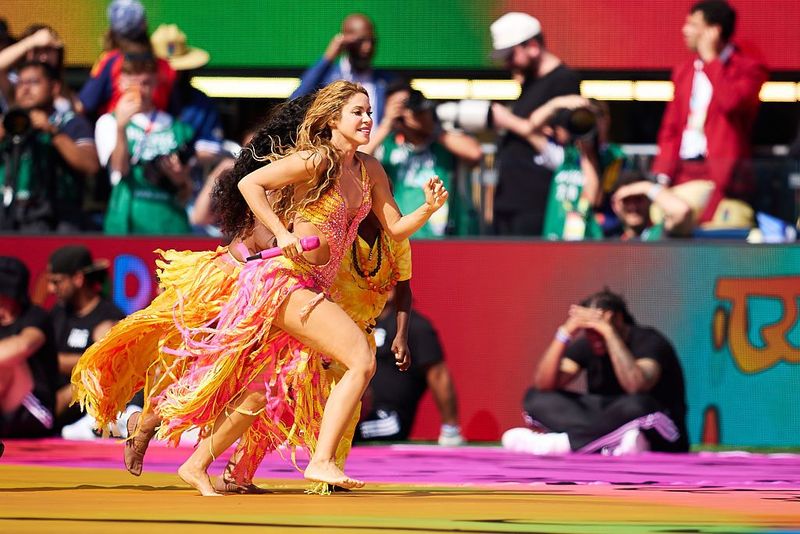
- Costume Variations: The dancers performed in two distinct looks—a cross-over crop top with matching skirts, and a sleeveless bodice paired with wide-leg trousers—ensuring a unified visual language that complemented the "sunset" color palette.
- Production Time: The 120 hours of manual labor required for Shakira’s dress represents the peak of high-fashion couture applied to stage performance, highlighting a trend where musical spectacles are increasingly indistinguishable from high-end fashion shows.
- Global Reach: While official viewership numbers for the 2026 final are still being aggregated, initial estimates suggest that the halftime show reached an audience of over 800 million people, cementing its status as the most-watched musical segment in the history of the FIFA World Cup.
Official Responses and Creative Vision
The creative synergy between Shakira and Fausto Puglisi was the driving force behind the performance’s success. Puglisi emphasized that the goal was to represent the "Latin soul" in its most unadulterated form.
"It is about the rhythm of the Caribbean, the boldness of the Latina woman, the glamour, the danger, and the sensuality," Puglisi explained. "Shakira embodies that spirit so naturally. Together, we wanted to create something that wasn’t just a costume, but a living, breathing testament to the energy of a sunset—full of light, freedom, and constant motion."
This sentiment was echoed by the production teams at FIFA, who noted that the inclusion of such a high-caliber performance was intended to elevate the tournament from a series of matches to a holistic cultural festival. By integrating music at this level, FIFA has signaled that the future of the World Cup is a multimedia experience designed to compete with the world’s largest entertainment platforms.
Implications: The Future of the World Cup
The success of the 2026 halftime show sets a new precedent for international football. For years, critics of the sport have argued that the intermission in a football match is a missed opportunity for entertainment. With the "MetLife Standard" now established, it is highly likely that future World Cups—including the 2030 and 2034 editions—will adopt similar, if not more elaborate, musical performances.
Cultural and Economic Impact
- Fashion and Music Integration: The collaboration highlights the increasing commercial interdependence between the music industry and luxury fashion houses. Expect more "bespoke" stage looks that leverage the histories of fashion houses to create "moment" pieces.
- Broadcasting Evolution: The integration of a halftime show requires a shift in television production. Broadcasters must now treat the intermission as a "prime-time slot" rather than a period for analysis and commercial breaks.
- The "Shakira Effect": By connecting the 2010 and 2026 performances, the event reinforced the idea of a "World Cup Legacy." It creates a longitudinal narrative that keeps fans engaged with the tournament’s history even during the quiet moments of the match.
Conclusion
As the final notes of "Dai Dai" faded and the players returned to the pitch for the second half, the impact of the performance remained palpable. Shakira, in her sunset-hued Roberto Cavalli gown, had done more than just sing; she had provided a bridge between the grit of the game and the glamour of the stage.
The 2026 FIFA World Cup final will be remembered for the goals scored and the trophies lifted, but for the millions watching worldwide, it will also be remembered for the moment the sun set on the field, and a pop icon, draped in 200,000 crystals, reminded the world that football is, above all, a celebration of human spirit. As Puglisi perfectly summarized, the performance was "bold, emotional, and full of life"—a fitting anthem for a sport that unites the globe.