The Persistent Ghost: Unraveling the Neurobiological Mystery of Phantom Limb Syndrome
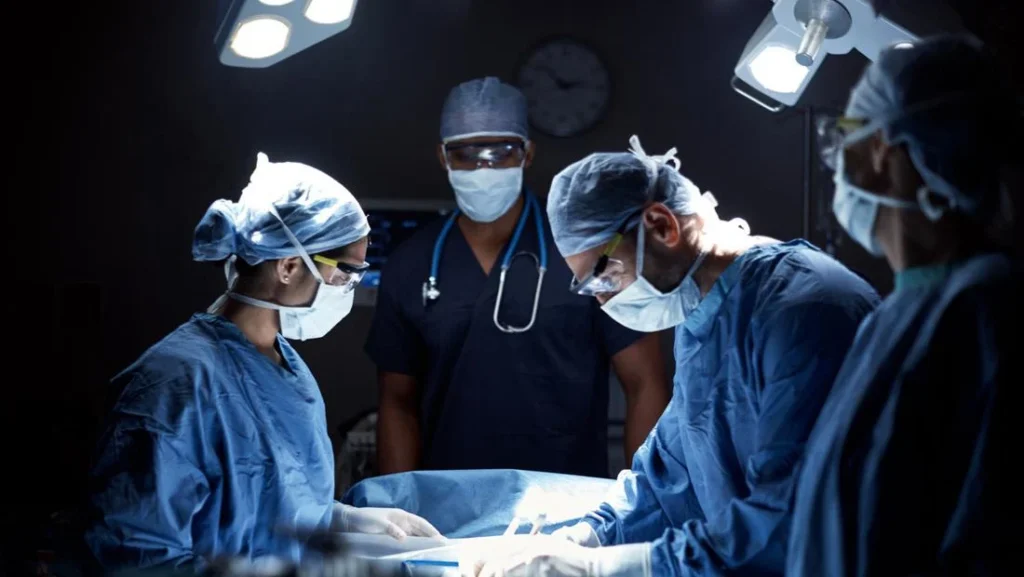
Jakarta – For decades, the medical community has operated under a widely accepted neurological assumption: that the human brain is a highly malleable, almost plastic landscape that reacts to trauma by immediately "repurposing" lost territory. When a patient undergoes an amputation, the conventional wisdom suggested that the area of the brain responsible for controlling that limb would quickly atrophy or be "invaded" by neighboring regions, such as the face or torso.
However, a groundbreaking study published in Nature Neuroscience in August 2025 has upended this long-standing paradigm. By tracking the neurological activity of patients before and after life-saving amputations, researchers have discovered that the brain’s map of the body is far more resilient and stable than previously imagined. This revelation not only challenges our understanding of neuroplasticity but also shifts the clinical approach to treating "phantom limb syndrome"—a condition that affects approximately 90% of amputees worldwide.
What is Phantom Limb Syndrome?
Phantom limb syndrome is a complex, often distressing phenomenon where an individual continues to experience vivid sensations—ranging from tingling and itching to intense, burning pain—in a body part that is no longer physically present.
For the vast majority of those who undergo an amputation, the "ghost" of the limb does not vanish upon the cessation of physical nerves. According to data from ScienceDirect, roughly nine out of ten amputees report feeling as though their removed limb remains intact. While News Medical notes that these sensations typically manifest in the days or weeks following surgery, the duration is highly variable; for some, the sensation is fleeting, while for others, it persists for years, occasionally manifesting as chronic, debilitating pain.
The psychological impact of this condition cannot be overstated. Patients often describe an agonizing disconnect between their visual reality—seeing a missing limb—and their internal sensory experience, which insists that the hand, foot, or arm is still there, moving, clutching, or even throbbing with phantom pain.
The Historical Paradigm: The "Brain Invasion" Theory
For nearly thirty years, the prevailing scientific consensus was rooted in the theory of cortical reorganization. This theory posited that if the brain’s sensory cortex stopped receiving input from an arm, it would not remain dormant. Instead, it would be "colonized" by adjacent cortical regions. For example, it was believed that the area of the brain mapping the face would expand into the area previously dedicated to the hand.
This theory was used to explain phantom limb pain: if the brain’s mapping was disrupted and "scrambled," it would result in the sensory confusion perceived by the patient. Therapies, such as mirror box therapy, were designed based on this concept, aiming to "re-train" the brain to accept the loss of the limb. While these therapies have provided relief for some, the underlying premise—that the brain map itself was fundamentally broken or repurposed—has now been called into question by the latest longitudinal research.
Chronology of a Scientific Breakthrough
To challenge the status quo, researchers took a novel, highly controlled approach. In collaboration with surgeons from the National Health Service (NHS), the study team tracked three adult patients who were scheduled for elective arm amputations due to medical necessity, such as aggressive cancer or severe vascular compromise.
1. The Pre-Operative Baseline
Before the surgeries, the researchers established a neurological baseline. Using functional magnetic resonance imaging (fMRI), they mapped each patient’s brain activity while they performed specific motor tasks—tapping individual fingers, wiggling toes, or pursing their lips. This allowed the team to pinpoint the exact spatial coordinates of the body’s representation in the brain.
2. The Longitudinal Monitoring
Following the amputations, the team continued to scan the patients at multiple intervals, with some participants being monitored for up to five years post-surgery. During these sessions, the patients were asked to perform "phantom" movements—attempting to flex or extend the fingers of the limb that was no longer there.
Because these patients possessed such vivid sensory recall of their missing limbs, they were able to provide clear, actionable data. The researchers were not looking at "imagined" movements in the abstract; they were observing the brain’s active, persistent attempts to operate a limb that the physical body could no longer support.
3. The Discovery of Stability
The results were startling. The fMRI scans revealed that the "hand map" in the brain remained virtually unchanged in all three patients. There was no evidence of the neighboring "face" or "torso" regions encroaching upon the hand’s territory. The map remained intact, stable, and distinct, even years after the amputation occurred.
This stability is the smoking gun that explains why patients continue to feel their limbs so clearly: the brain’s internal representation of that limb never went away. It is not "damaged"; it is simply awaiting signals that can no longer arrive.
Case Study: The "RN" Phenomenon
The depth of this mystery is perhaps best illustrated by the case of a patient identified as "RN," who visited the Center for Brain and Cognition at the University of California, San Diego, in 2012.
RN was 57 years old when he sought help for persistent, burning phantom pain in his right hand. His medical history provided a unique variable: he had been born without an index finger, and his hand had been amputated at age 18 following a severe car accident.
Prior to the amputation, RN had never experienced a phantom finger where his missing index finger should have been; he lived his life with a four-fingered internal map. However, post-amputation, something strange happened: his brain began to "fill in the gaps." Despite never having an index finger, he began to feel a phantom sensation of a complete, five-fingered hand. This suggests that the brain’s internal map is not merely a record of physical history, but a complex, innate biological construct that can attempt to compensate for loss in ways that defy simple cause-and-effect logic.
Implications for Clinical Practice
The implications of the Nature Neuroscience study are transformative for the field of neurology and physical medicine. If phantom limb pain is not caused by a "broken" or "reorganized" brain map, then the current focus on "re-mapping" the brain may be misdirected.
Shifting the Therapeutic Lens
Medical professionals must now consider that the source of phantom pain may lie in the peripheral nervous system rather than the central nervous system. Specifically, the researchers suggest that the pain may be driven by damaged or severed nerves at the site of the amputation (the stump). When these nerves continue to fire, they send chaotic, erratic signals to a brain that is still perfectly configured to receive them.
New Avenues for Treatment
By pivoting away from the idea that the brain is at fault, future treatments may focus more heavily on:
- Targeted Muscle Reinnervation (TMR): Rerouting nerves to healthier muscle tissue to provide a more stable signal path.
- Advanced Neuromodulation: Using peripheral nerve stimulation to calm the hyperactivity of the damaged nerve endings before they can relay pain signals to the brain.
- Refined Surgical Techniques: Improving how nerves are handled during amputation to minimize the formation of neuromas (tangles of nerve fibers) that often act as the primary "noise" generators for phantom sensations.
Conclusion: A New Era of Understanding
The revelation that the brain is a bastion of stability, rather than a fluid landscape of constant re-appropriation, provides a sense of hope for millions of amputees. It suggests that the brain is not "broken" by the tragedy of amputation; it is merely waiting for the peripheral signals to be silenced.
As we move forward, the scientific community must integrate these findings into a more holistic approach to post-amputation care. By acknowledging the persistence of the brain’s internal map, doctors can move away from treating the brain as a damaged organ and start treating the peripheral nervous system as the true source of the "ghost" pain. The path to relief, it seems, lies not in trying to change how the brain perceives the world, but in clarifying the signals we send to it from the physical world.