
Guardians of the Gavel: Understanding the Role and Mandate of the DPR’s Mahkamah Kehormatan Dewan (MKD)
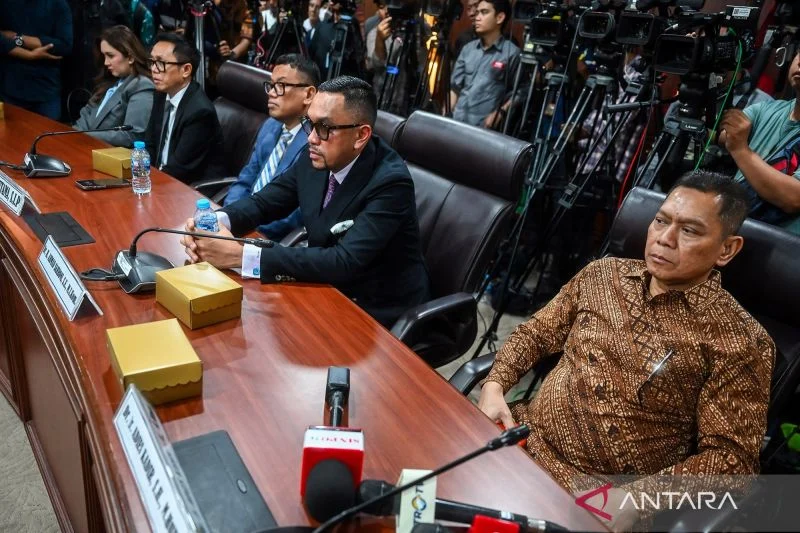
JAKARTA – Within the complex architecture of Indonesia’s parliamentary system, the Dewan Perwakilan Rakyat (DPR RI) operates not only as a legislative body but as an institution bound by strict codes of conduct. At the heart of this internal oversight mechanism lies the Mahkamah Kehormatan Dewan (MKD)—the Council of Ethics—a permanent auxiliary body tasked with preserving the dignity, integrity, and credibility of the nation’s elected representatives.
As the gatekeeper of parliamentary ethics, the MKD serves as a crucial check on power, ensuring that those who sit in the legislative chamber at Senayan act in accordance with the mandates entrusted to them by the Indonesian people.
1. The Genesis and Institutional Framework
The MKD did not emerge in a vacuum; it is the evolution of the former Badan Kehormatan (Honorary Body). Its legal foundation is cemented in Law Number 17 of 2014 concerning the MPR, DPR, DPD, and DPRD, which was subsequently amended by Law Number 13 of 2019. This legislative mandate transformed the body into a more robust, formalized entity designed to handle the growing complexities of modern parliamentary behavior.
Functioning as a quasi-judicial body within the DPR, the MKD occupies a unique space. While it does not preside over criminal trials—which fall under the jurisdiction of the judiciary—it acts as an "internal court" for ethics. It is tasked with evaluating, investigating, and adjudicating alleged breaches of conduct by members of parliament, whether those allegations stem from public grievances, complaints from fellow lawmakers, or internal reports from the DPR leadership.
The institutional integrity of the MKD is protected by strict prohibitions against outside interference. Neither the political party leadership, the DPR leadership, nor other members of parliament are permitted to intervene in the proceedings or the final decisions of the MKD, ensuring that the council maintains a veneer of independence necessary for the rule of law.
2. Structure and Composition: Principles of Equity
The council is composed of 17 members, whose selection is formalized during the Plenary Session at the start of each term or parliamentary year. The selection process is governed by the principles of consensus (musyawarah untuk mufakat) while maintaining a proportional balance of political factions and ensuring the representation of women, reflecting a commitment to diverse perspectives.
The leadership of the MKD is characterized by a collective and collegial structure, comprising one Chairperson and four Deputy Chairpersons. Once appointed, members are strictly bound by the DPR Regulation Number 1 of 2015 regarding the Code of Ethics. This regulation mandates that every member of the MKD must operate with absolute independence, remaining untethered from the influence of their respective political factions or any external pressure groups.
3. Scope of Mandate: Duties and Authority
The operational framework of the MKD is defined by the DPR Regulation Number 2 of 2015 concerning the Procedural Rules of the MKD. This comprehensive document empowers the council to act as both a preventive body and a punitive one.
Preventive and Investigative Duties
- Proactive Monitoring: The MKD performs continuous monitoring of parliamentary behavior to prevent potential violations before they occur.
- Verifying Complaints: The council conducts thorough investigations and verification of all incoming reports regarding alleged member misconduct.
- Conducting Formal Hearings: It convenes plenary sessions to evaluate events or actions deemed to be in breach of the code of ethics.
- Liaison with Law Enforcement: The MKD acts as the primary point of contact when law enforcement agencies seek to question, summon, or investigate a member of parliament for alleged criminal activity.
- Due Process Protections: The council is responsible for granting or denying formal written approval for law enforcement agencies to proceed with investigations against members, ensuring that the parliamentary immunity of members is balanced against the requirements of criminal justice.
- Oversight of Search and Seizure: The MKD is mandated to accompany law enforcement officials during any search or seizure operations conducted at a member’s premises.
Regulatory Authority
Beyond investigative duties, the MKD wields the power to:
- Issue circulars and guidelines regarding parliamentary etiquette and rule adherence.
- Monitor attendance and behavior during parliamentary sessions.
- Issue binding recommendations to maintain the credibility of the DPR.
- Initiate proceedings with or without a formal public complaint.
- Summon witnesses and relevant parties to provide testimony.
- Formulate and propose updates to the DPR’s Code of Ethics to keep pace with changing political and social norms.
4. Chronology of Oversight: A Case-Based Perspective
The MKD frequently finds itself at the center of public attention when high-profile cases involving lawmakers arise. While it cannot punish criminal acts—leaving those to the Corruption Eradication Commission (KPK) or the National Police—its ethical rulings often serve as the first step in accountability.
Recent developments in the DPR have underscored the MKD’s role. For instance, in cases involving lawmakers such as Adies Kadir and Uya Kuya, the MKD has been called upon to mediate conflicts and ensure that members resume their duties only after ethical sanctions or clearances have been formally announced in a Plenary Session.
These cases illustrate a critical function: the MKD provides a "cooling-off" period and a standard of rehabilitation for members. When the Speaker of the House, Puan Maharani, confirms that the DPR will follow through on MKD rulings, it signals that the legislative body acknowledges the authority of its own ethical watchdog. This reinforces the principle that parliamentary immunity is not a shield against accountability, but rather a mechanism to facilitate legislative work, provided that work remains within the bounds of the law and morality.
5. Implications for Indonesian Democracy
The existence and efficacy of the MKD have profound implications for the health of Indonesia’s democracy.
Enhancing Public Trust
Public perception of legislative bodies is often low due to historical concerns regarding corruption and "political games." By maintaining a functional and visible MKD, the DPR demonstrates a willingness to engage in self-regulation. When the council holds members accountable for ethical lapses, it serves to mitigate public cynicism and reaffirms that the institution holds its members to a standard higher than the average citizen.
Safeguarding Legislative Marwah (Dignity)
The term marwah—the dignity or honor of the institution—is central to the MKD’s mission. In a parliamentary system, the legislature is the embodiment of the people’s voice. If members engage in behavior that undermines this voice—whether through absenteeism, conflicts of interest, or unprofessional conduct—they erode the legitimacy of the entire state. The MKD acts as the firewall protecting this legitimacy.
The Challenge of Political Influence
Despite the legal protections against intervention, the MKD faces the perennial challenge of political bias. Because the council is composed of members from different political parties, the temptation to protect "one’s own" remains a risk. The evolution of the council, from the older Badan Kehormatan to the more structured MKD, represents an ongoing effort to insulate the body from such partisan pressures. The continued evolution of the procedural rules suggests an acknowledgment that trust must be earned through transparent, consistent, and impartial decision-making.
6. Conclusion
The Mahkamah Kehormatan Dewan serves as the moral compass of the DPR RI. It is a necessary friction in the legislative process, slowing down the unchecked impulses of political actors to ensure that their actions align with the ethical standards expected of national leaders.
As Indonesia continues to strengthen its democratic institutions, the role of the MKD will likely expand in significance. Whether through digitalizing the monitoring of attendance or adopting more rigorous standards for conflict-of-interest disclosures, the MKD remains the primary mechanism for internal policing. By holding the gavel of ethics, the MKD ensures that the legislative chamber remains a place where the honor of the Indonesian people is upheld, not just in law, but in practice.
The council stands as a testament to the fact that while power in a democracy is derived from the ballot box, its legitimacy is maintained through the unwavering commitment to integrity and the rule of law.
Disclaimer: This article provides an overview of the Mahkamah Kehormatan Dewan based on existing DPR regulations and legal frameworks. For specific ongoing cases or inquiries, please refer to the official public records of the DPR RI Secretariat.