Where Safety Meets Canvas: How Fire Extinguishers and Soot Became Jakarta’s Most Unconventional Art Exhibition
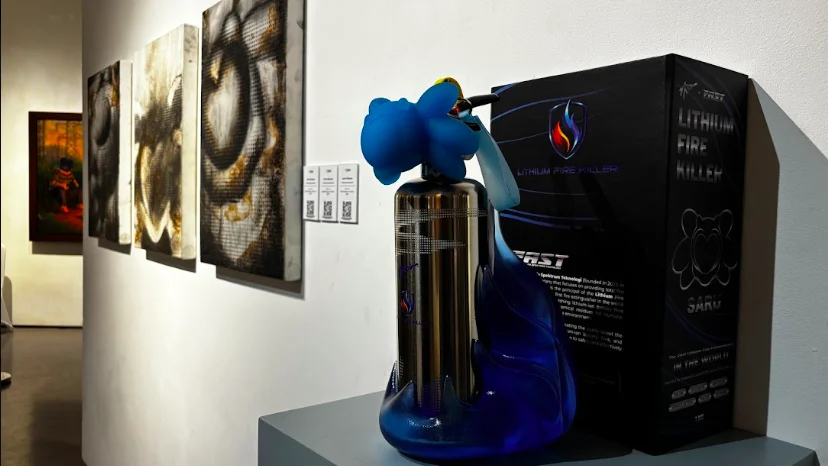
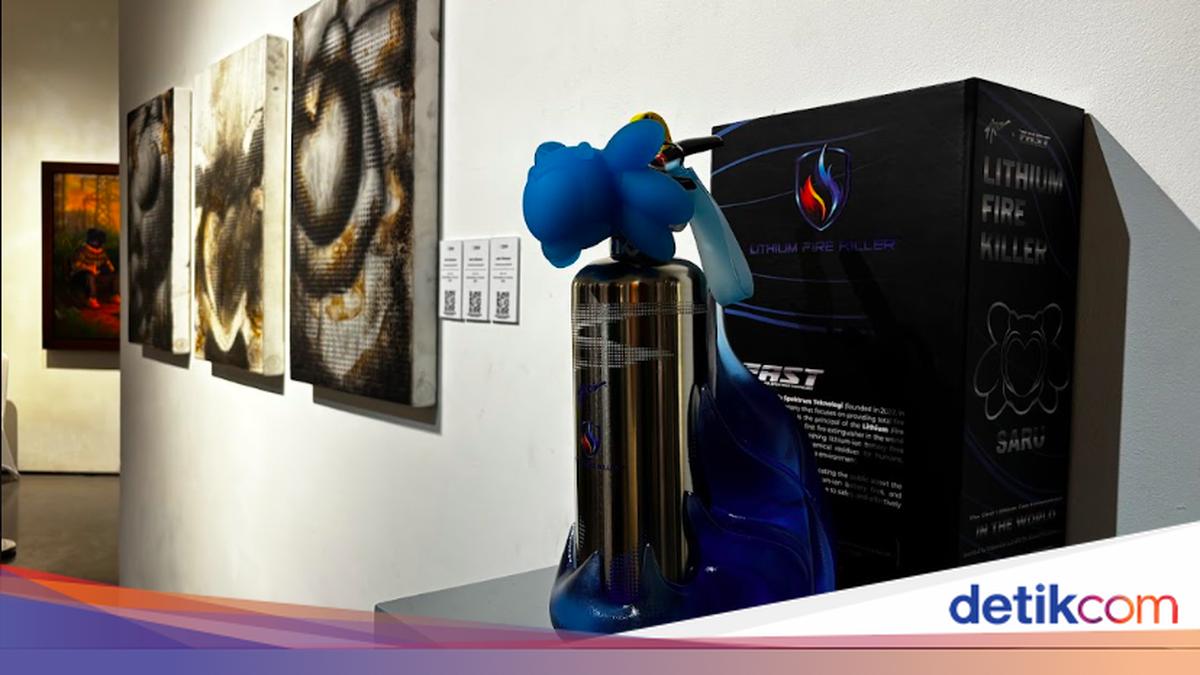
JAKARTA — The timeless adage that art knows no bounds has found a striking, smoke-kissed manifestation in the heart of Indonesia’s capital. Imagine an object as utilitarian as a fire extinguisher—traditionally sequestered in corporate hallways, relegated to the dusty corners of parking garages, or locked away behind emergency glass—transformed into a vibrant, high-value canvas of contemporary fine art.
This unexpected collision of two diametrically opposed worlds, industrial fire safety and avant-garde fine art, took center stage at the prestigious Galeri Zen1 in Menteng, Central Jakarta. Titled ‘Jelaga di Ujung Raya’ (Soot on the Edge of the Highway), the groundbreaking exhibition officially opened its doors, captivating art collectors, environmentalists, technology enthusiasts, and the general public alike.
Far from a conventional gallery showcase, the event challenged preconceived notions of what constitutes an artistic medium. By injecting creative expression into life-saving equipment, the exhibition successfully bridged a critical gap between public safety awareness and aesthetic appreciation, setting a new benchmark for corporate-artistic synergy in Southeast Asia.
1. Main Facts: Redefining Utility Through the Prism of Fine Art
At its core, ‘Jelaga di Ujung Raya’ is a multidisciplinary exhibition that challenges the boundaries of traditional media. Held over a high-impact weekend, the showcase featured the creative output of prominent Indonesian artist Arkiv Vilmansa alongside 20 other celebrated local contemporary artists. Together, they explored the complex motifs of jelaga (soot) and fire—elements historically associated with destruction, industrial pollution, and hazards—and recontextualized them as instruments of creation and narrative.
The exhibition was spearheaded by an unusual collaboration: LFK (Lithium Fire Killer), a specialized electric vehicle (EV) safety product line under PT Famindo Alfa Spektrum Teknologi (PT FAST), partnering with the Indonesian art scene. Instead of treating fire safety gear as a purely industrial commodity, the initiative reimagined hardware like portable fire extinguishers (APAR) and safety canisters as sculptural canvases and installation centerpieces.
Key highlights of the exhibition include:
- The Medium: The primary utilization of soot and fire-based techniques to render visual narratives on canvas and three-dimensional objects.
- The Canvas: Industrial fire extinguishers (APAR) transformed into bespoke, collectible art pieces.
- The Scale: A curated collection of dozens of works, featuring installations, paintings, and sculptures by 21 Indonesian artists.
- The Venue: Galeri Zen1, a renowned cultural hub in Menteng, Central Jakarta.
- The Duration: A high-visibility public exhibition running from September 12 to September 13, 2026.
2. Chronology: From Concept to Cultural Phenomenon
The journey of ‘Jelaga di Ujung Raya’ from an abstract boardroom concept to a celebrated public exhibition developed through a carefully orchestrated timeline of creative exploration and institutional alignment.
The Inception Phase (Early 2026)
The project began as an exploratory dialogue between PT Famindo Alfa Spektrum Teknologi (PT FAST) and prominent artists led by Arkiv Vilmansa. As electric vehicle adoption rapidly accelerated across Indonesia, PT FAST—through its LFK brand—sought innovative ways to communicate the importance of fire safety to a broader, design-conscious demographic. Traditional marketing campaigns for fire safety equipment often relied on fear-mongering or sterile corporate messaging. The leadership team wondered: What if, instead of frightening people about potential hazards, we invited them to appreciate safety through the lens of beauty?
Artist Residencies and Experimentation (Mid 2026)
Over several months, participating artists were given access to industrial safety equipment and unconventional materials, including controlled soot and open flames. Arkiv Vilmansa spearheaded a revolutionary technique: painting directly with fire, utilizing controlled thermal manipulation on canvas—a pioneering approach in contemporary fine art. Meanwhile, sculptors and painters began treating cylindrical fire extinguishers as totem poles of modern security, painting intricate murals, pop-art graphics, and abstract expressions onto the metallic surfaces.
The Grand Opening (September 12, 2026)
The exhibition officially launched at Galeri Zen1 in Menteng, drawing heavy media attention and high-profile figures from government, industry, and the arts. The opening night served as both an art viewing and a cross-sector symposium, highlighting the intersection of urban safety, technological progress, and cultural expression.
Public Exhibition and Educational Outreach (September 12–13, 2026)
Throughout the weekend, thousands of visitors—ranging from fine art collectors to curious families—streamed through the doors of Galeri Zen1. Guided tours focused not only on the artistic merits of the works but also on the practical necessity of fire preparedness in an increasingly electrified urban ecosystem.
3. Supporting Data and Technological Integration
While the artistic presentation captured public imagination, the underlying impetus of the exhibition remained deeply rooted in technological adaptation—specifically, the safety challenges posed by the rapid transition toward electric vehicles (EVs) in Indonesia.
The Rise of Electric Mobility and Safety Realities
As Indonesia aggressively positions itself as a global hub for electric vehicle manufacturing and adoption, urban centers like Jakarta have witnessed a surge in EV ownership. While electric mobility promises a greener, lower-emission urban future, it introduces unique safety challenges, particularly concerning lithium-ion battery thermal runaway.
Lithium-ion battery fires burn at exceptionally high temperatures and are notoriously difficult to extinguish using conventional water-based methods. This reality necessitates specialized equipment, such as the advanced formulations provided by LFK (Lithium Fire Killer) and high-performance safety barriers like the Portex EV Fire Blanket.
Artistic Innovation Meets Industrial Engineering
The data behind the artworks themselves reflects a profound technical mastery. According to exhibition curators, the works incorporated several technical breakthroughs:
- Pyrotech Painting: Arkiv Vilmansa’s pioneering technique involves harnessing thermal energy and soot deposition to etch and stain canvases, creating gradients and textures that chemical-based paints cannot replicate.
- Surface Adaptation: Transforming standard, pressure-tested steel APAR cylinders into durable art objects required specialized priming and sealing techniques to ensure that the integrity of the safety equipment was not compromised while achieving aesthetic perfection.
- Cross-Disciplinary Participation: The inclusion of 21 distinct artists ensured a diverse stylistic spectrum, ranging from surrealism and street art to minimalist abstraction, effectively proving that industrial safety gear can serve as a universal artistic canvas.
4. Official Responses and Institutional Endorsements
The unique premise of ‘Jelaga di Ujung Raya’ garnered immense praise from high-ranking government officials and industry leaders, who recognized the exhibition as a masterclass in public-private partnership and creative civic education.
Perspectives from City Leadership
Jakarta’s Deputy Governor, H. Rano Karno, who attended the grand opening, expressed profound admiration for the exhibition’s conceptual boldness during his opening remarks.
"If we are talking about standard paintings, to me, that is ordinary," Wagub Rano Karno stated. "But the extraordinary theme this time revolves around the language of soot (jelaga). It speaks a very specific language of soot. It turns out that the material of a painting is not just ink or paint, but it can also be forged with fire."
His remarks underscored the local government’s appreciation for cultural initiatives that push the boundaries of traditional mediums while enriching Jakarta’s vibrant arts scene.
Industry Leadership and Psychological Safety
Dr. H. Moeldoko, Chairman of the Indonesian Electric Vehicle Industry Association (Periklindo) and a prominent figure in national infrastructure and security, officially opened the exhibition alongside city officials. Moeldoko emphasized the exhibition’s psychological and educational impact on the general public.
"How do technology and art merge? The ultimate goal is to build engaging awareness," Moeldoko explained. "If a fire extinguisher is just left in the dark corner of a room, perhaps our safety awareness is never truly triggered. But the moment this APAR is polished with art and placed out in the open—even right in the living room—everyone becomes captivated by it."
Moeldoko further elaborated on how this shifts consumer psychology regarding electric vehicles:
"By bridging safety and design, everyone who uses an electric vehicle no longer needs to feel anxious. Safety becomes a natural, beautiful part of our daily living space."
Emergency Services and Municipal Preparedness
The collaborative spirit of the event extended beyond fine art into tangible municipal safety enhancements. During the exhibition, Dr. Bayu Meghantara, M.Si., Head of the Jakarta Provincial Fire and Rescue Department (Gulkarmat), formally accepted a major contribution from PT FAST.
The contribution featured the Portex EV Fire Blanket, a specialized, high-temperature thermal blanket designed specifically to smother lithium-ion battery fires in electric vehicles. This corporate contribution is set to significantly upgrade the frontline operational readiness of Jakarta’s firefighters as they manage emerging urban hazards on the capital’s bustling highways. Dr. Bayu expressed deep appreciation for the private sector’s proactive support in equipping municipal first responders with cutting-edge defensive tools.
5. Implications: Shaping the Future of Urban Safety and Cultural Diplomacy
The success of ‘Jelaga di Ujung Raya’ extends far beyond a weekend gallery exhibition; it establishes a new paradigm for how society approaches public safety, industrial marketing, and contemporary art.
1. De-stigmatizing Safety Equipment through Design
Historically, safety gear has suffered from a design failure: it is built strictly for utility, leading consumers to hide fire extinguishers away in cabinets or trunks where they are difficult to access in an emergency. By transforming APAR units into high-end art pieces worthy of display in living rooms and executive boardrooms, the exhibition addresses a fundamental behavioral flaw. When safety equipment becomes an interior design asset, accessibility increases, and consequently, urban survival rates in the event of minor domestic fires improve.
2. A New Frontier for Corporate Social Responsibility (CSR) and Art
The collaboration between PT FAST (through LFK) and Indonesia’s contemporary art community demonstrates a sophisticated evolution of corporate sponsorship. Rather than traditional logo placement or passive banner advertising, the corporate entity integrated its core mission—fire safety—directly into the cultural fabric of the nation. This approach offers a sustainable blueprint for other industrial sectors to engage with the arts meaningfully, fostering public goodwill while advancing civic education.
3. Fostering Resilience in the EV Era
As Jakarta and other major Indonesian metropolitan areas transition toward green mobility, public anxiety regarding new technologies (such as EV battery fires) remains a hurdle to mass adoption. Initiatives like ‘Jelaga di Ujung Raya’ perform vital psychological work. By normalizing fire safety tools through art and equipping municipal services with state-of-the-art blankets like the Portex EV, the initiative builds a robust ecosystem of preparedness. It sends a clear message to citizens: progress and safety go hand in hand.
4. Elevating Indonesian Contemporary Art on the Global Stage
By showcasing pioneering techniques—such as Arkiv Vilmansa’s canvas painting using controlled fire and soot—the exhibition reinforces Indonesia’s position as an epicenter of artistic innovation. International collectors and curators increasingly look to Jakarta not just for traditional cultural expressions, but for avant-garde experiments that push the boundaries of materials and societal critique.
Conclusion
‘Jelaga di Ujung Raya’ has successfully proven that even the most stark boundaries—between fire and art, industrial utility and aesthetic beauty, fear and reassurance—can be dissolved through creative vision. By turning soot into strokes of genius and fire extinguishers into collectors’ items, the exhibition at Galeri Zen1 has left an indelible mark on Jakarta’s cultural landscape. More importantly, it has sparked a national conversation on how we protect, embrace, and celebrate the modern urban environment.