
Understanding National Income: A Comprehensive Guide to Economic Health and Measurement
In the intricate machinery of a nation’s economy, few indicators carry as much weight as National Income. It is the pulse by which governments, investors, and economists measure the vitality of a country. Whether it is the small-scale sale of goods at a local school market or the multi-billion dollar output of a multinational corporation, every economic transaction contributes to the broader narrative of a nation’s financial well-being.
This article explores the fundamental concepts, methodologies, and implications of National Income, providing a clear framework for understanding how economic activities are aggregated into the figures that shape national policy and global perception.
What is National Income?
At its core, National Income is defined as the total value of all final goods and services produced by a nation within a specific timeframe, typically one fiscal year. It serves as a comprehensive scorecard for an economy, reflecting the cumulative result of production, consumption, and distribution activities performed by both individuals and organizations.
Far from being an abstract academic concept, National Income is a tangible reflection of reality. Every time an individual earns a wage, a business records a sale, or the government subsidizes an industry, these activities are woven into the fabric of the national accounts. By measuring these outputs, policymakers can determine whether an economy is expanding, stagnating, or contracting.

The Six Pillars of National Income Measurement
To provide an accurate picture, economists categorize National Income into six distinct concepts. Each serves a unique purpose in analyzing the layers of an economy:
1. Gross Domestic Product (GDP)
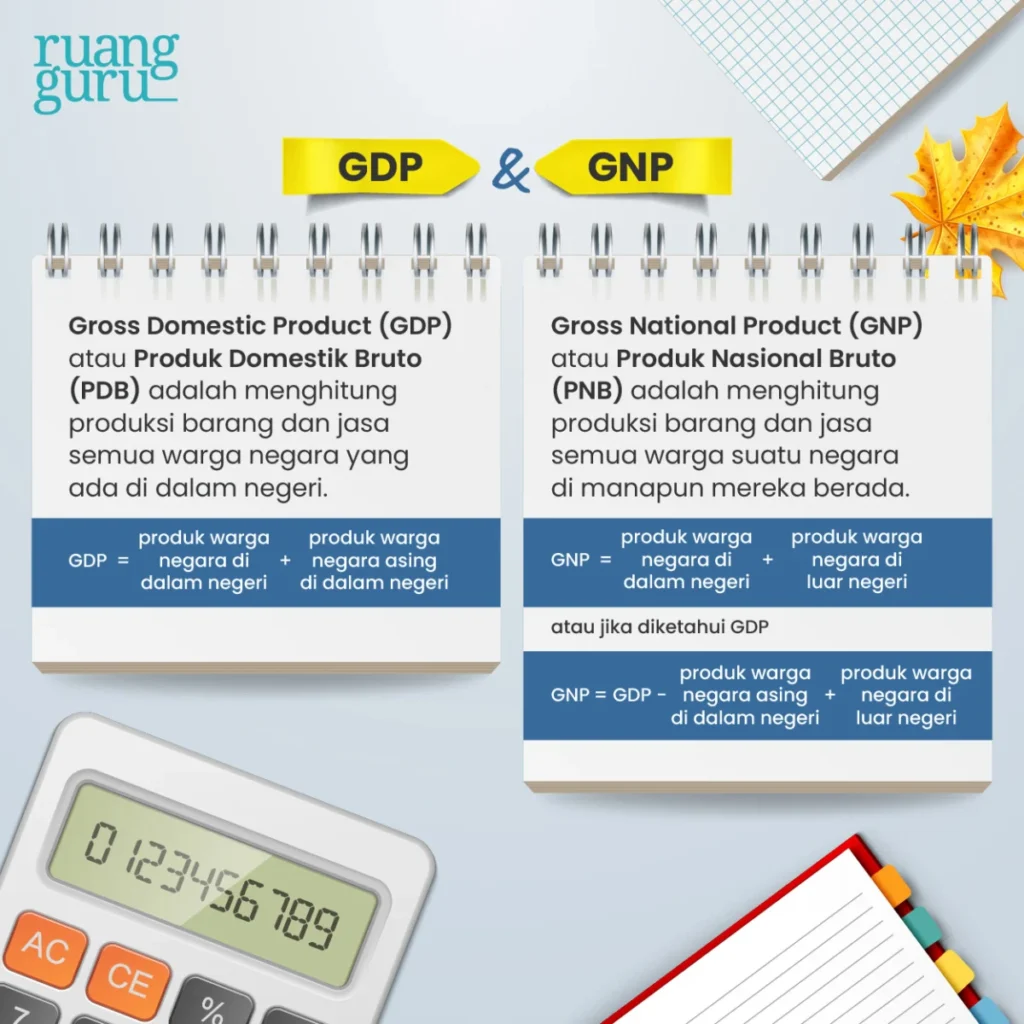
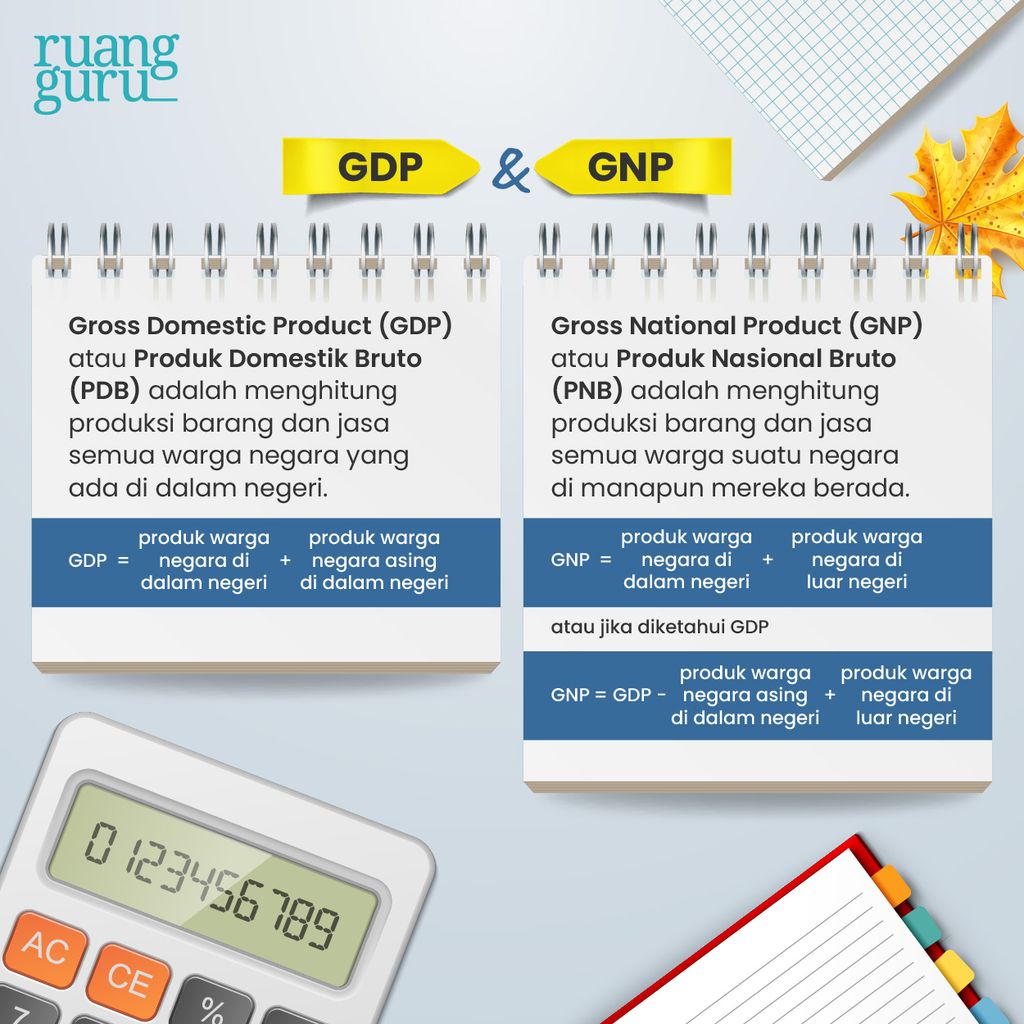
GDP, or Produk Domestik Bruto, is the most widely cited indicator of economic health. It measures the total value of goods and services produced within a country’s borders, regardless of whether the producers are citizens or foreign nationals.
- Formula: GDP = (Value of production by domestic citizens) + (Value of production by foreign nationals within the country).
- Key Insight: The emphasis here is on the "domestic" geographic boundary.
2. Gross National Product (GNP)
GNP, or Produk Nasional Bruto, focuses on the nationality of the producers rather than the location of the production. It captures the total output of a nation’s citizens, even if they are operating abroad.
- Formula: GNP = (GDP) – (Production by foreign nationals within the country) + (Production by domestic citizens abroad).
- Key Insight: The emphasis here is on the "national" identity of the labor and capital owners.
3. Net National Product (NNP)
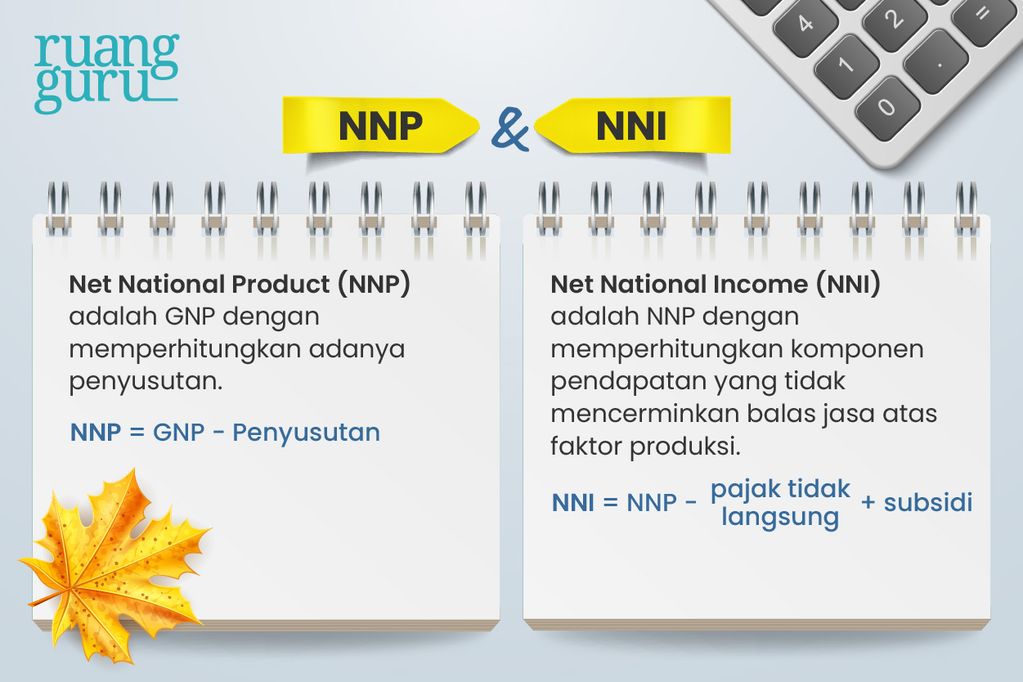
Production is not without its costs. Machinery wears out, and assets depreciate over time. NNP adjusts the GNP by accounting for these costs, providing a more "net" or realistic view of wealth generation.
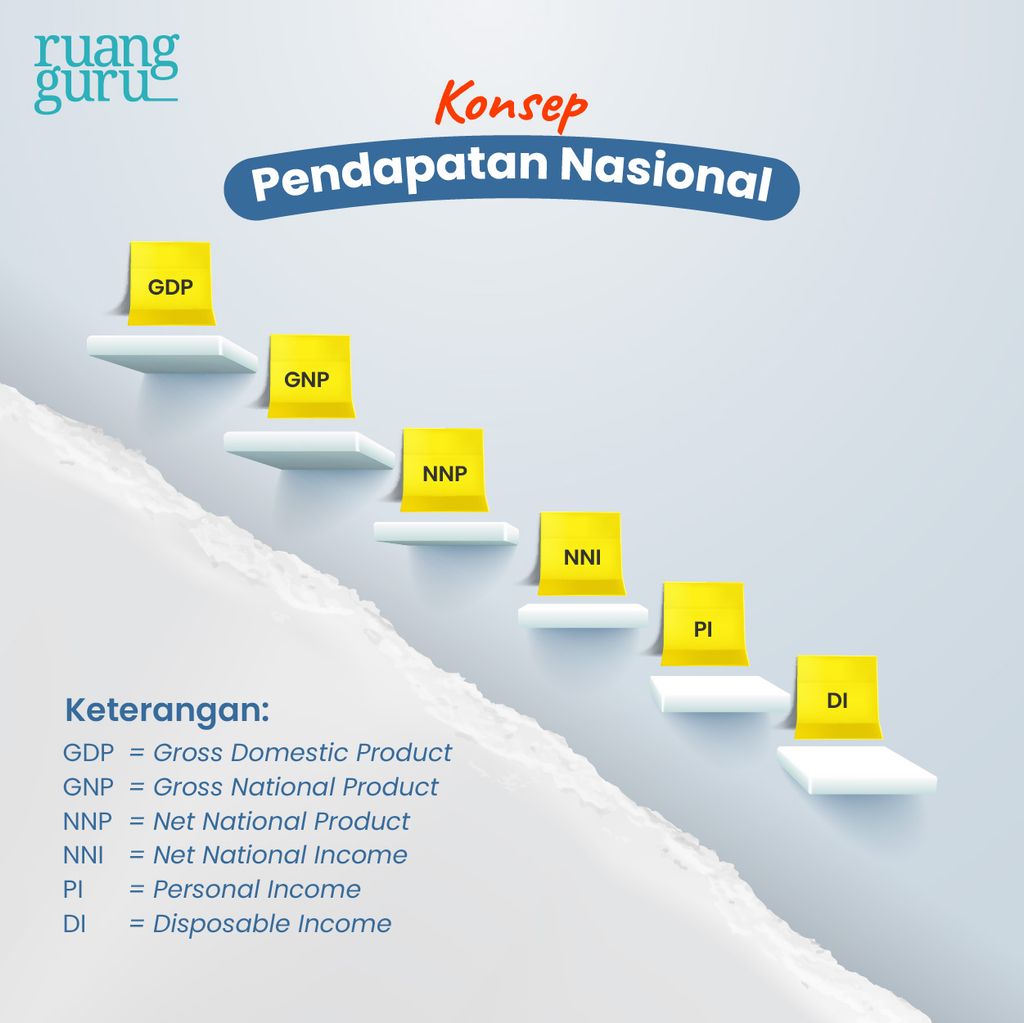
- Formula: NNP = GNP – Depreciation.
- Key Insight: NNP isolates the true net value of production, stripping away the cost of capital consumption.
4. Net National Income (NNI)
NNI moves closer to the actual income earned by the factors of production. It adjusts the NNP by subtracting indirect taxes (which do not represent direct payment for production) and adding subsidies (which lower costs for producers).
- Formula: NNI = NNP – Indirect Taxes + Subsidies.
- Key Insight: NNI ensures that the figures reflect true compensation for economic factors rather than government-induced price distortions.
5. Personal Income (PI)
Personal Income is the portion of national income that actually lands in the pockets of individuals. It accounts for "transfer payments"—such as government welfare or pensions—while subtracting corporate taxes and retained earnings that are not distributed to individuals.
- Formula: PI = NNI + Transfer Payments – (Retained earnings + Corporate income taxes + Social insurance contributions).
- Key Insight: PI reflects the actual purchasing power available to the citizenry.
6. Disposable Income (DI)
Finally, Disposable Income is the amount of money households have left to spend or save after paying direct taxes, such as income tax. It is the ultimate indicator of a population’s standard of living and capacity for personal investment.
- Formula: DI = PI – Direct Taxes.
- Key Insight: DI represents the "ready-to-spend" income of the individual.
The Chronology of Economic Aggregation
The process of calculating these figures is a rigorous, cyclical operation conducted by national statistical agencies.
- Data Collection: Throughout the fiscal year, agencies collect data from diverse sectors: agriculture, manufacturing, services, and retail. This involves surveying firms and tracking tax records.
- Aggregation: Data is compiled into the GDP. This is the "raw" data phase.
- Refinement: Through the application of the formulas mentioned above, statisticians subtract depreciation, adjust for international income flows, and account for tax-subsidy fluctuations.
- Final Reporting: The result is a series of reports (often quarterly) that allow the government to adjust interest rates, fiscal policy, and social spending.
Supporting Data and Economic Realities
Why is this data so critical? Consider the role of "Transfer Payments" in Personal Income. During economic downturns, government-led transfer payments (such as unemployment benefits) become a significant component of Personal Income. Without these, the drop in individual purchasing power would be far more severe.
Furthermore, the distinction between GDP and GNP is essential for developing nations. A country with a high GDP but a lower GNP might be seeing much of its wealth repatriated by foreign corporations, whereas a country with a high GNP relative to GDP may have a strong diaspora contributing to the domestic economy from abroad.
Official Responses and Policy Implications
Governments worldwide use these metrics as a compass. When NNI figures show a decline, central banks may respond with expansionary monetary policies—lowering interest rates to stimulate borrowing and investment.
Conversely, if Disposable Income (DI) is growing too rapidly without a corresponding increase in the supply of goods, it can lead to demand-pull inflation. In such cases, the government may implement fiscal policies, such as increasing taxes or reducing public spending, to cool down the economy.
Why National Income Matters: Implications for the Future
The study of National Income is not merely for economists; it is for every participant in the economy. Understanding these concepts allows citizens to:
- Evaluate Government Performance: By looking at growth trends, voters can judge the efficacy of economic policies.
- Plan Personal Finances: Understanding the difference between Personal Income and Disposable Income helps individuals grasp how tax structures and social contributions affect their take-home pay.
- Assess Global Standing: National Income per capita is one of the primary indicators used by the World Bank and the IMF to classify countries by development status.
Conclusion
National Income is a mirror held up to the face of a nation’s economy. It captures the nuance of daily life—the sale of a school project, the production of a factory, and the tax contributions of a citizen—and aggregates them into a coherent story of growth and distribution. By mastering these concepts, we gain the ability to analyze not just where a nation has been, but where it is headed in an increasingly competitive global landscape.
As we look toward the future, the integration of digital economies and sustainable development goals will necessitate new ways of measuring these figures, but the core principles—GDP, GNP, NNP, NNI, PI, and DI—will remain the essential building blocks of economic literacy.
Disclaimer: This article is intended for educational purposes and provides a simplified overview of complex macroeconomic indicators. For in-depth economic analysis, readers are encouraged to consult official reports from national statistical bureaus or academic resources like Alam S. (2014) in "Ekonomi untuk SMA dan MA Kelas XI."