
The Psychology of the Penalty: Decoding Cristiano Ronaldo’s Viral ‘Bismillah’ Moment at the 2026 World Cup
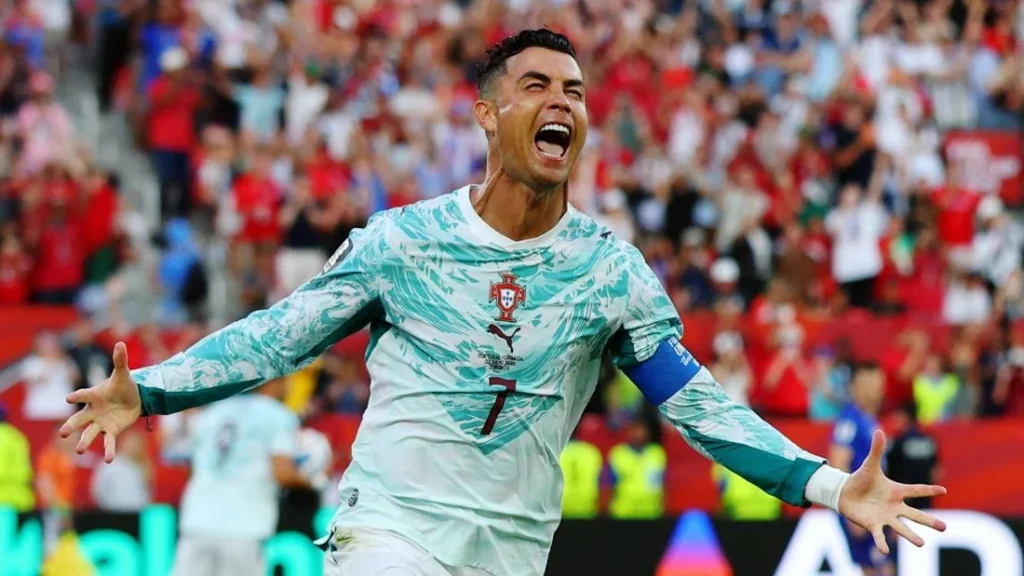
JAKARTA – In the high-stakes arena of the 2026 FIFA World Cup, where the margins between national glory and heartbreak are measured in millimeters, Cristiano Ronaldo has once again found himself at the center of a global conversation. Following Portugal’s hard-fought 2-1 victory over Croatia, a fleeting, intimate moment captured by broadcast cameras has ignited intense speculation across social media platforms.
As the Portuguese captain stepped up to the penalty spot in the 66th minute, viewers around the world noticed the legendary forward whispering a phrase before striking the ball past Croatian goalkeeper Dominik Livakovic. While the debate over whether he uttered the Arabic phrase "Bismillah" (In the name of God) or a variation of "Wish me luck" remains inconclusive, the moment has opened a wider dialogue regarding the intersection of elite sports performance, psychological conditioning, and the "fight or flight" response under the world’s most intense spotlight.
The Chronology of the Moment
The match against Croatia was a pivotal juncture for Portugal, a team carrying the weight of a nation’s expectations. In the 66th minute, a defensive error inside the penalty area handed Portugal a golden opportunity to break the deadlock.
Ronaldo, tasked with the responsibility of the spot-kick, exhibited the familiar pre-penalty ritual that has defined his illustrious career: the deep breaths, the calculated distance from the ball, and the focused gaze. However, it was the lip-reading analysis from keen-eyed fans that turned a standard goal into a viral sensation. As he prepared his strike, a close-up shot captured him mouthing words that many believe to be "Bismillah."
The ball, a precise, low-driven strike, found the back of the net, sealing a crucial win. For fans, the viral clip—which has garnered millions of views—echoes a similar incident during his tenure with Al-Nassr in the Saudi Pro League, where the same phrase was allegedly observed. Whether a manifestation of religious conviction or a psychological anchor for focus, the moment has humanized one of football’s most polarizing figures.
Supporting Data: The Pressure of the 12-Yard Spot
To understand why such a moment is significant, one must look at the psychological landscape of the 2026 World Cup. Penalty kicks are no longer just technical exercises; they are psychological warfare.
This tournament has been particularly unforgiving. The 32-round stage saw the dramatic exits of football powerhouses Germany and the Netherlands, both of whom succumbed to the crushing pressure of penalty shootouts. When a player stands at the penalty mark in a World Cup, they are not merely kicking a ball; they are managing the collective anxiety of millions of fans, the scrutiny of global media, and the potential legacy-altering consequences of a miss.
Research in sports psychology suggests that elite athletes utilize "self-talk" to regulate their nervous systems. Whether a player uses religious invocations, affirmations, or tactical reminders, the primary objective remains the same: to transition from a state of chaotic anxiety to one of singular, laser-like focus.
Scientific Context: The ‘Fight or Flight’ Response
The viral debate surrounding Ronaldo has prompted experts to analyze the physiological state of an athlete in such high-pressure scenarios. When the referee blows the whistle for a penalty, the human body naturally triggers the fight or flight response—an evolutionary mechanism designed to handle acute stress.
The Biological Surge
During this high-stress event, the body’s sympathetic nervous system shifts into high gear. Hormones such as adrenaline, cortisol, and corticotropin-releasing hormones flood the bloodstream. The physical symptoms are immediate and intense:
- Elevated Heart Rate: To pump oxygen-rich blood to the muscles.
- Muscle Tension: To prepare the body for explosive movement.
- Hyper-awareness: A narrowing of visual and cognitive focus to the immediate threat—the ball and the keeper.
In this context, Ronaldo’s whispered words represent a conscious attempt to manage this biological surge. While the body screams for "flight" due to the overwhelming pressure, Ronaldo chooses "fight." By centering himself through a repetitive, familiar phrase, he effectively overrides the panic response, channeling the adrenaline into a controlled, technical action rather than a panicked strike.
Is the Response Always Accurate?
It is important to note that the fight or flight response is an ancient survival tool, not a precision instrument. It is often triggered by perceived threats—such as the pressure of a World Cup final—even when there is no physical danger to life. If an athlete cannot regulate this response, the resulting muscle tension can lead to "choking," where the fluid movement required for a penalty kick becomes rigid and forced.
Ronaldo’s ability to remain consistent at the age of 41 suggests he has mastered the art of "cognitive reappraisal." He does not view the penalty as a threat; he views it as a task. The vocalization of "Bismillah" or similar words acts as a cognitive bridge, helping him maintain emotional equilibrium in an environment that is designed to destabilize him.
Official Responses and Public Reaction
As of the time of writing, neither Cristiano Ronaldo nor the Portuguese Football Federation (FPF) has officially addressed the viral speculation regarding the specific words uttered. In professional football, such ambiguity is common; players often maintain that pre-match or pre-penalty rituals are private matters.
However, the public reaction has been widespread. On social media, the discussion has transcended football. For many Muslim fans, the potential acknowledgement of faith by a global icon is a moment of pride. For others, the debate serves as a fascinating study in the psychology of excellence. Sports analysts have largely focused on the utility of the moment rather than the religious implication, noting that Ronaldo’s longevity in the sport is a direct result of his psychological resilience.
Implications: The Psychology of Legacy
The implications of this viral moment go beyond a simple video clip. It highlights the growing importance of mental health and psychological performance coaching in modern football.
1. Mental Conditioning as the New Frontier
With physical conditioning reaching a plateau in modern sports science, the next frontier for athletes is mental optimization. Ronaldo’s reliance on rituals—whether spiritual or psychological—demonstrates that even the greatest players require tools to navigate the "fight or flight" threshold.
2. The Global Icon’s Influence
Ronaldo’s actions are subject to intense scrutiny, and this incident reinforces his position as a cultural touchstone. By appearing vulnerable yet composed under extreme pressure, he continues to influence how younger generations of athletes perceive the importance of mental preparation.
3. The Humanization of the ‘Machine’
For years, critics have characterized Ronaldo as a "machine"—a player defined by robotic consistency and physical perfection. Moments like these remind the public that beneath the athleticism is a human being subject to the same physiological stresses as any other person. It provides a rare glimpse into the internal dialogue required to perform at the absolute pinnacle of human potential.
Conclusion
Whether Cristiano Ronaldo whispered "Bismillah" or a personal mantra to calm his nerves, the result remained the same: the ball hit the net. The viral nature of this moment is a testament to our fascination with the internal life of elite performers.
In the chaotic, adrenaline-fueled environment of the 2026 World Cup, Ronaldo’s penalty was more than a goal; it was a masterclass in psychological management. By effectively navigating the "fight or flight" response, he proved that even in the twilight of an extraordinary career, the mind remains the most potent weapon in his arsenal. As Portugal advances, the world will be watching not just for his goals, but for the quiet, calculated moments of focus that allow him to defy the odds time and time again.