The Parched Arteries of Jabodetabek: A Looming Ecological Crisis in Bogor’s Watersheds
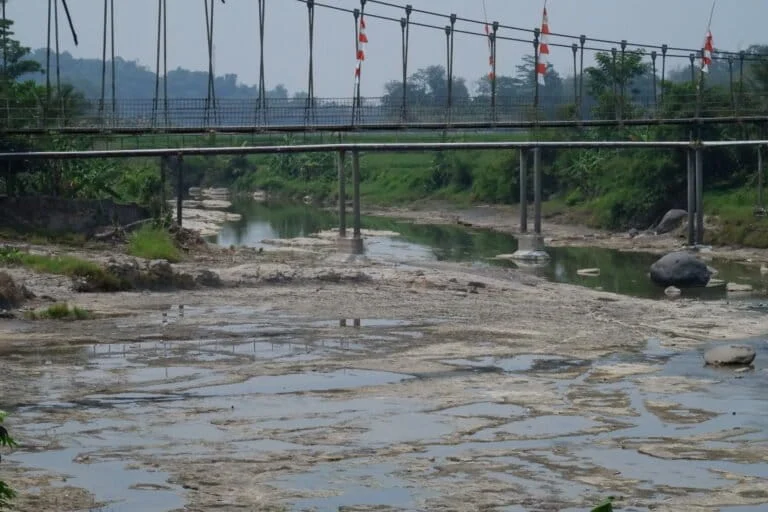
The lush landscapes of Bogor, long considered the water tower for the sprawling Jabodetabek (Jakarta, Bogor, Depok, Tangerang, and Bekasi) metropolitan area, are currently facing a profound environmental transformation. Rivers that once roared with perennial flow have slowed to a trickle or vanished entirely, exposing cracked riverbeds and parched earth. This is not merely a seasonal fluctuation; it is a clear indicator of a systemic ecological crisis that threatens the water security of millions of residents downstream.
The Reality on the Ground: A Desperate Struggle for Basic Needs
For residents like Rosmiati, a resident of Kampung Katulampa, the drying of the rivers has turned basic hygiene into a logistical struggle. With her household well running dry, she has been forced to rely on the Kali Baru—an irrigation canal fed by the Ciliwung River—to bathe her two children. Daily chores, such as washing clothes and cleaning kitchen utensils, now require the laborious task of hauling water in used gallon jugs from distant sources.
Rosmiati’s plight is a microcosm of a larger, systemic failure. The Ciliwung River, one of the most vital waterways in the region, has been significantly depleted for over a month. At the Katulampa Dam, a critical monitoring point for flood and drought management, the water level has plummeted to zero centimeters. A similar, dire situation is unfolding in Kampung Pulo Geulis, where the drastic reduction in discharge has disrupted the daily rhythms of life.
Chronology of a Slow-Motion Disaster
The current water scarcity is the culmination of a protracted period of low rainfall, exacerbated by the El Niño weather phenomenon. However, environmental analysts and experts argue that blaming the weather alone is a dangerous oversimplification.
For decades, the watersheds in the Bogor region—specifically the areas surrounding Puncak and the upstream tributaries of the Ciliwung, Cipamingkis, and Ciherang rivers—have been subjected to intense anthropogenic pressure. The transformation of forest cover into concrete jungles, luxury villas, and commercial properties has decimated the land’s natural capacity to act as a sponge.
In the case of the Cipamingkis River, which originates in the Sukamakmur highlands, the situation reached a breaking point that forced authorities to close irrigation floodgates. The water has been diverted entirely to meet the immediate, survival-level needs of local households. Meanwhile, the Ciherang River presents a bleak landscape: a bone-dry bed littered with stones, flanked by paddy fields where the crops have yellowed and died under the relentless sun.
Supporting Data: Infrastructure Under Stress
The impact of this drought is not limited to domestic households; it has severely crippled critical infrastructure. The Perumda Tirta Pakuan, the regional water utility company, is currently struggling to maintain service levels. Under normal operating conditions, the Katulampa Water Treatment Plant produces 307.14 liters of water per second, serving approximately 35,492 customers across North Bogor, East Bogor, and parts of the surrounding regency.
As the raw water intake drops, the utility faces a significant deficit in production. When the primary water source fails, the burden shifts to groundwater extraction. However, this creates a dangerous feedback loop. The increased reliance on deep-well pumps to compensate for the lack of surface water accelerates land subsidence—a chronic problem in the Jabodetabek region—and risks irreversible damage to the aquifers that serve as the area’s final line of defense against total water depletion.
The Ecological Perspective: Beyond the Drought
Wahyu Eka Styawan, a campaigner for Urban Justice at the National WALHI (Friends of the Earth Indonesia), posits that the current drought is merely a "curtain-raiser" that has exposed long-standing ecological neglect.

"We have treated our rivers as if they exist in a vacuum, ignoring the fact that the health of these waterways is entirely dependent on the integrity of the catchment areas upstream," says Styawan. "For years, we have permitted land-use changes that prioritize short-term commercial gain over long-term environmental stability. When you replace forests with paved surfaces, you destroy the natural mechanism that stores rainwater. The result is that when the rain stops, the rivers stop, and the land has no reserves left to draw upon."
Furthermore, as river flow diminishes, the concentration of pollutants increases. With less water to dilute domestic and industrial waste, the remaining stagnant pools become toxic, posing severe public health risks to communities that still attempt to use the water for sanitation.
Implications for Jabodetabek’s Future
The implications of this crisis extend far beyond the borders of Bogor. As the upstream regions dry up, the downstream urban centers of Jakarta face the specter of severe water rationing. The current emergency response—distributing water via tanker trucks—is a necessary stopgap, but it is fundamentally unsustainable.
If the current trajectory of land-use change and environmental degradation continues, the region faces several looming threats:
- Water Insecurity: As aquifers are over-extracted and surface water sources fail, the cost of water will inevitably rise, disproportionately affecting the most vulnerable populations.
- Land Subsidence: Continued over-reliance on groundwater will accelerate the sinking of the land, making low-lying areas in the metropolitan region even more susceptible to permanent flooding when the rains eventually return.
- Ecological Collapse: The loss of river biodiversity and the destruction of riparian ecosystems will make it impossible for these rivers to perform their natural filtration services, leading to a permanent decline in water quality.
Policy Recommendations and Official Responsibility
Addressing this crisis requires a radical shift in how water and land are managed. Experts suggest a multi-pronged approach that moves beyond reactive measures:
- Zoning Enforcement: Authorities must adopt a more aggressive stance in regulating and, where necessary, dismantling illegal construction in protected water catchment areas.
- Vegetation Restoration: A massive, state-led initiative is required to reforest the upstream areas of Bogor. Restoring the natural vegetation is the only way to restore the land’s ability to retain water.
- Groundwater Regulation: Stricter controls on the commercial and industrial use of groundwater must be enforced. This includes incentivizing businesses to invest in water recycling technologies and rainwater harvesting systems.
- Waste Management: The discharge of industrial and domestic waste into the remaining water sources must be strictly monitored and penalized to prevent the further degradation of remaining water quality.
"The crisis of water is not something to be managed only when the wells run dry," warns Styawan. "We must protect the sources long before the crisis arrives. We have been living off the interest of our natural capital for too long, and now the principal is being eroded."
Conclusion: A Call for Urgent Action
The sight of children bathing in irrigation canals and dried-up riverbeds should serve as a wake-up call for policymakers in Jakarta and West Java. The water crisis in Bogor is a symptom of a larger, systemic disregard for the environment that sustains the nation’s economic heart.
Without immediate intervention, the cycle of drought will only become more frequent and more severe as climate change accelerates. Protecting the watersheds of Bogor is not merely an environmental preference; it is a prerequisite for the survival and prosperity of the Jabodetabek metropolitan area. The time for reactive measures has passed; the era of proactive ecological restoration must begin now, or the region risks a future where the faucets run dry for good.