The Eternal Journey of Water: Understanding the Mechanics, Classifications, and Critical Implications of the Hydrological Cycle
GLOBAL — Every single day, billions of human beings engage in a standardized routine: waking up, washing their faces, brushing their teeth, hydrating with fresh water, showering, and cooking. Across Indonesia alone, a population exceeding 270 million consumes millions of liters of potable water daily for domestic, agricultural, and industrial purposes. When multiplied globally, the daily extraction of water resources reaches staggering proportions.
Yet, despite continuous, heavy consumption across millennia, the Earth’s total volume of water remains remarkably constant. The oceans do not run dry, and lakes continually replenish. The underlying mechanism responsible for this planetary preservation is the hydrological cycle—commonly known as the water cycle.
Hydrology, scientifically defined as the branch of Earth science that studies the movement, distribution, and quality of water on and beneath the Earth’s surface, governs every drop of moisture on our planet. Through a continuous, closed-loop system of physical phases, water transforms, travels, and recycles, ensuring the survival of terrestrial and aquatic ecosystems alike.
Main Facts: The Anatomy of the Hydrological Cycle
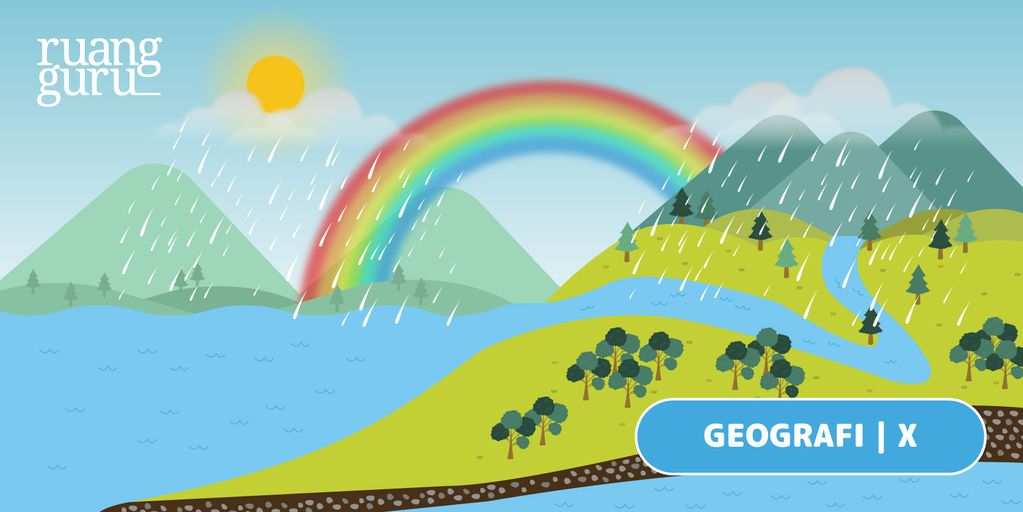
At its core, the hydrological cycle is a continuous planetary pathway through which water moves from the Earth’s surface into the atmosphere and back again. The system is entirely driven by solar energy and gravity.
The primary stages of this planetary plumbing system include:
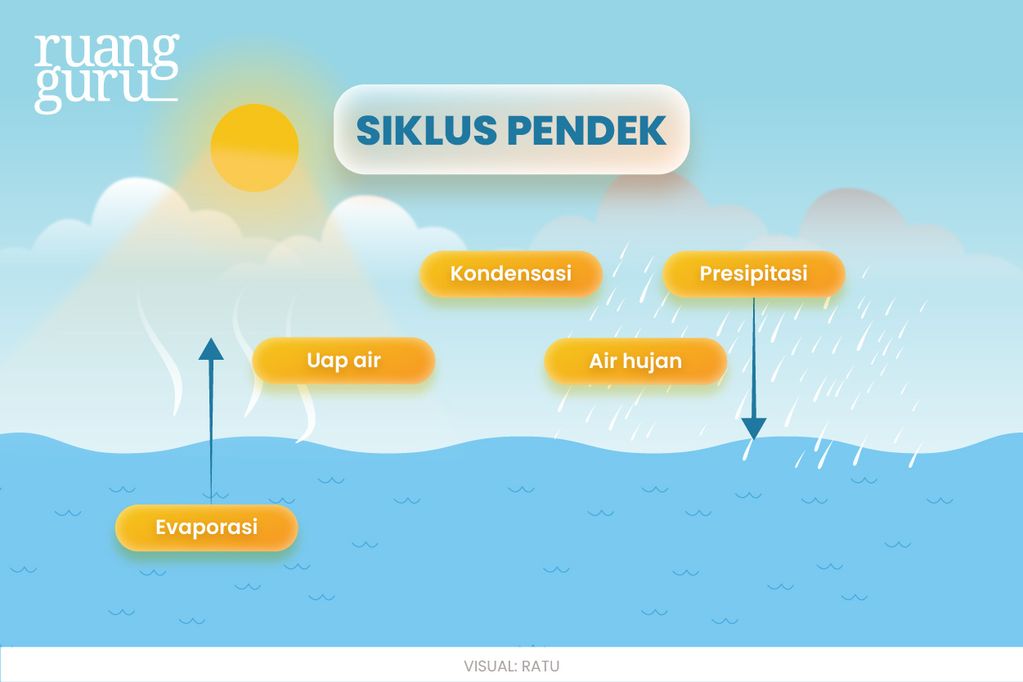
- Evaporation: The process by which liquid water from oceans, seas, lakes, and rivers absorbs thermal energy from the sun and transforms into water vapor, rising into the atmosphere.
- Transpiration: The biological release of water vapor from plants through microscopic pores called stomata.
- Condensation: The cooling of rising water vapor, causing it to transition from a gas back into liquid droplets or ice crystals, forming clouds and fog.
- Precipitation: The release of condensed moisture from clouds in the form of rain, snow, sleet, or hail when droplets become too heavy to remain suspended in the atmosphere.
- Infiltration and Percolation: The downward movement of water from the land surface into the soil and deep geological strata.
- Runoff: The movement of excess water across the Earth’s surface, flowing from higher elevations to lower topography, eventually feeding back into major water bodies.
According to geophysical data, the Earth contains approximately 1.386 billion cubic kilometers of water. However, roughly 97.5% of this total is saline ocean water. Freshwater accounts for only 2.5%, and the vast majority of that fraction is locked away in glaciers, ice caps, or deep underground aquifers, leaving less than 1% readily accessible for human use. The hydrological cycle is the sole mechanism responsible for purifying and redistributing this scarce freshwater resource.

Chronology and Classification: The Three Pathways of the Water Cycle
While the fundamental processes remain consistent, meteorologists and hydrologists classify the water cycle into three distinct types based on the geographical scale and duration of the pathway:
1. The Short Hydrological Cycle (Short Water Cycle)
The short cycle is the most rapid and geographically contained pathway. It typically occurs over oceanic regions or large inland water bodies.
- The Process: Solar radiation heats the surface of the sea, initiating intense evaporation. The resulting water vapor rises into the atmosphere, where it undergoes condensation to form clouds. Once saturated, the clouds release the moisture back into the water body via precipitation (rainfall).
- Vegetative Variations: Within this cycle, scientists also account for transpiration (plant evaporation) and interception—a phenomenon where rainfall is temporarily caught in the canopy of dense forest foliage and evaporates back into the atmosphere before ever touching the forest floor. Because no land transit is involved, this cycle completes itself in a matter of hours or days.
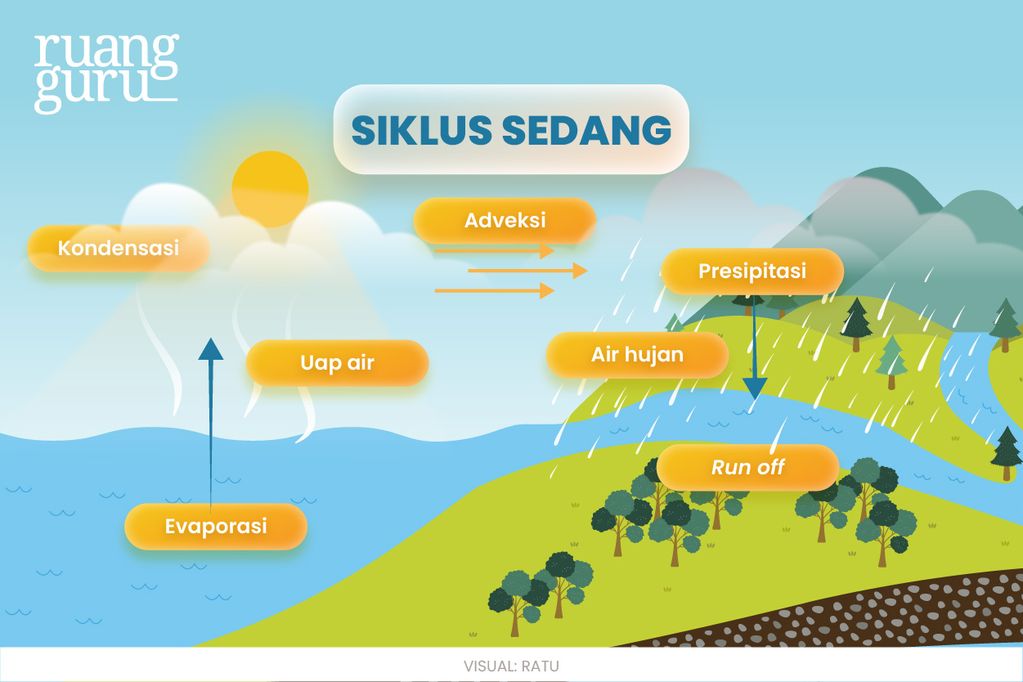
2. The Medium Hydrological Cycle (Medium Water Cycle)
The medium cycle involves a significant geographic displacement, moving moisture from oceanic sources to terrestrial environments.
- The Process: Water evaporates from the ocean, condenses into clouds, and is then subjected to advection—the horizontal movement of air masses driven by atmospheric winds.
- Terrestrial Precipitation: Carried across coastlines, the clouds release precipitation over landmasses (mountains, plains, and valleys). Once the water hits the ground, it can take two primary paths: surface runoff, where gravity pulls water across the landscape into rivers and streams flowing back to the ocean, or infiltrating into the shallow soil layers before eventually re-emerging in waterways.
3. The Long Hydrological Cycle (Long Water Cycle)
The long cycle is characterized by extended temporal delays and complex thermal transitions, often spanning centuries or millennia.
- The Process: Much like the medium cycle, water evaporates and forms clouds over oceans, and winds transport these clouds toward high-altitude or high-latitude landmasses.
- Sublimation and Glacial Storage: Because temperatures in these regions are drastically lower, the precipitation falls as snow or ice, accumulating into glaciers, ice sheets, or permanent snowpacks. The water remains locked in a solid state for prolonged periods. When seasonal warming occurs, the ice undergoes sublimation (transforming directly from a solid to a gas) or melts into liquid runoff. This meltwater slowly navigates subterranean aquifers and complex river networks over decades before finally discharging back into the oceans.
Supporting Data and Scientific Observations
Recent climatological studies emphasize that human interference and global climate change are altering the natural pace and distribution of the hydrological cycle.
- Acceleration of Evaporation: As global surface temperatures rise due to greenhouse gas emissions, the rate of evaporation over oceans increases. Warmer air holds more moisture, leading to intensified, erratic precipitation events (such as extreme downpours and severe flash floods) in certain regions, while exacerbating droughts in others.
- Groundwater Depletion: According to hydrological assessments, extraction rates from underground aquifers often outpace the natural infiltration rate of the medium and long water cycles. In major agricultural and urban centers, this creates a dangerous deficit, causing land subsidence and depleting long-term freshwater reserves.
- Glacial Retreat: Observations from polar and alpine regions indicate that the long hydrological cycle is being disrupted. Rapid glacial melting dumps massive amounts of freshwater into the oceans prematurely, reducing the volume of frozen freshwater reserves stored for future decades.
Official Responses and Global Policy Frameworks
Recognizing the vulnerability of global freshwater supplies, international governing bodies and scientific organizations have stepped up monitoring and conservation efforts.
The United Nations (UN) has consistently emphasized water security through Sustainable Development Goal 6 (SDG 6), which calls for clean water and sanitation for all by 2030. Meteorological agencies worldwide, including the World Meteorological Organization (WMO), utilize advanced satellite telemetry, radar networks, and computer modeling to track precipitation anomalies, evaporation rates, and river discharge patterns in real time.
National governments are increasingly adopting Integrated Water Resources Management (IWRM) policies. These frameworks aim to coordinate the development and management of water, land, and related resources to maximize economic and social welfare equitably—without compromising the sustainability of vital ecosystems and the natural mechanisms of the water cycle.
Implications: Why We Must Practice Water Conservation
A common misconception regarding the hydrological cycle is that because the Earth’s total water volume remains constant, water can never truly run out. While this is scientifically true regarding the global mass of water, it creates a dangerous illusion of abundance.

The water that sustains human civilization—accessible, clean liquid freshwater—is strictly limited in volume and location.
- Temporal Mismatch: While water perpetually recycles, the process is not instantaneous. The deep percolation of the long water cycle takes centuries, meaning polluted or depleted aquifers cannot be easily or quickly replaced.
- Distribution Inequities: Precipitation does not fall evenly across the globe. Arid and densely populated urban centers frequently face severe water scarcity, relying heavily on fragile river systems and local groundwater tables.
- The Imperative of Conservation: Because the purification and delivery of freshwater via natural cycles require specific climatic conditions, any degradation of watersheds, deforestation, or pollution directly impairs our access to usable water.
Ultimately, understanding the intricate mechanics of the short, medium, and long hydrological cycles yields a profound realization: water is a finite, highly vulnerable resource. Protecting our watersheds, reducing domestic and industrial waste, and mitigating climate change are not merely ecological choices—they are absolute prerequisites for the continued survival and prosperity of human society on Earth.