Resilience Amidst Global Skepticism: President Prabowo Defends Indonesia’s Economic Sovereignty
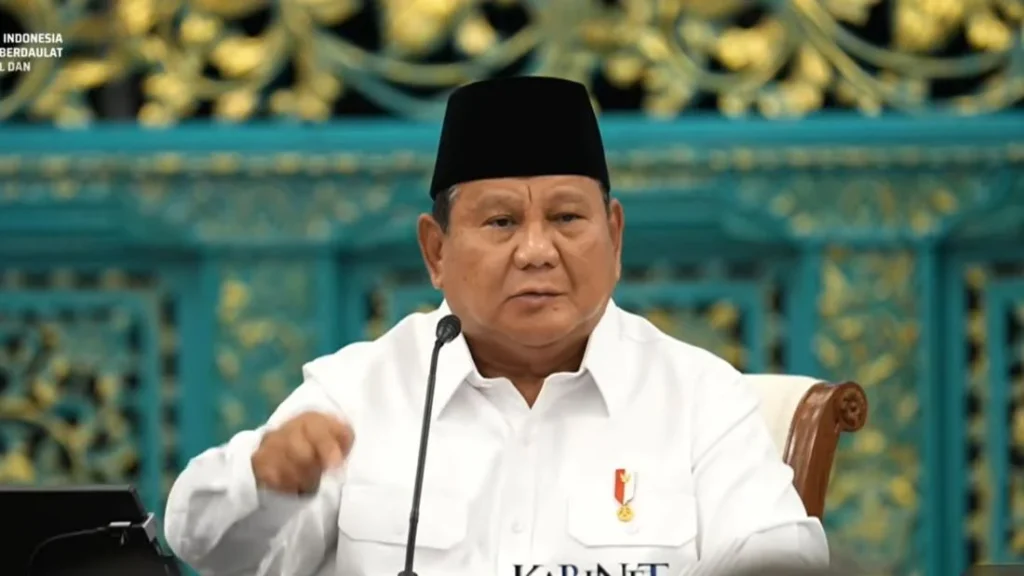
Jakarta – In a defiant stance against international skepticism, President Prabowo Subianto has challenged the narrative surrounding Indonesia’s economic stability, specifically addressing concerns regarding the nation’s credit ratings. Speaking during the Plenary Cabinet Session at the State Palace in Jakarta on Monday, July 20, 2026, the President underscored his administration’s commitment to self-reliance and strategic structural reforms, most notably the establishment of PT Danantara Sumberdaya Indonesia (DSI).
Main Facts: Defying the "Doom and Gloom" Narrative
The central tension of the President’s address revolved around the psychological warfare often played by global rating agencies. According to President Prabowo, there have been persistent attempts to undermine investor confidence by floating rumors of an impending downgrade for Indonesia. The narrative suggested that Indonesia was headed for a "poor report card," which would ostensibly scare off foreign direct investment (FDI) and cripple national growth.
However, Prabowo highlighted a stark contradiction between these rumors and the official assessment provided by S&P Global Ratings. Far from the expected downgrade, S&P issued a positive signal regarding the government’s decision to form PT Danantara Sumberdaya Indonesia (DSI)—a new state-owned entity tasked with spearheading export growth and sovereign wealth management.
"We were being intimidated by some global rating agencies, told that Indonesia would receive a bad report card. We were told our rating would be lowered so that no one would want to invest here," Prabowo stated. "But we are not afraid. In fact, S&P themselves have publicly announced that they view the formation of PT DSI as the right step."
Chronology of the DSI Initiative and Market Reaction
The formation of PT Danantara Sumberdaya Indonesia (DSI) has been a cornerstone of President Prabowo’s economic agenda. The initiative was designed to consolidate national assets and streamline export-oriented industries to maximize revenue streams.
- Early 2026: The administration began drafting the framework for DSI, aiming to integrate state resources to better compete in the global market.
- Mid-2026: Market analysts and some international rating observers raised concerns that the restructuring might lead to bureaucratic inefficiencies or fiscal risks. Rumors of a potential downgrade began to circulate in financial circles, suggesting that Indonesia’s "Investment Grade" status was under threat.
- July 20, 2026: During the Plenary Cabinet Session, President Prabowo directly addressed these rumors, citing S&P’s validation of the DSI model as proof that the government’s strategic direction is sound.
- Post-Announcement: The confirmation from S&P serves as a stabilizing factor, maintaining Indonesia’s "Stable" outlook and preserving its "Investment Grade" credit rating, effectively neutralizing the speculative threats.
Supporting Data: Why Fundamentals Matter
The debate over Indonesia’s creditworthiness is not merely about political rhetoric; it is rooted in the country’s macroeconomic fundamentals. Despite the volatility of the global economy, Indonesia has maintained a consistent trajectory of growth.
The Role of Investment Grade
A sovereign credit rating is a key indicator for international investors. Retaining an "Investment Grade" status allows Indonesia to borrow at lower interest rates and attracts institutional capital that is mandated to invest only in stable, low-risk economies. For Indonesia, losing this status would have triggered a capital outflow and increased the cost of sovereign debt servicing.
Export Diversification through DSI
The DSI initiative is designed to move Indonesia away from a dependence on raw commodity exports. By centralizing the management of strategic resources, the government aims to:
- Increase Value-Added Production: Transitioning from exporting raw materials to processed goods.
- Revenue Stabilization: Creating a buffer against commodity price fluctuations.
- Market Leverage: Enhancing Indonesia’s bargaining power in bilateral trade agreements.
Economists note that the S&P’s endorsement of DSI reflects a broader confidence in the government’s ability to manage complex state-owned enterprises (SOEs). While previous administrations focused on infrastructure, the Prabowo administration is shifting its focus toward institutional reform and revenue optimization.
Official Responses and Strategic Vision
The President’s message to his ministers was clear: external validation is welcome, but internal strength is paramount.
"They (the rating agencies) stated that this is the right step for the Indonesian nation, and that it will increase our revenue," Prabowo told his cabinet. "They have decided not to downgrade our outlook. We remain at a stable outlook, and we maintain our investment grade."
The "Self-Reliance" Doctrine
President Prabowo emphasized that while Indonesia operates in a globalized economy, the nation cannot afford to be beholden to the subjective opinions of international financial institutions. This "Self-Reliance" doctrine suggests that the government will continue to prioritize internal policy coherence—such as the creation of DSI—over the potential reactions of external actors.
However, he cautioned his ministers against complacency. "Do not be satisfied with the current rating," he urged. "We must continue to improve our fundamentals. We must believe in our own strength."
Implications: A New Era for Indonesia’s Economic Policy
The implications of this episode are significant for both the Indonesian government and international stakeholders.
1. Shift in Governance Philosophy
The administration is signaling a departure from being a "rating-taker" to a "rating-maker." By successfully pushing through the DSI formation despite implicit threats of downgrades, the government has proven that it is willing to pursue structural reforms that it believes are in the long-term national interest, even if they deviate from traditional prescriptions.
2. Investor Confidence
The fact that S&P chose to validate the DSI initiative suggests that global rating agencies are increasingly recognizing the nuance in Indonesian economic policy. Investors who were waiting for a "clearance" from rating agencies now have the green light to view Indonesia’s new SOE model as a positive development rather than a risk.
3. The Future of State-Owned Enterprises
PT Danantara Sumberdaya Indonesia will now be under the spotlight. Its success or failure in the coming years will likely determine Indonesia’s credit trajectory in the long term. If DSI succeeds in boosting national revenue and export efficiency, it could serve as a model for other developing nations seeking to maximize their sovereign assets.
4. Psychological Independence
Perhaps most importantly, the President’s rhetoric marks a psychological shift. By publicly calling out the "intimidation" from rating agencies, Prabowo is setting a tone of economic sovereignty. It is a message to both the Indonesian public and the international community that Indonesia’s economic policy will be dictated by domestic needs and long-term goals, not by the short-term volatility of financial indices.
Conclusion: Balancing Global Integration and National Interest
As Indonesia navigates the complexities of a changing global economic landscape, the standoff between the government and rating agency speculation serves as a case study in resilience. President Prabowo’s administration has clearly articulated its belief that the path to prosperity lies in strengthening the nation’s fundamental economic structures, such as the newly formed PT DSI.
While the "Investment Grade" status has been preserved, the President’s closing remarks served as a reminder that the real work is just beginning. The government’s focus remains on increasing revenue, fostering innovation, and building an economy that is robust enough to weather any external pressure.
"We live in a global world, but we must believe in our own power," Prabowo concluded. "We must believe in our own fundamentals." As Indonesia moves forward, this balance between global integration and firm national policy will likely define the success of the current administration’s economic legacy. With the DSI now operational, the government has set the stage for a more aggressive, state-led approach to international trade—one that it hopes will lead to sustained growth and a stronger, more independent Indonesian economy.