
Market Double-Dip: IHSG and Rupiah Retreat Amidst Heightened Global Economic Uncertainty
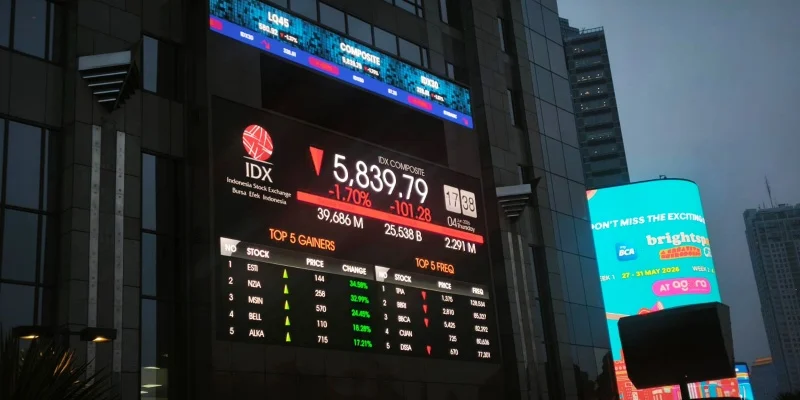
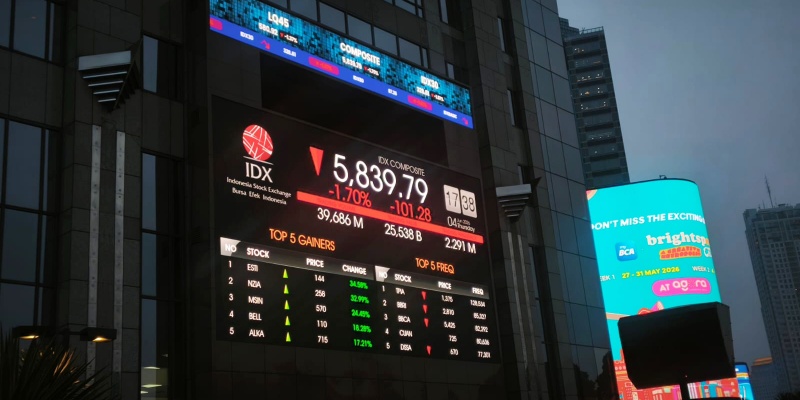
JAKARTA – The Indonesian financial markets experienced a synchronized downturn on Wednesday, July 21, 2026, as both the Jakarta Composite Index (IHSG) and the Indonesian Rupiah (IDR) struggled to maintain upward momentum. Investors, grappling with a cocktail of domestic data and international market volatility, opted for a cautious approach, resulting in a widespread retreat across the bourse and a softening of the national currency.
As the trading session concluded, market participants were left weighing the implications of a high-frequency, high-volume day that saw capital shifts totaling trillions of rupiah, signaling a period of significant rebalancing within the domestic equity market.
The Core Data: A Bearish Close
The Indonesian Stock Exchange (IDX) closed the session in negative territory, with the IHSG shedding 19.1 points, or 0.30 percent, to settle at the 6,315 level. This dip reflects a cooling sentiment among retail and institutional investors who had previously driven the market toward higher valuations earlier in the week.
Trading Metrics at a Glance
The technical data provided by the Indonesia Stock Exchange (BEI) highlights the intensity of the day’s activity:
- Intraday Range: The index touched a daily high of 6,346 before retracting to a low of 6,306, indicating a volatile session characterized by profit-taking.
- Transaction Volume: A staggering 63 billion shares changed hands, a figure that underscores the high liquidity currently present in the market despite the bearish sentiment.
- Total Turnover: The total value of transactions reached Rp23 trillion, a substantial figure that suggests significant institutional movement.
- Market Frequency: The market saw 3.1 million transaction cycles, pointing to an active day of algorithmic and retail trading.
- Market Capitalization: Despite the index drop, overall market capitalization reached a robust Rp11,085 trillion, showing that while stock prices fluctuated, the long-term value of listed companies remains significant.
Market Dynamics: The Battle Between Bulls and Bears
The market breadth for the day revealed a tightly contested battle. Out of the total stocks traded, 321 counters ended in the red, while 299 managed to sustain growth. Meanwhile, 176 stocks remained stagnant, reflecting a period of consolidation for many mid-cap and small-cap companies.
This distribution suggests that while the overall index was dragged down by heavyweights—likely in the banking and commodity sectors—there remained pockets of strength in the market. Investors appear to be rotating their portfolios, moving away from overextended sectors and into defensive positions as they await clearer signals regarding global interest rate policies and inflation targets.
Currency Volatility: The Rupiah’s Struggle
Simultaneous to the equity market decline, the Indonesian Rupiah faced downward pressure in the foreign exchange market. According to data sourced from Bloomberg, the "Garuda" currency closed at Rp17,936 per US Dollar. This represents a depreciation of 19 points, or 0.11 percent, compared to the previous day’s closing.
The weakening of the Rupiah is largely attributed to the strengthening of the US Dollar, which continues to act as a safe-haven asset in times of global economic uncertainty. As the Federal Reserve’s policy outlook remains a focal point for global traders, emerging market currencies, including the IDR, have found themselves in a vulnerable position.
Chronology of the Trading Day
The trading day began with a flicker of optimism, as opening positions showed resilience. However, as the clock approached midday, the sentiment began to shift.
- Morning Session (09:00 – 11:30 WIB): The market opened with moderate volatility. Investors were testing the waters, keeping the index range-bound.
- Midday Dip (11:30 – 14:00 WIB): As global indices in Asia Pacific began to report mixed results, a wave of selling pressure emerged. Foreign investors, often the primary drivers of volatility in the IHSG, began liquidating positions, forcing the index toward the 6,306 support level.
- Afternoon Recovery Attempts (14:00 – 16:00 WIB): There was a late-session attempt by domestic institutional buyers to bolster the index. While this effort prevented a deeper crash, it was insufficient to pull the index back into positive territory.
- Closing Bell (16:00 WIB): The market closed at 6,315, marking a day where the "red" sentiment dominated the trading floor.
Expert Perspectives: Interpreting the Pullback
Financial analysts are divided on whether this pullback is a temporary correction or the start of a more sustained bearish trend.
"The market is currently reacting to a confluence of factors," said a market strategist. "While the Rp23 trillion transaction value suggests that there is still plenty of capital circulating within the system, the lack of a strong catalyst has left the index directionless. Investors are waiting for the next round of quarterly earnings reports to determine if the valuations are justified."
Furthermore, the pressure on the Rupiah is viewed as a natural response to the global interest rate environment. "The central bank is likely monitoring the situation closely," the analyst added. "The key for the coming weeks will be how the Rupiah maintains its stability against the Dollar without significantly impacting the cost of imports, which could exacerbate domestic inflationary pressures."

Implications for Investors
For the average investor, the current market climate necessitates a disciplined approach. The high volume of trading suggests that there is no lack of opportunity, but the prevalence of declining stocks (321 decliners vs. 299 gainers) serves as a warning against speculative trading.
Strategic Considerations:
- Diversification: With the index struggling to maintain its footing, diversification across non-correlated sectors is vital to mitigate risk.
- Focus on Fundamentals: Investors are advised to look toward companies with strong balance sheets and dividend history, as these stocks tend to be more resilient during periods of market consolidation.
- Currency Hedging: For businesses and individuals with exposure to the US Dollar, the current exchange rate levels serve as a reminder to hedge against further volatility.
Future Outlook: Looking Toward the Next Quarter
As we look beyond the July 21, 2026, trading session, all eyes will be on upcoming economic indicators. The government’s fiscal policy, combined with the central bank’s monetary stance, will play a crucial role in determining whether the IHSG can reclaim the 6,400 level in the near future.
While the market closed in the red today, the record-breaking market capitalization of Rp11,085 trillion suggests that the underlying infrastructure of the Indonesian market remains robust. Investors remain cautiously optimistic, waiting for the dust to settle before committing to the next major market move.
The dual decline in the stock index and the currency is a stark reminder of the interconnectedness of modern financial markets. Whether this represents a short-term correction or a shift in the medium-term trend remains the subject of intense debate on the trading floors of Jakarta. For now, the prevailing sentiment is one of "wait and see," as the market recalibrates for the next phase of the year.
For more trusted and up-to-the-minute financial updates, follow RMOL.ID on Google News. Click the star icon to stay informed on the latest market developments as they happen.