
Indonesia’s 2029 Electoral Landscape: Millennials to Spearhead Nation’s Democratic Future
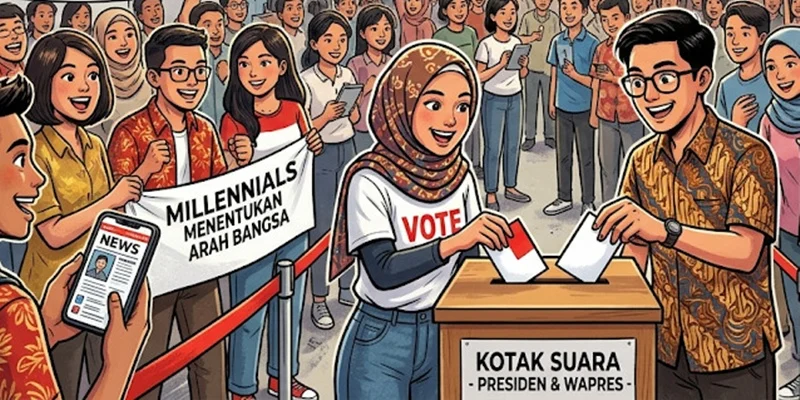
JAKARTA – The General Elections Commission (KPU) of Indonesia has officially released its updated national voter registry for the first semester of 2026, revealing a demographic shift that signals a transformative era for the country’s political landscape. With a total of 214,354,667 registered voters, the nation is bracing for a 2029 electoral cycle defined by the profound influence of the millennial generation.
The announcement, made on Monday, July 20, 2026, provides a comprehensive blueprint of the Indonesian electorate, highlighting a steady growth in voter participation and a significant generational transition that will dictate the policy directions of the next decade.
1. The Main Facts: A Growing Electorate
According to the KPU’s latest Sustainable Voter Data Update (PDPB) report, the national voter pool has reached 214,354,667 individuals. This figure represents a 1.17% increase compared to the second semester of 2025, underscoring the dynamic nature of Indonesia’s population and the effectiveness of the KPU’s continuous registration efforts.
The data reveals a slight female majority, with women accounting for 50.15% of the total voters, while men comprise 49.85%. Geographically, the electorate remains vast and highly decentralized. Of the total population, 212,406,069 voters are based within the country, distributed across 38 provinces, 514 regencies and cities, 7,285 sub-districts, and 83,737 villages and wards. This sprawling geography presents both a challenge and a testament to the logistical complexity of managing one of the world’s largest democratic processes.
2. Chronology of the Update
The process leading to this announcement has been a rigorous, multi-month endeavor. Throughout the first half of 2026, the KPU engaged in systematic data cleaning and verification to ensure the integrity of the voter list.
- January – June 2026: KPU teams conducted continuous field verifications, cross-referencing civil registry data with on-the-ground updates, including records of new voters, those who have passed away, and those who have moved residence.
- July 20, 2026: The official plenary session was held, where the KPU finalized the national re-recapitulation. The commission verified the accuracy of the 214.35 million figure, ensuring that the data meets the standards required for the upcoming electoral cycle preparations.
- July 22, 2026: Following the public announcement, political analysts and civil society organizations began dissecting the implications of the demographic findings, leading to widespread discourse on the role of youth in the 2029 General Elections.
3. Supporting Data: The Generational Shift
The most striking element of the 2026 report is the generational composition of the electorate. As Indonesia approaches the 2029 elections, the power dynamics are shifting away from older cohorts toward a more digitally native and globally connected workforce.
Generational Breakdown:
- Millennials (Gen Y): 32.13% – The largest bloc.
- Generation X: 27.13%
- Generation Z: 24.56%
- Baby Boomers: 14.29%
- Pre-Boomers: 1.89%
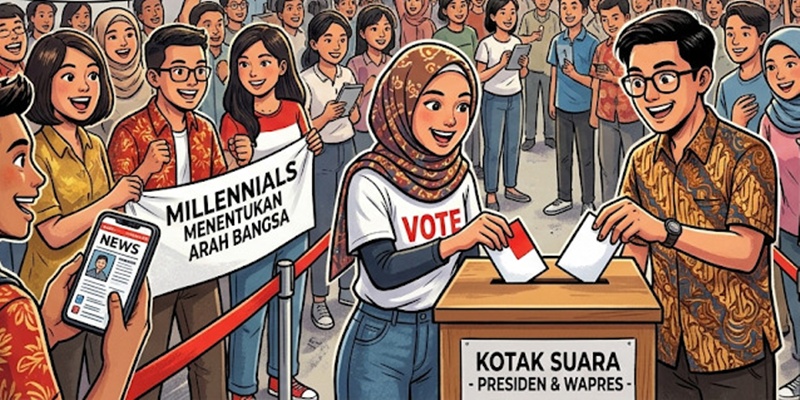
The dominance of millennials is a critical factor for political strategists. With over 32% of the voter base, millennials hold the "swing vote" capacity. They occupy a unique position as the bridge between the older, more traditional Baby Boomers and the burgeoning, tech-savvy Gen Z. This position as a "generational stabilizer" makes them the primary targets for political messaging, policy platforms, and campaign outreach strategies.
4. Official Responses and Expert Analysis
Betty Epsilon Idroos, the Head of the Data and Information Division of the KPU, emphasized that the data is not merely a statistical achievement but a vital tool for ensuring that every eligible Indonesian is represented. "The dominance of the millennial generation is a clear indicator that the political landscape of 2029 will be shaped by the values, concerns, and aspirations of this cohort," Idroos noted during the press conference.
The sentiment was echoed by experts in the field of political law. Muhammad Haris Zulkarnain, Executive Director of the Laboratory of Political Law (Labpolhum) at the MHZ Centre, lauded the findings. Speaking on July 22, 2026, in Jakarta, Zulkarnain highlighted that the demographic shift is an opportunity that the nation must seize rather than fear.
"The millennial generation possesses the capability to participate in the 2029 elections not just as voters, but as participants, election observers, and stakeholders," Zulkarnain stated. He argued that the era of political apathy must come to an end, as the decisions made at the ballot box in 2029 will determine the socioeconomic fate of the nation for decades to come.
5. Implications: A Call to Action for Millennials
The rise of the millennial and Gen Z voter blocks necessitates a total transformation in how Indonesian political parties operate. According to Zulkarnain, the traditional party structure—often dominated by older elites—must evolve.
The Need for Structural Inclusion
"Political parties at both the national and regional levels must open their doors wide to the millennial generation," Zulkarnain urged. "They should not just be relegated to youth wings or grassroots activism; they deserve positions in party structures and strategic leadership roles. Millennials bring a level of creativity and relevance that is essential for modern party management."
A Multi-Faceted Role for Youth
The implications for the younger generation are clear: they must be proactive. Zulkarnain outlined several ways millennials can exert influence:
- Community Education: Acting as agents of change by educating their peers on the importance of critical voting.
- Critical Oversight: Being highly selective and critical in choosing leaders—from local mayors to presidential candidates—based on policy records rather than rhetoric.
- Active Participation: Engaging directly as election organizers or independent observers to ensure the integrity of the democratic process.
- Policy Advocacy: Using digital platforms to scrutinize government policies and demand accountability.
Bridging the Gap
By positioning themselves as the "toughest generation," millennials are tasked with the difficult job of reconciling the views of the Boomers and Gen Z. Their role as a bridge is crucial for political stability. If they successfully navigate this, they can ensure that the 2029 elections produce a government that is both experienced and innovative.

6. The Road Ahead: Challenges and Opportunities
While the high voter registration numbers are a positive sign for Indonesia’s democracy, the real challenge lies in conversion—getting these registered voters to the polling stations in 2029.
The KPU faces the daunting task of maintaining accurate data in a country characterized by high migration and urbanization. Furthermore, the political parties face the challenge of communication. If parties continue to utilize outdated campaign methods, they risk alienating the 32.13% of voters who are looking for transparency, digital integration, and tangible results.
The Digital Frontier
With the prevalence of social media and digital information, the 2029 election will likely be the most technologically influenced in Indonesian history. The KPU’s data shows that the majority of voters are now accustomed to digital services, suggesting that the upcoming election should focus on digital literacy and protecting the electoral process from misinformation.
Conclusion
The 2026 update of the voter registry is a defining moment. It confirms that the future of Indonesia’s governance rests in the hands of a younger, more dynamic electorate. As the nation prepares for the 2029 cycle, the call for inclusion, critical thinking, and active participation has never been louder. Whether the political establishment adapts to this reality or remains stagnant will be the defining story of the next three years. For now, the numbers speak for themselves: the era of the millennial leader has arrived, and the ballot box is waiting.
For more updates on the 2029 election cycle and the latest developments in Indonesian politics, stay tuned to our continued coverage.