Indonesia Urges Global Governance Reform at 18th BRICS Summit, Emphasizing Developing Nations’ Agency
JAKARTA — Amid mounting global economic fragmentation, escalating trade uncertainties, and persistent disruptions in international supply chains, Indonesia has issued a strong and decisive call for developing nations to move beyond passive compliance and actively shape the architecture of international governance.
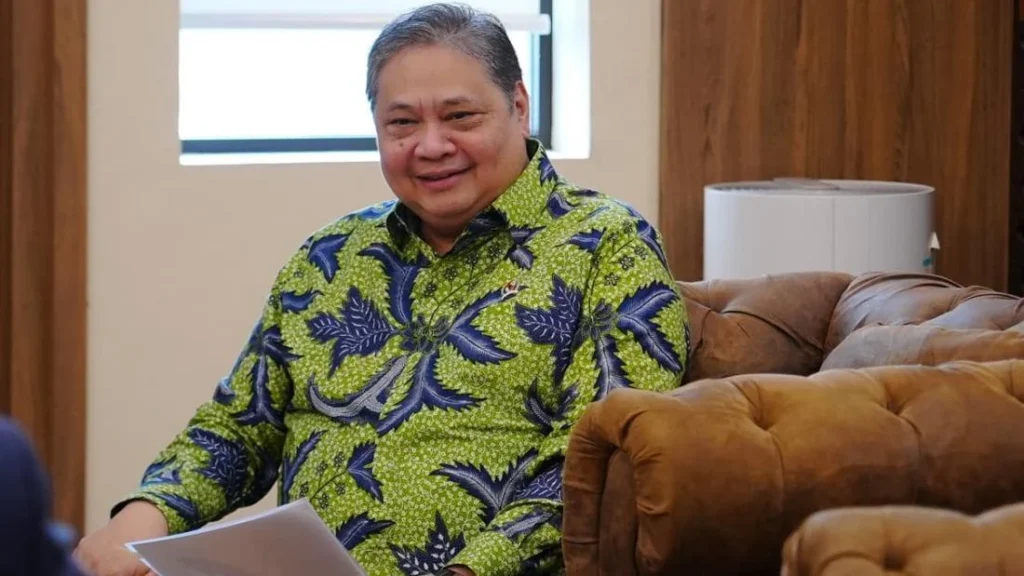
Speaking on the sidelines of the 18th BRICS Summit at the prestigious Bharat Mandapam in New Delhi, India, Coordinating Minister for Economic Affairs Airlangga Hartarto stressed that emerging economies must no longer merely act as rule-takers. Instead, they must secure their rightful place as core rule-makers in the global multilateral system.
Minister Airlangga is currently in India accompanying Indonesian President Prabowo Subianto for the high-level international gathering, which commenced on Saturday, September 12, 2026. The summit has drawn global attention as a pivotal platform for emerging economies to address deep-seated systemic challenges, economic inequities, and shifting geopolitical realities.
Main Facts: The Core Message from New Delhi
The central thesis of Indonesia’s diplomatic and economic stance at the 18th BRICS Summit centers on inclusive multilateralism and the urgent necessity of reforming global governance institutions.
- Active Participation vs. Passive Compliance: Minister Airlangga articulated a clear ultimatum for the Global South: actively engage in the negotiation and formulation of global rules, or inevitably face an international order dictated entirely by external powers.
- The Multilateral Imperative: Indonesia maintains that the current multilateral framework requires profound structural reform to effectively address modern economic fragmentation, trade protectionism, and fragile global supply chains.
- Core Principles: Jakarta continues to advocate for an international trade system that is open, inclusive, transparent, rules-based, and adequately accommodating of the developmental aspirations of emerging and developing nations.
- Strategic Alignment at BRICS: President Prabowo Subianto’s delegation is actively participating in broad-ranging discussions encompassing institutional frameworks, international finance, peace and security, energy transitions, food security, digitalization, and climate change.
"If we are not part of the negotiation process, those rules will ultimately be formulated and imposed upon us. Therefore, Indonesia must continue to take an active role in shaping a global governance structure that is more inclusive, representative, and just," Minister Airlangga stated in an official release on Sunday, September 13, 2026.
Chronology of Events: Day One at the 18th BRICS Summit
The diplomatic engagement in New Delhi unfolded through a carefully orchestrated series of high-level plenaries, bilateral meetings, and strategic consultations.
Saturday, September 12, 2026: Day One Proceedings
- Arrival and Delegation Welcoming: President Prabowo Subianto, accompanied by Coordinating Minister Airlangga Hartarto and a high-ranking Indonesian delegation, arrived at the Bharat Mandapam convention center in New Delhi. The leaders were received by Indian official hosts as part of the opening ceremonies for the 18th BRICS Summit.
- Opening Plenary Sessions: The first day kicked off with formal addresses by summit leaders, focusing heavily on the changing contours of international relations, plurilateral cooperation, and the strategic expansion and institutional strengthening of the BRICS bloc.
- Substantive Working Groups: Parallel working sessions convened to debate critical international concerns. Discussions spanned international financial architecture, trade resilience, geopolitical stability, and the pressing need to reform outdated multilateral institutions such as the United Nations, the World Trade Organization (WTO), and global financial watchdogs.
- ASEAN as a Regional Blueprint: During discussions on regional resilience, the Indonesian delegation highlighted the enduring success of the Association of Southeast Asian Nations (ASEAN). Indonesia underscored how regional integration, institutional dialogue, and proactive diplomacy have insulated Southeast Asia from severe geopolitical shocks while driving consistent regional growth.
Sunday, September 13, 2026: Strategic Synthesis and Policy Rollout
- Consolidation of Economic Agendas: Minister Airlangga released an exhaustive policy statement framing Indonesia’s strategic objectives at the summit, particularly concerning international finance, supply chain resilience, and trade mechanisms.
- Advancement of Local Currency Settlement (LCS): Building upon prior regional initiatives, discussions among emerging economies intensified regarding the expansion of Local Currency Settlement mechanisms to mitigate reliance on dominant global reserve currencies and insulate domestic markets from foreign exchange volatility.
Supporting Data & Context: Navigating Global Fragmentation
To fully appreciate the gravity of Indonesia’s statements at the BRICS Summit, it is vital to examine the current macroeconomic and geopolitical landscape. The global economy in 2026 remains deeply scarred by compounding crises from the early decade, including post-pandemic supply chain restructuring, prolonged geopolitical conflicts, and an escalation of tariff and non-tariff barriers among major economic superpowers.
The Rise of Economic Fragmentation
According to reports from international financial institutions, global trade fragmentation—often referred to as "slowbalization" or economic decoupling—poses a severe threat to developing nations. When advanced economies enact unilateral industrial policies, friend-shoring, and restrictive subsidies, emerging markets frequently bear the collateral damage through restricted market access, capital flight, and volatile commodity prices.
Indonesia’s Economic Resilience and Trade Position
As Southeast Asia’s largest economy, Indonesia has maintained steady GDP growth hovering around 5%, anchored by robust domestic consumption, strategic downstreaming policies (hilirisasi), and diversified international trade partnerships.
- Trade Openness: Indonesia’s total foreign trade remains a critical engine of its national development plan, making Jakarta inherently vulnerable to shifts in WTO rules and bilateral trade disputes.
- ASEAN Integration Model: With a combined GDP exceeding $3.8 trillion and a population of over 680 million, ASEAN represents a buffer against global instability. Indonesia leverages its leadership within ASEAN to advocate for "ASEAN Centrality," ensuring that regional stability is maintained independently of great-power rivalries.
- BRICS Engagement Strategy: While Indonesia evaluates deeper engagement with BRICS—which has expanded to include major economic powerhouses across Asia, Africa, and Latin America—Jakarta maintains a strict "free and active" (sakti) foreign policy doctrine. Indonesia engages pragmatically with all major global groupings without binding itself to any single geopolitical bloc.
Official Responses and Diplomatic Reactions
The Indonesian delegation’s active footprint in New Delhi has generated significant commentary among international observers, economic analysts, and domestic policymakers.
The Government Perspective: Agency and Inclusivity
President Prabowo’s administration has consistently signaled a pragmatic, muscular foreign policy designed to maximize Indonesia’s national interests on the world stage. Minister Airlangga’s remarks reinforce the administration’s core philosophy: Indonesia is too large, economically significant, and strategically positioned to remain on the sidelines of history.
"Developing nations account for the vast majority of the global population and drive a significant share of contemporary economic growth. It is an unsustainable paradox that the rules governing international trade, finance, and security continue to be written primarily by a select group of traditional Western powers," noted a senior foreign policy analyst based in Jakarta.
International Reception within BRICS
Emerging economies gathered at the Bharat Mandapam largely welcomed Indonesia’s emphasis on institutional reform. Nations within the BRICS framework—which has increasingly positioned itself as a champion of the Global South—frequently critique existing international financial institutions (such as the International Monetary Fund and the World Bank) for under-representing developing economies in their voting shares and governance structures.
Discussions during the summit specifically targeted:
- Financial Architecture: Expanding the capabilities of the New Development Bank (NDB) to provide alternative financing options free from traditional conditionalities.
- Trade Settlement: Accelerating the adoption of bilateral trade conducted in local currencies to reduce transaction costs and mitigate vulnerability to global monetary tightening cycles.
- Supply Chain Security: Developing robust intra-bloc supply chains for critical minerals, green technologies, and agricultural commodities.
Implications: What This Means for Indonesia and the Global Order
Indonesia’s assertive posture at the 18th BRICS Summit carries profound long-term implications for both domestic development and international diplomacy.
1. Reshaping International Trade and Financial Security
By championing mechanisms such as Local Currency Settlement (LCS) and inclusive trade rules, Indonesia is actively working to insulate its national economy from external currency shocks. The expansion of LCS frameworks—already successfully piloted between Indonesia and several regional partners like Thailand, Malaysia, Japan, and China—reduces dependence on the US Dollar and deepens financial resilience.
2. Elevating the Voice of the Global South
Indonesia’s insistence that developing nations must sit at the negotiating table transforms its diplomatic posture from a regional leader to a global champion of equity. By drawing parallels with ASEAN’s success, Indonesia demonstrates that regional cohesion and constructive multilateral dialogue can successfully counterbalance major power unilateralism.
3. Strategic Autonomy in a Bipolar World
As strategic competition intensifies between traditional Western alliances and emerging alternative blocs (such as BRICS), Indonesia’s deliberate refusal to pick sides—while simultaneously engaging deeply with all stakeholders—reinforces its traditional "free and active" foreign policy. This approach allows Jakarta to extract maximum economic benefit, secure technology transfers, and attract foreign direct investment from all directions without compromising its sovereign independence.
4. Domestic Policy Alignment
For domestic industries, the government’s push for resilient global supply chains and robust trade rules translates into enhanced support for national downstreaming policies. Ensuring that international rules do not penalize developing nations for processing their own raw materials is a critical economic priority for Jakarta, directly impacting national industrialization goals and long-term job creation.
Conclusion
As the 18th BRICS Summit concludes its deliberations in New Delhi, Indonesia’s message resonates clearly across the international community: the rules governing the global economy must evolve to reflect contemporary realities. Through the forceful advocacy of leaders like President Prabowo Subianto and Coordinating Minister Airlangga Hartarto, Indonesia has firmly established itself not just as an observer of global change, but as a vital architect of a more just, representative, and inclusive international order.
Moving forward, Jakarta’s ability to bridge the gap between traditional multilateral institutions and emerging economic coalitions will be a decisive factor in shaping a stable and prosperous global future for the Global South.