From Humble Roots to Academic Excellence: The Inspiring Journey of Aulia Nurul Hikmah at IPB University
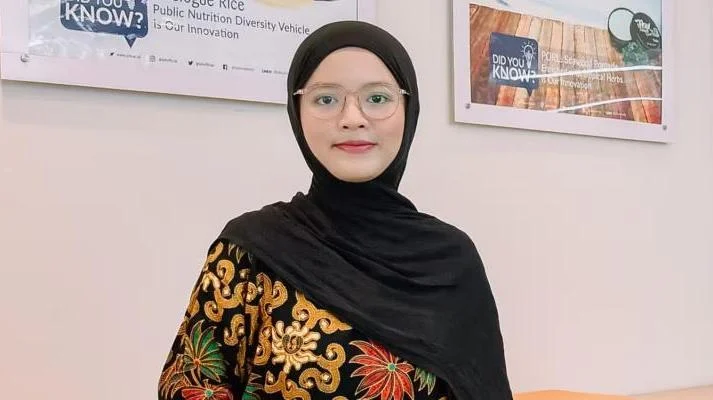
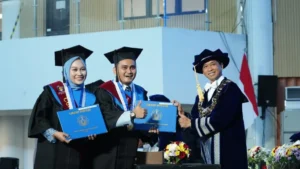
JAKARTA – In an academic landscape often defined by privilege and accessibility, the story of Aulia Nurul Hikmah serves as a poignant reminder that intellectual rigor and determination remain the ultimate equalizers. During the eighth graduation ceremony of the 2025/2026 academic year, Aulia Nurul Hikmah was formally recognized as the valedictorian of the Faculty of Forestry and Environment at IPB University, Indonesia’s premier institution for agricultural and environmental sciences.
Achieving a stellar Grade Point Average (GPA) of 3.87, Aulia’s journey is not merely a tale of academic success but a narrative of resilience, familial sacrifice, and a deep-seated commitment to the ecological preservation of the planet.
The Main Facts: A Triumph Over Adversity
Aulia Nurul Hikmah’s recognition as the best graduate of her faculty is the culmination of four years of relentless pursuit of knowledge. Hailing from a modest background, she is the daughter of a manual laborer and a tire repairman—a profession that requires physical toil under the harsh Jakarta sun.
For many, the financial burden of pursuing a degree at a top-tier university like IPB is an insurmountable barrier. However, for Aulia, economic constraints became the fuel for her ambition. Her achievement is a testament to the fact that when talent meets opportunity, socioeconomic status need not dictate one’s future. As she stood on the graduation stage, she represented the thousands of students across Indonesia who navigate the complexities of higher education while balancing the weight of familial expectations and financial instability.
Chronology: The Path to Silviculture
Aulia’s academic trajectory was not accidental; it was a deliberate choice driven by a profound fascination with the natural world. Long before she stepped foot on the IPB campus, Aulia nurtured an interest in life sciences and ecology. She viewed the forest not just as a collection of trees, but as the heartbeat of the Earth.
Choosing the Path Less Traveled
Upon enrolling at IPB University, Aulia opted for the Silviculture study program. In the context of modern environmental education, Silviculture—the art and science of controlling the establishment, growth, composition, health, and quality of forests—is a discipline that demands both scientific precision and a visionary outlook.
In her reflections, Aulia noted that her decision was rooted in the realization that forests are the most complex and vital life-support systems on the planet. "Through this program, I was able to study the forest in its entirety: from its initial growth and maintenance to its utilization and the critical processes of rehabilitation," Aulia stated in an interview with the IPB official portal on July 21, 2026.
The Balancing Act
The journey from a freshman to the top graduate was marked by a strict regimen of discipline. Aulia spoke candidly about the necessity of time management. Navigating the rigorous demands of an forestry degree—which includes extensive fieldwork, laboratory research, and complex ecological modeling—while managing the stresses of a limited family income required a level of adaptability that most students never have to encounter.
She attributes her success to the "flexibility" she developed over the years. "The challenges I faced reinforced my ability to think critically and adapt to ever-changing circumstances," she explained.
Supporting Data: Why Silviculture Matters Today
The relevance of Aulia’s academic focus cannot be overstated. As global discourse shifts toward climate change mitigation and biodiversity loss, experts in Silviculture are becoming increasingly vital to national and international interests.
Addressing Global Crises
Aulia’s research and academic interests center on the pressing issues of forest degradation and deforestation. With Indonesia possessing one of the world’s largest tropical rainforests, the stakes for graduates in this field are high. According to recent environmental data, the rate of forest loss in Southeast Asia continues to pose a threat to regional climate stability.
Aulia views her degree as a professional toolkit. She intends to act as an agent of preservation, applying the principles of sustainable forestry to reverse the trends of degradation. "Silviculture is not just about planting trees," she noted. "It is a field that offers highly competitive and innovative career prospects that directly impact the future of our environment."
Academic Metrics
- GPA: 3.87 (Summa Cum Laude trajectory)
- Study Program: Silviculture
- Faculty: Faculty of Forestry and Environment
- University: IPB University
- Graduation Cycle: Phase VIII, 2025/2026
Official Responses and Institutional Pride
The faculty at IPB University has lauded Aulia’s performance, viewing her as a model for the "New Generation of Foresters." Academic advisors have pointed to her consistent attendance, her active participation in research forums, and her ability to synthesize theoretical silvicultural models with practical field observations.
Institutional representatives noted that Aulia’s story aligns with IPB’s mission to foster "Techno-Socio Entrepreneurship," where graduates are encouraged to use their expertise to solve real-world community problems. Her recognition as the best graduate is viewed as an institutional validation of their efforts to provide scholarships and financial aid to high-achieving students from underprivileged backgrounds.
Implications: The Future of Environmental Leadership
Aulia’s graduation is not the end of her journey; it is the beginning of a professional chapter dedicated to environmental advocacy and technical innovation.
Bridging Science and Society
The primary implication of Aulia’s academic success is the potential for practical, science-backed environmental policy. In a country where the intersection of industry and nature is often fraught with conflict, professionals like Aulia are needed to act as mediators and architects of sustainable development. She has expressed a strong desire to continue her learning process, aiming to transform her academic insights into tangible solutions for local communities living on the fringes of forest regions.
A Beacon for Future Generations
Perhaps the most significant implication of Aulia’s story is its social impact. In a society where many talented youth from low-income families might feel discouraged from pursuing higher education due to fear of debt or failure, Aulia serves as a beacon of hope. Her story suggests that:
- Resilience is a skill: The ability to endure hardship translates into the ability to navigate complex professional environments.
- Specialization is key: By choosing a niche yet vital field like Silviculture, students can carve out a career path that is both personally fulfilling and socially responsible.
- Institutional support works: When universities provide the right environment, students from diverse economic backgrounds can excel.
Conclusion: A Legacy in the Making
As Aulia Nurul Hikmah looks toward the future, the global environmental community awaits the contributions of young, dedicated professionals who understand that our survival is inextricably linked to the health of our forests.
From the humble shop of a tire repairman to the hallowed halls of IPB University, Aulia has demonstrated that the most resilient trees are those that grow through the toughest soil. Her transition into the workforce is expected to be marked by the same dedication that earned her the title of valedictorian.
For the students currently navigating their own paths of struggle, Aulia’s message is clear: the challenges of today are the foundation of tomorrow. As she prepares to apply her knowledge to the rehabilitation of Indonesia’s forests, she carries with her not just a diploma, but the hopes of a generation that views the environment not as a resource to be depleted, but as a legacy to be protected.
The story of Aulia Nurul Hikmah is not just a news headline; it is a blueprint for excellence in the face of adversity. It is a reminder that while the roots of our journey may be humble, the branches of our impact can reach as high as we are willing to climb.