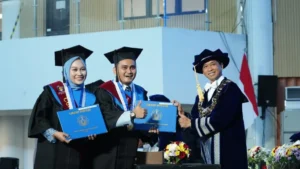
Empowering Jakarta’s Youth: DKI Provincial Government Partners with ITB to Provide Targeted Scholarships
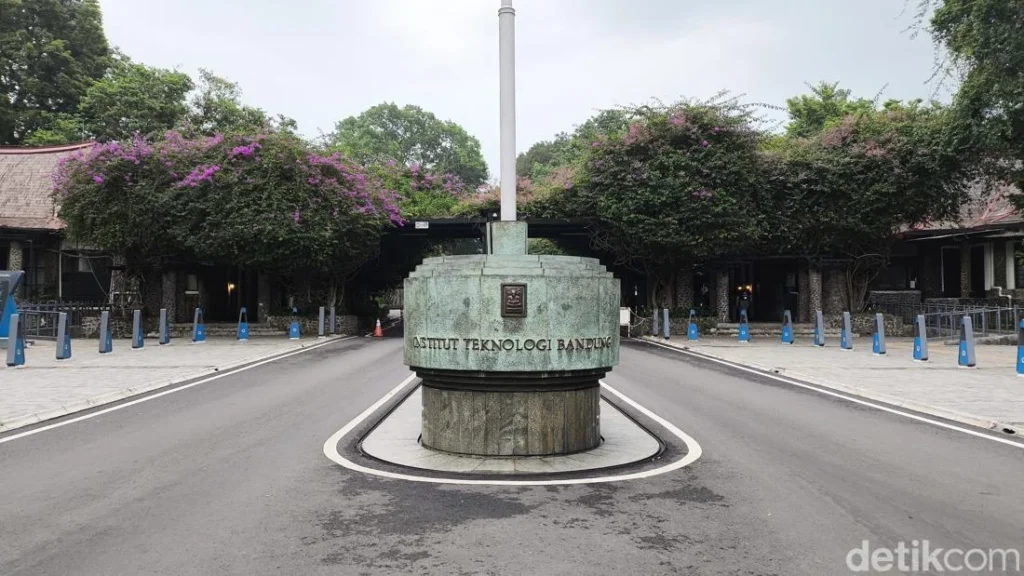
JAKARTA – In a significant move to bridge the socioeconomic gap in higher education, the Provincial Government of Jakarta has officially launched a strategic scholarship initiative aimed at supporting students from the capital city who are currently pursuing their studies at the prestigious Bandung Institute of Technology (ITB). This partnership, formalized on Friday, July 17, 2026, marks a pivotal commitment by the local administration to ensure that financial limitations do not act as a barrier to academic excellence.
The program, which currently targets 85 students from underprivileged backgrounds, reflects a broader mission to nurture the next generation of Indonesian innovators and leaders. By alleviating the burden of tuition fees, the Jakarta government hopes to enable these high-achieving students to focus entirely on their rigorous engineering, science, and management curricula.
The Formalization of the Partnership: A Collaborative Effort
The formal handover of the list of scholarship recipients took place at the Jakarta City Hall, where the Rector of ITB, Prof. Dr. Ir. Tatacipta Dirgantara, personally presented the names of the 85 selected students to the Governor of Jakarta, Pramono Anung.
This meeting served as more than just a procedural handover; it was a reaffirmation of the synergy between top-tier academic institutions and the regional government. During the event, Governor Pramono Anung emphasized that the provincial government stands ready to support the scholarship program, ensuring that the disbursement of funds adheres to all established regulatory frameworks and transparent mechanisms.
"Our goal is to ensure that every talented student residing in Jakarta, regardless of their family’s financial status, has the opportunity to walk through the gates of Indonesia’s premier universities," Governor Anung stated. "This collaboration with ITB is a testament to our ongoing commitment to human capital development."
Chronology of Support: A Persistent Commitment
The initiative is not an isolated event but rather a continuation of the Jakarta Provincial Government’s long-standing policy of investing in youth education. For several years, the administration has maintained a robust scholarship portfolio, assisting thousands of students holding Jakarta ID cards (KTP) who have successfully navigated the competitive admissions process at various public and private universities across the Indonesian archipelago.
The partnership with ITB is specifically designed to address the unique costs associated with technical education. By identifying students from low-income families early in their academic journey, the government and the university aim to prevent dropout rates caused by economic volatility, ensuring a higher completion rate for students in STEM (Science, Technology, Engineering, and Mathematics) fields.
Understanding the Financial Landscape: The Cost of an ITB Education
For many families, the prospect of an ITB education is daunting due to the complexity of the tuition structure, known as the Uang Kuliah Tunggal (UKT). The UKT is a single-fee system that categorizes payments based on the financial capability of the student’s family, ensuring that the cost of education is somewhat equitable.
However, even with these systems in place, the financial requirement for elite institutions remains high for the average household. Understanding the financial reality is essential to appreciating the significance of the Jakarta government’s scholarship intervention.
The UKT Structure at ITB
ITB’s tuition is categorized into seven tiers (UKT 1 through UKT 7), with the tier being determined by the student’s socioeconomic profile during the admissions process.
1. School of Business and Management (SBM)
SBM remains one of the most sought-after and expensive faculties.
- UKT 7: Rp 14,500,000
- UKT 6: Rp 12,500,000
- UKT 5: Rp 10,500,000
- UKT 4: Rp 8,500,000
- UKT 3: Rp 6,500,000
- UKT 2: Rp 1,000,000
- UKT 1: Rp 500,000
2. Faculty of Mathematics and Natural Sciences (FMIPA-Mathematics)
Mathematics serves as the bedrock of engineering, and ITB maintains a tiered structure to ensure accessibility:
- UKT 7: Rp 12,250,000
- UKT 6: Rp 10,250,000
- UKT 5: Rp 8,250,000
- UKT 4: Rp 6,250,000
- UKT 3: Rp 4,250,000
- UKT 2: Rp 1,000,000
- UKT 1: Rp 500,000
3. General Faculties and Schools
This category encompasses the majority of ITB’s core disciplines, including Architecture, Civil Engineering, Mechanical Engineering, and Information Technology (FITB, FTTM, FMIPA-IPA, FSRD, FTI, FTMD, FTSL, SAPPK, SITH, SF, and STEI).
- UKT 7: Rp 12,500,000
- UKT 6: Rp 10,500,000
- UKT 5: Rp 8,500,000
- UKT 4: Rp 6,500,000
- UKT 3: Rp 4,500,000
- UKT 2: Rp 1,000,000
- UKT 1: Rp 500,000
Beyond Regional Scholarships: The KIP-Kuliah Alternative
While the Jakarta Provincial Government’s scholarship program provides a critical safety net, it exists alongside the national Kartu Indonesia Pintar Kuliah (KIP-K) program. The KIP-K is a federal government initiative that covers tuition costs and provides a living stipend for students who meet specific economic criteria.
ITB continues to integrate KIP-K students into its campus culture, allowing the brightest minds from the most remote or economically disadvantaged regions to study without the looming shadow of debt. The Jakarta government’s new scholarship acts as a complementary layer, ensuring that those who may not qualify for KIP-K—or who require supplementary aid—do not fall through the cracks.
Implications for Jakarta and the Nation
The implications of this scholarship program are profound. Firstly, it creates a "social elevator" effect. By targeting students from lower-income families and placing them in a high-caliber environment like ITB, the government is effectively disrupting the cycle of poverty. These students, upon graduation, will be equipped to enter high-growth sectors, contributing significantly to Jakarta’s economy and the national industrial landscape.
Secondly, the partnership highlights the role of regional governments in decentralizing academic excellence. Jakarta is setting a precedent for other provinces to follow: investing directly in the intellectual capital of their constituents, even when those students are studying outside of the province.
Finally, for the beneficiaries, this is a life-altering opportunity. It provides the stability required for deep academic focus. As Prof. Dr. Ir. Tatacipta Dirgantara noted during the handover, the success of these students is the success of the nation. By removing the financial barrier, the government is signaling that merit, not money, should determine a student’s future.
Conclusion: A Vision for the Future
As the 85 scholarship recipients begin their upcoming semester with the weight of tuition fees lifted from their shoulders, the impact of this policy will be felt in classrooms, laboratories, and eventually, in the workforce.
The collaboration between the Jakarta Provincial Government and ITB is a beacon of progressive governance. It serves as a reminder that the responsibility of a state is not only to maintain infrastructure but to build the human foundation upon which the future of the nation rests. With the continued support of the provincial administration, these students are now poised to become the engineers, architects, and business leaders who will shape the trajectory of Indonesia in the decades to come.
As the program moves into its implementation phase, stakeholders remain optimistic that this will serve as a model for future expansions, potentially increasing the number of beneficiaries and the scope of academic institutions involved in the coming years. For now, 85 young lives have been given the most valuable gift of all: the freedom to pursue their education to the fullest extent of their potential.