Architect of the Archipelago: Mochtar Kusumaatmadja Bestowed with National Hero Status
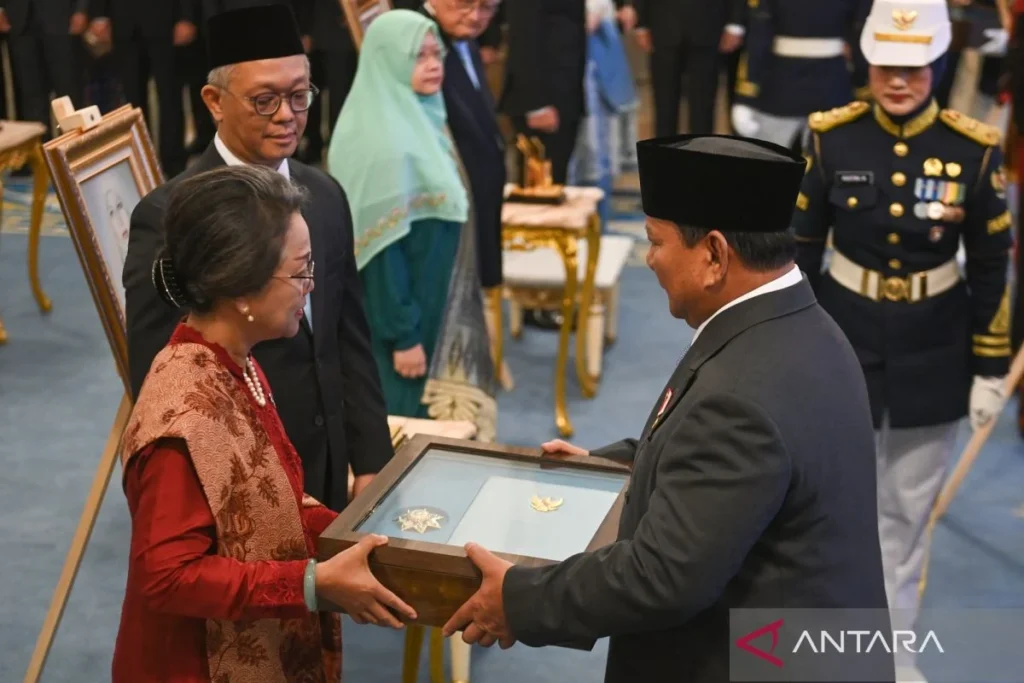
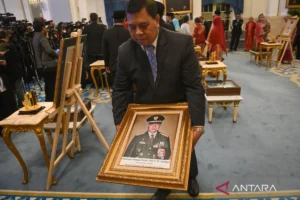
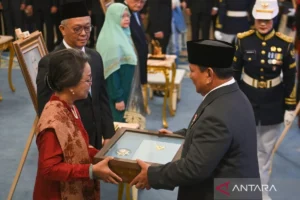
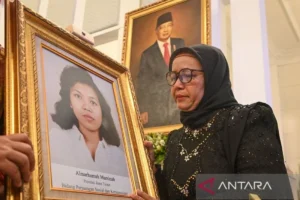
JAKARTA – In a solemn ceremony held at the State Palace on Monday, President Prabowo Subianto officially conferred the title of National Hero upon ten distinguished Indonesian figures. The induction, formalized under Presidential Decree (Keppres) Number 116/TK/2025, serves as the nation’s highest tribute to those who have contributed transformative efforts toward the sovereignty, legal foundation, and international standing of Indonesia.
Among the honorees, the late Professor Mochtar Kusumaatmadja stands as a towering figure, recognized posthumously for his monumental contributions to the fields of law and international diplomacy. As a scholar, statesman, and the man who redefined Indonesia’s maritime borders, his elevation to the status of National Hero marks the culmination of decades of advocacy by academics, diplomats, and legal experts who view him as the architect of modern Indonesian geopolitics.
The Life and Formative Years of a Legal Luminary
Born in Jakarta on April 17, 1929, Mochtar Kusumaatmadja was the product of an intellectual and cosmopolitan upbringing. His father, Taslim Kusumaatmadja, was a prominent pharmacist from Tasikmalaya, while his mother, Sulmi Soerawisastra, was a primary school teacher during the Dutch colonial era, hailing from Kuningan, West Java.
The mobility of his parents’ careers allowed young Mochtar to experience diverse cultural environments in Jakarta and Cirebon. This early exposure to the intricacies of colonial society and the burgeoning national consciousness set the stage for his academic brilliance. In 1955, he completed his Meester in de Rechten (Master of Laws) at the Faculty of Law and Social Sciences, University of Indonesia, specializing in international law. His hunger for knowledge soon took him abroad, where he earned a Master of Laws (LL.M.) from Yale University in 1956, cementing his credentials on the global stage.
A Chronology of Intellectual and Political Resilience
Mochtar’s trajectory was defined by a rare ability to bridge the gap between abstract legal theory and the pragmatic requirements of statecraft.
The Architect of the Archipelago
Upon returning to Indonesia, Mochtar was tapped by the government to operationalize the 1957 Djuanda Declaration. This declaration was a revolutionary geopolitical stance, asserting that Indonesia’s territorial waters were not limited to a three-mile radius from each island—a colonial-era standard—but encompassed the entire area between the islands. Mochtar spent the next two decades meticulously crafting the legal framework that would ultimately translate this vision into international reality.
Academic Trials and Triumphs
His academic career at Padjadjaran University (Unpad) in Bandung was equally distinguished. He served as Dean of the Faculty of Law (1960–1970) and later as Rector (1973). However, his journey was not without hardship. In the mid-1960s, his vocal criticisms of the Old Order regime led President Sukarno to revoke his doctoral degree. Undeterred, Mochtar demonstrated his resilience by pursuing further studies at Harvard and the University of Chicago between 1964 and 1966. He eventually attained his professorship at Unpad in 1970, re-establishing his intellectual authority.
The Ministerial Era
Mochtar’s transition into high-level politics began when he was appointed Minister of Justice (1974–1978). However, his most significant impact occurred during his tenure as Minister of Foreign Affairs (1978–1988). During these two decades, he became the face of Indonesian diplomacy, maneuvering through the complex Cold War landscape to secure the nation’s interests.
The UNCLOS 1982: A Legacy of Maritime Sovereignty
Perhaps the most significant achievement in Mochtar’s career—and the reason he is often called the "Father of Indonesian Maritime Law"—was his relentless advocacy for the archipelagic state concept.
Through his leadership, Indonesia successfully lobbied for the recognition of the "Archipelagic State" principle within the United Nations Convention on the Law of the Sea (UNCLOS) in 1982. This was not merely a diplomatic win; it was an existential one. It legally consolidated Indonesia’s vast maritime territory, ensuring that the waters connecting the archipelago were recognized as sovereign Indonesian territory rather than international transit lanes. This victory fundamentally altered the map of the world and the strategic security of Indonesia.
Beyond the Sea: Diplomacy and Conflict Resolution
Mochtar’s brilliance was not confined to maritime law. He was a pioneer in what he termed "Cultural Diplomacy," believing that Indonesia’s soft power—its history, art, and intellectual contributions—was just as vital as its military or economic strength in fostering international understanding.
His prowess in conflict resolution was equally profound. He played a pivotal role in the diplomatic channels that eventually led to the Paris Peace Agreement, which brought an end to the protracted conflict between Vietnam and Cambodia. His mediation efforts were instrumental in establishing stability across the Southeast Asian region during a period of extreme volatility.
Following his departure from the cabinet, he continued to serve on the global stage, including as a member of the UN International Law Commission and as Chairman of the Iraq-Kuwait Boundary Commission, further solidifying his status as a world-class legal statesman.
Official Responses and Public Recognition
The decision to name him a National Hero was met with broad consensus across the political and academic spectrum. Foreign Minister Sugiono recently emphasized that Mochtar’s contributions are "not only of historical significance but are the foundation upon which Indonesia’s modern foreign policy is built."
Legal experts have long championed his case. Throughout the 2020s, numerous symposia and academic papers argued that Mochtar’s work shifted the very face of international law, turning the tide from a Western-centric legal system to one that respects the rights of developing, archipelagic nations.
Publicly, his legacy is deeply ingrained in the Indonesian landscape. In 2009, the Law Library at Universitas Padjadjaran was named in his honor. In 2023, the iconic Pasopati Flyover in Bandung was renamed the "Mochtar Kusumaatmadja Flyover," a symbolic gesture recognizing his connection to the city where he spent much of his academic career.
Implications of the Honor: A Standard for Future Generations
The naming of Mochtar Kusumaatmadja as a National Hero serves as more than just a historical acknowledgment; it acts as a guiding principle for Indonesia’s future.
- Sovereignty in an Interconnected World: His work teaches that sovereignty is not just about physical borders but about legal recognition on the global stage. As Indonesia faces modern challenges—such as digital sovereignty and resource management—Mochtar’s strategic approach provides a blueprint for effective diplomacy.
- Institutionalizing Professionalism: By founding the law firm Mochtar, Karuwin, Komar (MKK), the first in Indonesia to integrate foreign legal expertise, he signaled that Indonesia must compete on international standards. This legacy of professional excellence continues to influence the Indonesian legal fraternity.
- The Continuity of Intellect: His life proves that intellectual integrity is a form of patriotism. Despite the revocation of his doctorate under political pressure, his commitment to his discipline eventually propelled him to the highest levels of government.
Mochtar passed away in 2021 at the age of 92 and was laid to rest at the Kalibata Heroes Cemetery. He is survived by his three children—Armida Salsiah Alisjahbana, Emir Kusumaatmadja, and Rachmat Askari Kusumaatmadja—who continue to carry the intellectual and public-service legacy of their parents.
As Indonesia enters 2025, the recognition of Mochtar Kusumaatmadja serves as a reminder that the strength of a nation lies in the minds of those who defend it. His transition from a student in a colonial classroom to the architect of a sovereign archipelago remains one of the most compelling narratives in Indonesian history, providing a beacon of light for future diplomats, lawyers, and leaders.