A Legacy Reclaimed: Marsinah Officially Named National Hero of Indonesia
By Editorial Staff
Jakarta, Indonesia
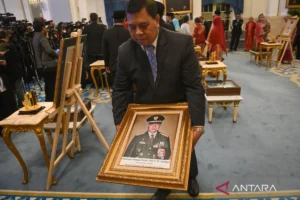
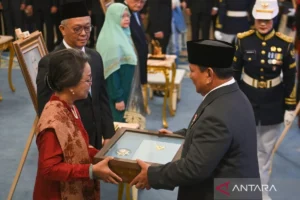
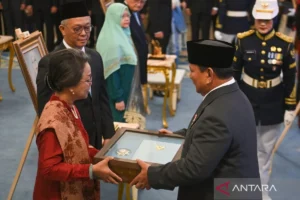
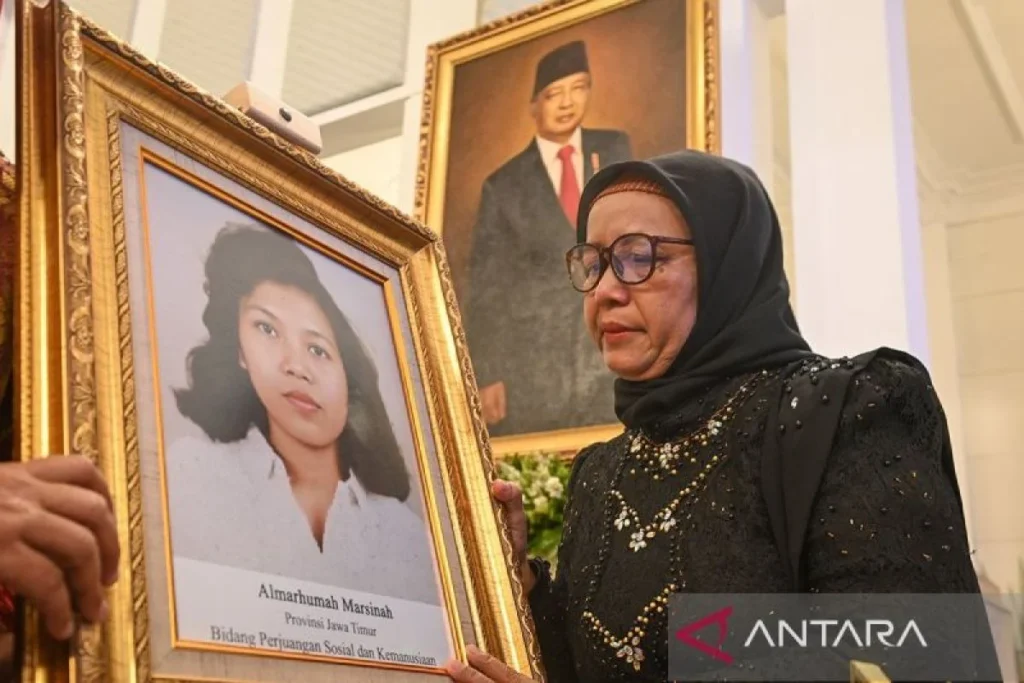
In a historic move that resonates through the corridors of Indonesia’s labor movement, President Prabowo Subianto officially conferred the title of National Hero (Pahlawan Nasional) upon Marsinah, the courageous labor activist whose life and tragic death became a rallying cry for justice during the late 20th century. The announcement was made during the solemn commemoration of National Heroes’ Day on Monday, November 10, 2025, at the State Palace in Jakarta.
The recognition, formalized under Presidential Decree (Keppres) No. 116/TK/2025, serves as a watershed moment for the nation’s reckoning with its past. Marsinah is one of ten distinguished figures honored this year, but her inclusion is particularly poignant, representing an official state acknowledgement of the often-overlooked struggles of the working class against systemic oppression.
The Symbol of Resistance: Why Marsinah Matters
Marsinah was not a politician, nor a military commander. She was a factory worker—a young woman who dared to stand up against the formidable machinery of the New Order regime. In the early 1990s, when dissent was dangerous and labor organizing was often met with intimidation, Marsinah emerged as a beacon of integrity.
Her struggle was not merely for a few extra rupiah; it was a battle for human dignity. By choosing to confront the power imbalance between industrial capital and the labor force, she became an icon of defiance. Her legacy is one of unwavering courage in the face of autocracy, a narrative that has finally been woven into the tapestry of Indonesia’s national history.
Chronology of a Fighter: From Nganjuk to the National Stage
Early Life and Formative Years
Born on April 10, 1969, in the village of Nglundo, Nganjuk, East Java, Marsinah was raised in the crucible of poverty. The daughter of Mastin and Sumiani, she was the second of three children. Following the death of her mother, she was raised by her grandmother and aunt, an upbringing that instilled in her a profound sense of independence.
Despite her humble beginnings, Marsinah possessed a voracious appetite for growth. She completed her primary education at SD Negeri Karangasem 189 and attended SMP Negeri 5 Nganjuk. For a time, she pursued studies at a Muhammadiyah Islamic boarding school, where she developed her rhetorical skills and critical thinking. While financial constraints prevented her from pursuing a university degree, she never ceased learning, eventually moving to Surabaya in 1989 to seek better opportunities.
The Industrial Frontline
After a brief stint at a plastics factory, Marsinah joined PT Catur Putra Surya (CPS), a watch manufacturing facility in Porong, Sidoarjo, in 1990. It was here that she witnessed the stark reality of the Indonesian labor force: stagnant wages, forced overtime, and the silencing of worker voices.
The catalyst for her activism arrived in 1993, when East Java Governor Soelarso issued Circular No. 50/Th.1992, mandating a 20 percent increase in the minimum wage. When PT CPS management refused to comply, Marsinah became the de facto leader of the resistance. On May 3–4, 1993, she led a massive strike, successfully forcing the company to concede to 11 of the 12 demands presented by the workers.
The Price of Defiance
The victory was short-lived. On May 5, 1993, thirteen workers were summoned to the Sidoarjo Military District Command (Kodim) and coerced into signing resignation letters. When Marsinah discovered this injustice, she did not flee. Instead, she courageously visited the Kodim office to demand accountability and clarity for her colleagues.
She disappeared shortly thereafter. On May 8, 1993, her lifeless body was discovered in a shack in Jegong village, Wilangan, Nganjuk. Her body bore the brutal marks of torture, a chilling message from those who sought to maintain the status quo through violence.
The Investigation and the Unresolved Mystery
The death of Marsinah triggered a national outcry, evolving into a defining case of human rights abuse during the late New Order era. The subsequent investigation was marred by irregularities, political interference, and shifting narratives. While several suspects were detained, the judicial proceedings were widely criticized by human rights observers as a "theatre of justice," failing to identify the true intellectual perpetrators behind her abduction and murder.
For over three decades, the case remained an open wound in the collective memory of the Indonesian labor movement. While the killers were never fully brought to justice, the narrative of Marsinah shifted from a "victim of circumstance" to a "martyr of labor rights."
Official Responses and Civil Society Perspectives
The conferral of the National Hero title has been met with widespread acclaim from labor unions and human rights organizations.
The Confederation of All Indonesian Trade Unions (KSPI) praised the decision, stating that the move represents a long-awaited acknowledgment by the state of the sacrifices made by the labor force. "Marsinah is the face of the Indonesian worker. By naming her a National Hero, the state finally recognizes that labor rights are an essential component of the nation’s independence," a spokesperson noted.
In a symbolic gesture of reconciliation, the Ministry of Law and Human Rights has also dedicated a specific space for human rights services in her name, ensuring that her legacy is not just a chapter in a textbook but a living resource for those seeking justice.
Implications: A New Era for Labor Recognition
Redefining Heroism
By elevating Marsinah to the status of a National Hero, the Indonesian government under President Prabowo has signaled a departure from traditional, state-centric definitions of heroism. This inclusion acknowledges that those who fight for social justice, worker welfare, and human rights—even against the state itself—are integral to the nation’s identity.
Impact on Labor Policy
The recognition is expected to embolden modern labor movements. It serves as a reminder that the state is now viewing labor not as a source of industrial friction, but as a pillar of economic and social progress. It places a moral imperative on the current administration to ensure that the rights for which Marsinah died are protected by robust legal frameworks.
The Historical Consensus
For families of other victims of the 1990s, the honor bestowed upon Marsinah offers a glimmer of hope for historical closure. It suggests that the state is willing to confront the darker chapters of its history, validating the struggles of those who were previously marginalized or silenced.
Conclusion: The Unfading Spirit
Marsinah’s journey from a village girl in Nganjuk to a National Hero of Indonesia is a testament to the power of the individual voice. Her life was cut short, but her spirit has proven indestructible.
As President Prabowo stated during the ceremony, "We honor those who paved the way for our current freedoms. Marsinah’s courage reminds us that the fight for justice is never in vain."
Today, the name Marsinah is no longer associated solely with the tragedy of her death, but with the strength of her convictions. She remains a guiding light for every worker in Indonesia who stands up against inequality, proving that while a life may be finite, the pursuit of justice is eternal.
As Indonesia moves forward into a new decade, the inclusion of Marsinah in the pantheon of national heroes serves as a foundational commitment: that the dignity of the worker is the dignity of the nation.
Quick Facts: Marsinah’s Legacy
- Birth: April 10, 1969, Nganjuk, East Java.
- Key Achievement: Led a successful 1993 strike at PT Catur Putra Surya, securing wage increases for 13 workers.
- National Hero Status: Awarded posthumously on November 10, 2025, via Keppres No. 116/TK/2025.
- Significance: Symbolizes the fight against labor exploitation and remains an icon for human rights in Indonesia.