JAKARTA — As educational institutions prepare for the upcoming mid-semester assessments (Penilaian Tengah Semester or PTS) for the odd semester of the 2026 academic year, educators and academic platforms are intensifying efforts to support high school students. Focusing on Grade 12 students enrolled in the Social Sciences (IPS) track, recent curriculum frameworks emphasize cross-disciplinary competency, bridging complex theoretical concepts with practical analytical skills across core subjects: Mathematics, Economics, Geography, and History.
Main Facts: The Evolution of Grade 12 IPS Assessments
The mid-term examination period serves as a critical evaluation milestone for twelfth-grade students navigating the final stages of secondary education.
Scope of Assessment: The curriculum evaluates both foundational comprehension and higher-order thinking skills (HOTS) across qualitative and quantitative subjects.
Core Disciplines: Mathematics (Spatial Dimensions), Economics (Accounting Systems and International Trade), Geography (Regional Development, Spatial Planning, and Geographic Information Systems), and History (National Disintegration Threats and Post-Independence Diplomacy).
Objective: To prepare students not only for localized school evaluations but also for standardized national benchmarks and tertiary education entrance examinations.
Chronology of Assessment Preparation and Academic Implementation
The structure of academic preparation for the odd semester typically follows a standardized educational timeline:
Early Semester Foundation (July – August): Educators introduce complex core concepts, such as three-dimensional geometry in mathematics, the accounting equation and fundamental ledgers in economics, spatial interaction theories in geography, and early post-independence security challenges in history.
Mid-Term Formative Evaluation (September – October): Schools administer formative assessments (PTS) to gauge student comprehension, identify learning gaps, and refine teaching methodologies.
Drill and Mastery Phase (October Onward): Utilizing digital learning ecosystems and intensive problem-solving modules (drill tests), students target specific cognitive levels—ranging from Lower-Order Thinking Skills (LOTS) to Higher-Order Thinking Skills (HOTS).
Supporting Data and Subject Breakdown
An analysis of sample high-stakes test items reveals the rigorous nature of the Grade 12 IPS curriculum. Below is a breakdown of key academic competencies evaluated during the assessment period.
1. Mathematics: Spatial Dimensions (Dimensi Tiga)
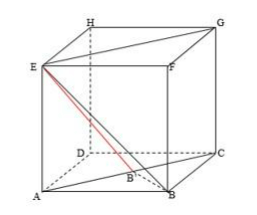
Spatial reasoning forms a core component of advanced high school mathematics. Students are tested on their ability to calculate projections, distances, and angles within geometric solids such as cubes and tetrahedrons.
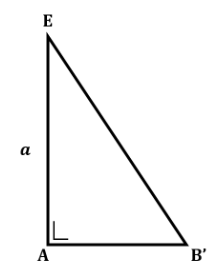
Key Concept: Projecting a point or line segment onto a specific plane using properties of right-angled triangles and the Pythagorean theorem.
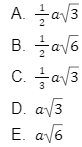
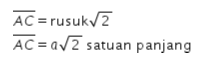
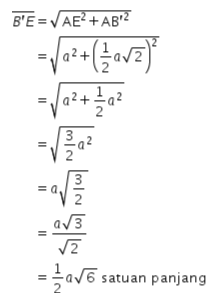
Example Application: Determining the projection of a line segment $BE$ onto plane $ACGE$ in a cube $ABCD.EFGH$, requiring precise coordinate or geometric proofs resulting in fractional radical lengths (e.g., $frac12asqrt6$).
2. Economics: Accounting Information Systems & International Trade
Accounting Frameworks: Mastery of the basic accounting equation ($textAssets = textLiabilities + textEquity$), analysis of business transactions, and normal balance rules (debit and credit mechanisms for assets, liabilities, equity, revenues, and expenses).
International Trade: Application of absolute advantage and comparative advantage theories. Calculations of exchange rates and export gains between nations (e.g., utilizing absolute advantage metrics to determine trade efficiency between countries like Indonesia and Malaysia).
3. Geography: Regional Planning, GIS, and Spatial Interaction
Geography bridges physical science and human sociology, focusing on sustainable urban development and spatial analysis.
Spatial Structures: Applying theories such as Burgess’s Concentric Zone Theory and regional development hierarchies (e.g., identifying primary growth poles within designated national development regions like Development Region IV, centered around Jakarta).
Gravitational Models: Utilizing the Breaking Point Theory (Teori Titik Henti) to determine optimal locations for public facilities between two cities based on population size and distance.
Remote Sensing: Interpreting aerial photographs and satellite imagery using elements such as tone, texture, pattern, and association to distinguish infrastructure features.
4. History: Post-Independence Threats and Diplomacy
History assessments challenge students to analyze political sovereignty, domestic rebellions, and international relations during Indonesia’s formative years.
Disintegration Threats: Evaluating internal conflicts, such as the proclamation of the Republic of South Maluku (RMS) by Christian Robert Soumokil in 1950, and counter-insurgency tactics like the "fence of legs" (pagar betis) operation against the DI/TII movement.
International Recognition: Analyzing diplomatic efforts, including the role of Middle Eastern solidarity (e.g., Egyptian labor boycotts of Dutch vessels in 1947) and the contributions of diplomats like L.N. Palar at the United Nations.
Official Responses and Educational Frameworks
In response to the increasing demand for analytical proficiency, educational authorities and supplemental learning platforms have restructured preparation tools.
"The modern assessment paradigm moves away from rote memorization," notes an academic coordinator specializing in high school curricula. "Students must demonstrate synthesis—connecting economic transaction logic with real-world accounting entries, or spatial theories with practical urban planning challenges."
Institutions are increasingly integrating adaptive digital platforms, diagnostic evaluations, and structured private tutoring frameworks to ensure equitable access to high-quality academic preparation. These interventions aim to address learning disparities across urban and developing regions.
Implications for Students and Academic Outlook
The outcomes of the odd semester mid-term assessments carry significant implications for secondary students:
Academic Tracking: Performance in these assessments serves as a primary indicator for university preparation, particularly for students targeting competitive social science tracks in higher education.
Critical Thinking Development: The emphasis on HOTS questions trains students to approach complex socio-economic and spatial problems with structured, evidence-based reasoning.
Holistic Preparedness: By mastering multidisciplinary concepts—ranging from geometric proofs and accounting ledgers to geopolitical history and urban geography—students are better equipped to navigate the structural demands of the modern global economy.
As the academic calendar progresses, educators advise students to utilize diagnostic testing tools, review foundational proofs and economic equations, and engage with comprehensive analytical problem sets to ensure optimal performance in the upcoming examination cycle.