Beyond the Border: The Indonesian Tactical Influence Within Malaysia’s Badminton Camp at the 2026 Asian Games
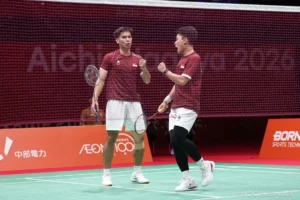
The 2026 Asian Games in Aichi-Nagoya have served as a litmus test for the shifting dynamics of elite badminton in Southeast Asia. As the tournament progressed, observers noted a fascinating paradox: while Malaysia’s national squad struggled to overcome the hurdles of the quarter-final stages, the tactical blueprint of their program remained deeply rooted in Indonesian expertise.
Despite the presence of three high-profile Indonesian coaches within the Badminton Association of Malaysia (BAM) hierarchy, the Malaysian team returned home without a team-event medal. This outcome has sparked intense debate regarding the limitations of coaching influence versus the broader developmental requirements of the sport.
The Quarter-Final Stagnation: A Chronology of Disappointment
The 2026 Asian Games were envisioned as a breakout performance for Malaysia. However, the tournament quickly turned into a reality check.
The Men’s Team Collapse
The Malaysian men’s team arrived in Aichi-Nagoya with significant momentum, bolstered by a mix of established veterans and rising stars. However, the draw was unkind. In the quarter-final showdown against Indonesia, the rivalry—which transcends mere sport—reached a boiling point. The tactical familiarity between the two nations proved to be a double-edged sword. While the Malaysian side was well-drilled, the Indonesian squad demonstrated a superior grasp of court coverage and psychological fortitude in the closing stages of the decider, eliminating Malaysia from podium contention.
The Women’s Team Struggle
Parallel to the men’s performance, the Malaysian women’s team faced an equally daunting task. Facing the powerhouse squad from South Korea in the quarter-finals, the Malaysians struggled to bridge the gap in technical depth and consistency. The loss was decisive, mirroring the men’s exit and sealing a tournament where Malaysia remained empty-handed in the team disciplines.
The Indonesian Architect: Rexy Mainaky and the BAM Hierarchy
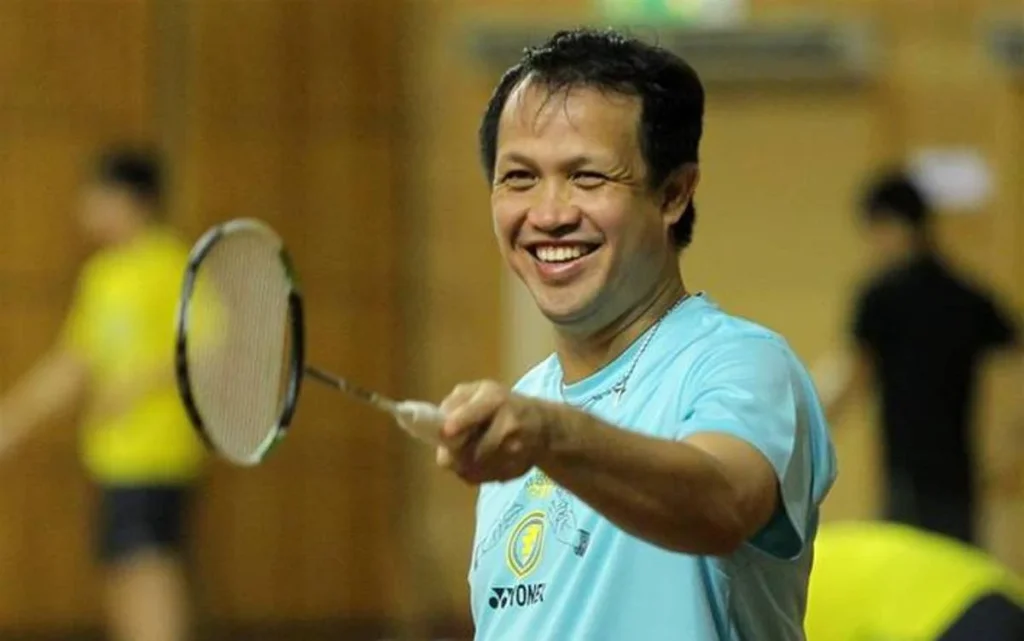
At the center of this narrative is Rexy Mainaky, a legend of the sport and a pivotal figure in the history of Malaysian badminton.
The Return of an Icon
Rexy’s presence in the BAM structure is not a new phenomenon. His first tenure (2005–2015) is widely credited with elevating Malaysia’s doubles pedigree to world-class standards. Returning on December 1, 2021, for his second stint, Rexy was initially appointed as the Deputy Director of Coaching. Over the years, his mandate expanded significantly. Today, he acts as the de facto director of coaching, overseeing the holistic development of the men’s, women’s, and mixed doubles sectors.

The Philosophy of "Mainaky-ism"
Rexy’s coaching philosophy is built on three pillars: defensive stability, aggressive front-court play, and the psychological resilience required to handle the pressure of elite competition. His influence is unmistakable in the way the Malaysian players approach the game; there is a clear emphasis on transition speed and net play that reflects the "Indonesian School." However, as the 2026 results suggest, a coach can only provide the tools; the execution remains entirely in the hands of the athletes.
The Indonesian Influence: Why BAM Looks Across the Strait
The reliance on Indonesian coaches by the Malaysian badminton establishment is not a coincidence but a strategic necessity born out of historical success.
Cultural and Tactical Synergy
Indonesia and Malaysia share a similar approach to the sport, characterized by a preference for flair and rapid-fire rallies. Because the playing styles are fundamentally compatible, Indonesian coaches can integrate into the Malaysian system with minimal friction. They understand the specific cultural nuances of Southeast Asian badminton, which is often more emotive and momentum-driven compared to the clinical, structured approaches seen in China or Japan.
The Coaching Pipeline
Indonesia possesses the world’s most robust ecosystem for coaching development. From the grassroots level in local clubs (PB Djarum, Jaya Raya, etc.) to the national training center in Cipayung, the supply of tactical thinkers is immense. For Malaysia, importing this talent is a cost-effective way to bypass years of domestic coaching development.
Implications: Can Coaching Overcome Talent Gaps?
The 2026 Asian Games results raise a critical question: Can world-class coaching compensate for a lack of depth in the talent pool?
The "Coaching Ceiling"
While Rexy Mainaky and his fellow Indonesian colleagues have successfully instilled a professional culture, there is a "coaching ceiling." A coach can optimize performance, but they cannot manufacture natural speed, explosive power, or the rare innate "game intelligence" that defines champions. The results in the 2026 Asian Games suggest that while the Malaysian team is well-coached, they currently lack the depth of world-class personnel in the singles categories to support their strong doubles foundation.
Strategic Adjustments Post-Asian Games
Following the quarter-final exits, the Badminton Association of Malaysia is expected to undergo a period of intense internal review. The implication is clear: the focus must shift from purely tactical refinement to a more aggressive scouting and development program. The reliance on Indonesian tactical expertise is an asset, but it is currently being asked to do too much. To bridge the gap with the likes of China, South Korea, and Indonesia, Malaysia must improve its domestic pipeline.

Official Responses and Future Outlook
The atmosphere within the Malaysian camp remains one of quiet frustration. Speaking briefly after the team’s elimination, members of the coaching staff emphasized that "the process is ongoing."
There has been no official talk of a personnel overhaul. BAM officials appear committed to the current structure, viewing the 2026 Asian Games as a learning curve rather than a failure of leadership. The consensus is that the Indonesian coaches have done as much as the current athlete roster allows.
Looking Toward the 2028 Olympic Cycle
As the dust settles on the Asian Games, the focus turns to the 2028 Olympic qualification cycle. For Rexy Mainaky and his team, the objective is to refine the rotation of players and perhaps introduce more aggressive training regimens to ensure that the "Indonesian touch" translates into podium finishes in the individual events of future tournaments.
Conclusion
The presence of Indonesian coaches like Rexy Mainaky in the Malaysian team is a testament to the global nature of elite sports, where borders are often secondary to the pursuit of excellence. The 2026 Asian Games may have ended in disappointment, but the collaboration between these two badminton-obsessed nations continues to be one of the most compelling stories in the sport.
Ultimately, the failure in the team events is not a reflection of poor coaching, but rather a reminder that in the high-stakes arena of elite badminton, the margin between success and failure is razor-thin. For Malaysia to reach the next level, they must harness the expertise provided by their Indonesian mentors while simultaneously reinvigorating the domestic talent pipeline. The blueprints are in place, the mentors are on the court, and the goal remains the same: a return to the top of the world rankings.