
Beyond Borders: Chula Vista’s Euphoric Celebration of Spain’s Historic 2026 World Cup Victory
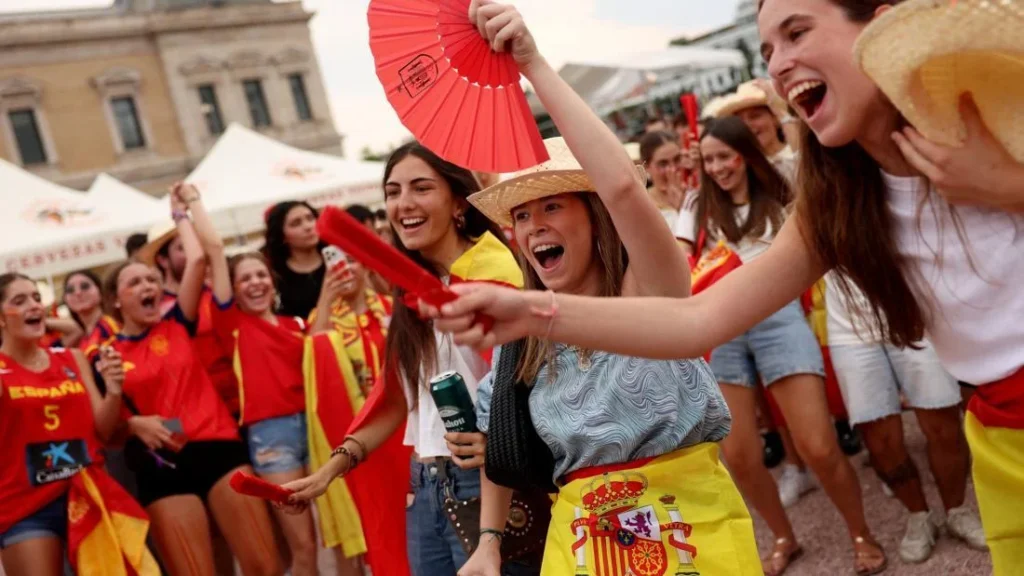
CHULA VISTA, CALIFORNIA – While the streets of Madrid and Barcelona were undoubtedly the epicenter of celebrations, a vibrant, unexpected hub of Spanish jubilation emerged thousands of miles away. In the sun-drenched city of Chula Vista, California, located just a stone’s throw from the U.S.-Mexico border, the 2026 FIFA World Cup final served as a powerful testament to the universal language of football, uniting a diverse community under the banner of sport.
On Sunday, July 19, 2026, the DeVore Stadium at Southwestern College became the heart of the local football world. As the final whistle echoed from the MetLife Stadium across the country, thousands of miles away, the atmosphere in Southern California erupted in a display of passion that bridged the gap between continents.
The Climax: A Tactical Masterclass at MetLife
The journey to the title was far from easy. The final match between Spain and Argentina was a tactical chess match, defined by resilience and precision. For 90 minutes of regulation time, the two titans neutralized each other, with both defenses proving nearly impenetrable.
As the game bled into extra time, the tension at DeVore Stadium was palpable. The scorching California heat did little to dampen the spirits of the hundreds of fans who occupied the bleachers, many of whom had been chanting, waving flags, and singing anthems since the opening whistle.
The breakthrough finally arrived in the 106th minute. Ferran Torres, finding space amidst a fatigued Argentine defensive line, delivered the decisive blow. The ball hit the back of the net, triggering an explosion of red and gold in Chula Vista. This solitary goal proved sufficient to secure Spain’s second World Cup title, ending a 16-year drought since their maiden triumph in 2010.
Chronology of a Championship Run
Spain’s victory in the 2026 tournament was not merely a stroke of luck; it was the culmination of a masterfully orchestrated campaign. Throughout the eight-match tournament, La Furia Roja showcased a level of defensive discipline rarely seen in the modern era.
- Group Stage Dominance: Spain navigated their group with clinical efficiency, conceding zero goals and establishing their intent early.
- The Knockout Path: Facing increasing pressure, the team remained steadfast. Whether against South American powerhouses or European rivals, their possession-based philosophy remained unshaken.
- The Statistical Marvel: Perhaps the most compelling narrative of this victory is Spain’s defensive record. By conceding only a single goal throughout the entire tournament, they set a new benchmark for the lowest number of goals allowed by a World Cup champion, solidifying their status as one of the most organized units in football history.
- The Final Act: The 1-0 victory over Argentina at MetLife Stadium served as the final chapter of a tournament defined by Spain’s tactical superiority and mental fortitude.
Perspectives from the Stands: Unity in Diversity
The event at Southwestern College was more than just a watch party; it was a melting pot of cultures. Chula Vista, with its deep-rooted Latin American influences and proximity to the Mexican border, has long been a city where global sporting events are treated with profound significance.
For Illusion Bishop, a staunch Spanish supporter, this victory was a long-awaited homecoming for his country’s football prestige. "Now is Spain’s time," Bishop reflected amidst the post-match celebrations. "They conquered the Euro, and I have been waiting two years for this moment to see them on top of the world again. It feels like the natural order has been restored."
However, the beauty of the event was the grace shown by those on the losing side. Romina Gordillo, an Argentina fan who stood alongside the jubilant Spanish supporters, offered a sentiment of pride despite the heartbreak. "I am obviously sad, but you have to keep perspective," she said. "I am incredibly proud of what the Argentine players accomplished. They fought until the very last second."
The camaraderie extended to those who viewed the match through the lens of pure football appreciation. Mohamad Shoufan, a self-proclaimed Barcelona devotee, viewed the outcome as a win for the sport itself. "I’m a Barça fan, so in many ways, this result is a win-win for me," Shoufan noted. "Regardless of the score, the spectacle was magnificent. I didn’t lose today; I was just part of a great experience."
The Sociological Impact: Football as a Bridge
Beyond the trophies and the tactical breakdowns, the 2026 World Cup has proven to be a vital instrument for social cohesion. In an increasingly polarized global climate, the ability of a stadium in Chula Vista to host fans from opposing nations—who then leave as friends—is a narrative that resonates deeply.
"This tournament has truly unified everyone," Bishop observed as the crowds began to disperse. "We have people from every walk of life, every cultural background, coming together. Even when one team loses, the respect remains. That is what this is really about."
This sentiment is echoed by local analysts who view the success of the watch party as a reflection of Chula Vista’s unique demographics. The city’s identity is inextricably linked to its diverse population, and for the residents, international football acts as a conduit for community engagement. When the world gathers for a match, the local community gathers as well, reinforcing the notion that geographical distance does not diminish the emotional investment in the "Beautiful Game."
Implications for the Future of the Sport
As the dust settles on the 2026 World Cup, the implications for football in the United States—and specifically in Southern California—are significant. The success of the event in cities like Chula Vista highlights a growing appetite for international competition that transcends the traditional American sports landscape.
The tournament has also validated the current Spanish managerial approach. By prioritizing defensive structure while maintaining the traditional tiki-taka passing rhythm, Spain has provided a blueprint for future generations of players. Their record-breaking defensive performance will undoubtedly be the subject of academic study in coaching circles for years to come.
Furthermore, the 2026 World Cup has successfully leveraged the infrastructure of college campuses and local stadiums to create a "festival" atmosphere. By moving beyond major professional arenas and into the heart of local communities, organizers have succeeded in making the sport accessible and inclusive.
Conclusion: A New Chapter in Football History
As the final chants faded from the DeVore Stadium, the impact of the afternoon remained. Spain has reclaimed its throne, cementing its legacy as a modern dynasty. Yet, for the people of Chula Vista, the day was about more than a championship trophy. It was about the shared heartbeat of a community that found joy in the triumph of others and solace in the camaraderie of the game.
The 2026 World Cup will be remembered for the goals, the saves, and the drama, but in places like Southern California, it will be remembered as the moment when the world felt a little smaller, a little more united, and a whole lot more passionate. As the sun set over the Pacific, the fans left the stadium, already looking forward to the next cycle, the next game, and the next opportunity to celebrate the sport that binds the world together.
Spain may have lifted the trophy, but the community of Chula Vista proved that, in the world of football, everyone has a place in the victory.