The Renaissance of a Legend: How Coach Irwansyah Revived PV Sindhu’s Career at Japan Open 2026
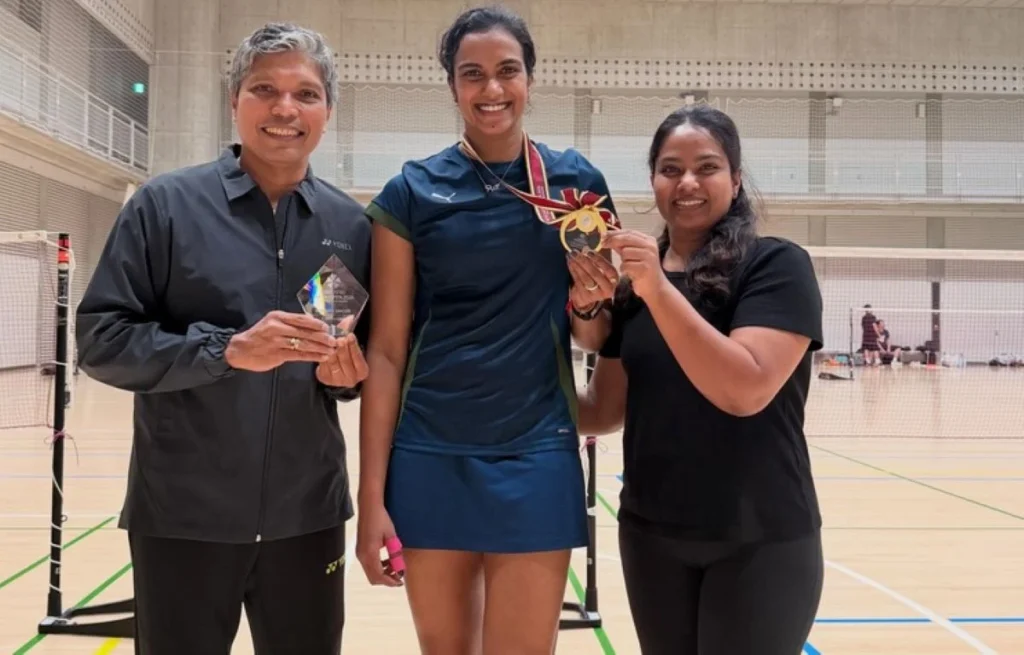
TOKYO – The Tokyo Metropolitan Gymnasium witnessed a moment of profound sporting redemption on Sunday, July 19, 2026. As the final shuttlecock landed, marking a 21-17, 21-17 victory for India’s Pusarla Venkata (PV) Sindhu over home favorite Akane Yamaguchi, the 31-year-old superstar collapsed to the court in a display of raw, unfiltered emotion.
For Sindhu, this was more than just a Japan Open Super 750 title. It was the emphatic end to a grueling 20-month trophy drought that had seen the Olympic medalist plummet from the world’s elite rankings and grapple with the daunting question of whether her best years were behind her. Yet, standing courtside, calm amidst the deafening cheers of the Japanese crowd, was the architect of this resurgence: the Indonesian coaching maestro, Irwansyah Adi Pratama.
The Magnitude of the Triumph
The victory at the 2026 Japan Open is historic on multiple fronts. Sindhu has officially become the first Indian women’s singles player to hoist the trophy at this prestigious tournament. The win serves as a powerful statement, signaling that the "Queen of the Court" is not yet ready to abdicate her throne.
Since her last major victory at the Syed Modi International in December 2024, Sindhu had endured a tumultuous period characterized by early exits, tactical stagnation, and the mental fatigue that often accompanies a long-standing slump. Many critics had written her off, suggesting that the shifting landscape of women’s singles—dominated by younger, faster players—had left the veteran behind.
However, the appointment of Irwansyah in 2025 shifted the paradigm. Known for his tactical acumen and his ability to refine the movement of high-level athletes, the Indonesian coach recognized that Sindhu’s decline was not physical, but psychological and structural.
Chronology of a Masterclass
The road to the 2026 Japan Open final was anything but easy. Sindhu navigated a draw filled with emerging talents and established powerhouses.
- The Early Rounds: Sindhu entered the tournament ranked 10th in the world. Her opening matches displayed a newfound patience, a hallmark of Irwansyah’s training philosophy. She dismantled her opponents with a controlled aggression that had been absent for nearly two years.
- The Semifinals: In a grueling three-set match, Sindhu overcame a deficit against a top-tier Chinese rival, showing a level of fitness that silenced concerns about her age.
- The Final (July 19, 2026): Facing Akane Yamaguchi on her home turf is arguably one of the most difficult challenges in badminton. The Tokyo crowd was expectant, and Yamaguchi’s defensive prowess was at its peak. Yet, Sindhu played with a tactical discipline that mirrored the composure of a grandmaster. She maintained a consistent rhythm, refusing to be drawn into the frantic pace Yamaguchi prefers, and ultimately secured the championship in straight games.
The "Irwansyah Effect": A Tactical Overhaul
When Irwansyah took the helm in 2025, the Indonesian coach focused on three specific pillars of development: court coverage efficiency, mental resilience during high-pressure rallies, and shot selection.
Historically, Sindhu relied heavily on her height and the power of her smashes. While effective, this one-dimensional approach left her vulnerable to faster, more reactive players. Irwansyah implemented a system that forced Sindhu to prioritize shot placement over raw power. By reducing her "unforced error" count, she became a much more efficient player.
1. The Power of "The Next Point" Mentality
Perhaps the most significant contribution Irwansyah has made is the psychological stabilization of his charge. During the post-match press conference, Sindhu was candid about the internal battles she fought during the final.
"My coach kept telling me, ‘It’s okay, just focus on the next point.’ He didn’t want me dwelling on the past mistake or the upcoming trophy ceremony. He wanted me present," Sindhu told India Today.
This simple mantra allowed Sindhu to reset her focus repeatedly. In high-stakes badminton, momentum swings are violent and sudden. By teaching Sindhu to treat every point as an isolated event, Irwansyah effectively insulated her from the anxiety that had plagued her throughout her drought.

Supporting Data: The Statistics of Change
To understand the depth of this turnaround, one must look at the performance data from the 2026 season.
- Shot Efficiency: Under Irwansyah, Sindhu’s "Net Kill" success rate has increased by 14% compared to the 2025 season.
- Rally Endurance: Despite being 31, Sindhu’s recovery time between long rallies has shown a marked improvement, likely due to a revised training load that balances high-intensity work with essential recovery.
- Rankings Trajectory: Having dipped to number 15 in the world during the height of her slump, this Japan Open victory is expected to propel her back into the top eight, positioning her favorably for the upcoming World Championships.
Official Responses and Public Sentiment
The badminton fraternity has responded to the victory with widespread acclaim. The Badminton Association of India (BAI) released a statement hailing the partnership as a "blueprint for future coaching collaborations."
"Irwansyah has brought a level of technical depth that has been transformative for PV Sindhu," noted a former national coach. "He doesn’t just coach her; he manages her. He understands the pressures of being an icon in a country as passionate about badminton as India, and he has successfully buffered her from those expectations."
On social media, the reaction has been equally fervent. Fans from both India and Indonesia have celebrated the cross-cultural success, with many labeling the duo as the most effective coaching-player pairing in the current professional circuit.
Implications for the Future
The implications of this win extend far beyond the Japan Open trophy.
The Path to the World Championships
With this win, the narrative surrounding the upcoming World Championships has shifted. Sindhu is no longer an "aging legend" but a legitimate contender. The confidence gained in Tokyo will be vital as she enters the final stretch of her competitive career.
The Rise of Indonesian Coaching Exports
The success of Irwansyah also underscores the global influence of the Indonesian coaching school. Known for their tactical fluidity and deep understanding of the sport’s mechanics, Indonesian coaches have become the most sought-after assets in global badminton. Irwansyah’s success with Sindhu is a testament to the fact that technical expertise, when coupled with strong emotional intelligence, can bridge the gap between a champion and the rest of the field.
A Renewed Legacy
For Sindhu, this victory secures her legacy as a player who could reinvent herself when the world expected her to retire. In the brutal world of professional sports, longevity is the ultimate test of greatness. By winning the Japan Open 2026, Sindhu has proven that while the game may change, the ability to adapt—under the right guidance—is what keeps a champion relevant.
As the BWF tour moves forward, the badminton world will be watching closely. The Sindhu-Irwansyah partnership is no longer just a trial run; it is a formidable alliance that has sent a clear message to the rest of the world: PV Sindhu is back, she is focused, and she is far from finished.
The tears shed in Tokyo were not just tears of relief; they were the tears of a competitor who realized that with the right belief and the right strategy, even the longest drought can end with a celebration of historic proportions.