Thick Haze Disrupts Operations at Sultan Mahmud Badaruddin II International Airport, Impacting 18 Flights
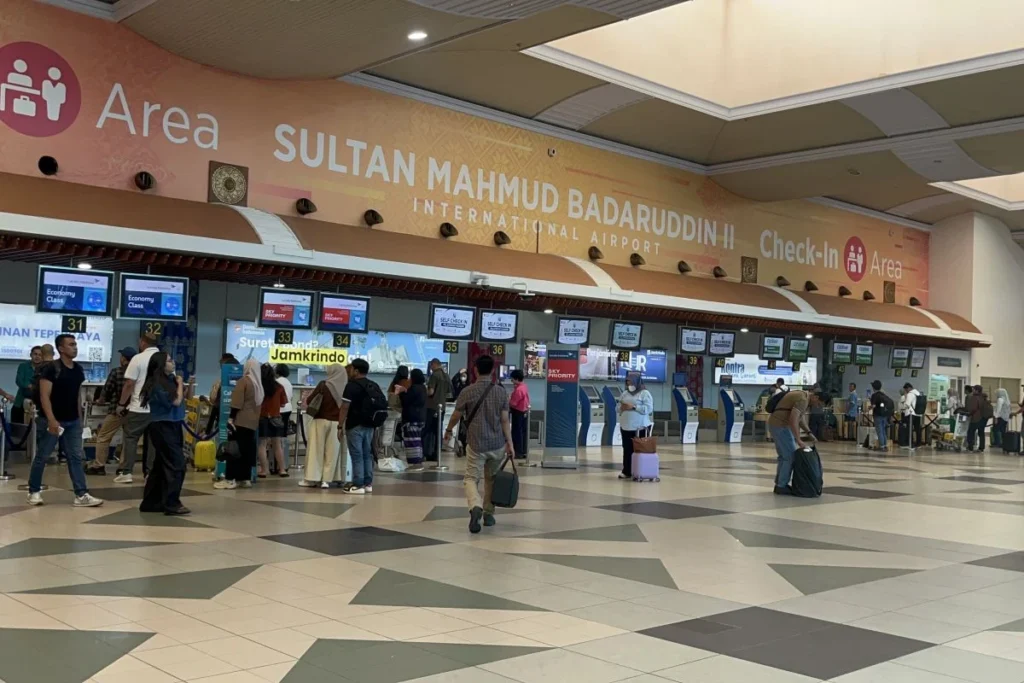
Palembang, South Sumatra — Operations at Sultan Mahmud Badaruddin (SMB) II International Airport in Palembang, South Sumatra, experienced significant disruptions on Sunday as thick smog drastically reduced visibility. The adverse weather conditions forced airlines to delay or reschedule numerous flights, inconveniencing hundreds of passengers and highlighting the persistent environmental challenges facing the region during the dry season.
According to airport authorities, the deteriorating visibility caused by a combination of smoke and early morning fog dropped to a mere 600 meters around the airfield. This fell well below the safety thresholds required for normal visual and instrument operations, prompting the airport management and participating airlines to implement stringent safety protocols.
Main Facts
The disruption at SMB II International Airport severely impacted a total of 18 flights by Sunday afternoon, affecting both departures and arrivals. The low-visibility crisis paralyzed travel schedules along several high-traffic domestic routes, as well as crucial international connections.
- Total Affected Flights: 18 scheduled flights.
- Departures Affected: 9 flights.
- Arrivals Affected: 9 flights.
- Visibility Level: Reduced to 600 meters.
- Key Routes Impacted: Palembang to and from Jakarta (Soekarno-Hatta and Halim Perdanakusuma), Surabaya, and the international route connecting Palembang to Kuala Lumpur, Malaysia.
- Airlines Involved: Citilink, AirAsia, Lion Air, Garuda Indonesia, Batik Air, and Pelita Air.
The sudden drop in visibility not only disrupted the immediate flight schedules but also created a cascading domino effect, delaying subsequent rotations across the domestic and international aviation networks connected to South Sumatra.
Chronology of the Disruption
The morning of Sunday began with unusual atmospheric conditions enveloping the Palembang metropolitan area and its surrounding districts. As dawn broke, a dense blanket of smog mixed with atmospheric moisture began rolling into the airport sector, significantly impairing the line of sight for air traffic controllers and pilots.
- Early Morning (05:00 – 07:00 WIB): Pilots reporting into SMB II International Airport first noted a rapid decline in horizontal visibility. As the fog and smoke thickened, meteorological instruments stationed at the airfield registered visibility dropping past the 1,000-meter mark down to 600 meters.
- Morning Peak (08:00 – 12:00 WIB): Several early morning departures and incoming flights were forced to hold position in the air, divert temporarily, or remain grounded at their origin airports. Airlines initiated passenger notifications regarding the rolling delays as the haze showed stubborn persistence.
- Midday Update (15:30 WIB): General Manager of SMB II International Airport, Ahmad Syaugi Shahab, released a comprehensive operational update detailing the scale of the disruption. Data compiled up to this hour confirmed that exactly 18 flights had sustained delays or schedule adjustments due to the persistent 600-meter visibility limit.
- Late Afternoon to Evening: Airport management, in continuous coordination with air navigation service providers (AirNav Indonesia) and individual carriers, closely monitored meteorological updates. While some flights gradually resumed as the solar heat slowly began to dissipate the low-lying haze, residual delays persisted into the evening hours.
Detailed Flight Manifest and Supporting Data
The operational log released by airport authorities outlines the specific flights caught in Sunday’s haze-induced gridlock. The disruption was evenly split between outbound and inbound traffic.
Departures Impacted (9 Flights)
The outbound schedule from Palembang suffered widespread delays, stranding passengers bound for major economic and transit hubs:
- Citilink: Flights QG981 and QG985.
- AirAsia: Flight AK461 (Palembang–Kuala Lumpur international route).
- Lion Air: Flight JT856.
- Garuda Indonesia: Flights GA107, GA109, and GA113.
- Batik Air: Flight ID7052.
- Pelita Air: Flight IP313.
These departures primarily served key business and commuter corridors linking Palembang to Soekarno-Hatta International Airport in Jakarta, Juanda International Airport in Surabaya, and Kuala Lumpur International Airport.
Arrivals Impacted (9 Flights)
Corresponding inbound services faced parallel delays as aircraft scheduled to land in Palembang were held at their departure points or forced to circle:
- Citilink: Flights QG980 and QG984.
- AirAsia: Flight AK462 (arriving from Kuala Lumpur).
- Lion Air: Flight JT856 (inbound segment).
- Garuda Indonesia: Flights GA102, GA104, and GA108.
- Batik Air: Flight ID7051.
- Pelita Air: Flight IP312.
These arrivals originated from major urban centers including Jakarta (Soekarno-Hatta and Halim Perdanakusuma airports), Surabaya, and Kuala Lumpur.
Official Responses and Stakeholder Coordination
Ahmad Syaugi Shahab, General Manager of SMB II International Airport, emphasized that passenger safety remains the absolute priority of airport operations.
"We continue to monitor the development of weather conditions and visibility around the airport, while actively coordinating with airlines and related stakeholders to ensure that all aspects of flight safety and operational continuity are strictly maintained," Shahab stated in his official address on Sunday.
The airport management has maintained an active crisis monitoring desk, working in tandem with the Meteorology, Climatology, and Geophysics Agency (BMKG) to track wind patterns, humidity, and particulate density. Airlines have been instructed to provide regular updates to affected passengers, offering refreshments, meal vouchers, and, where necessary, hotel accommodations or rebooking options in accordance with national consumer protection regulations for aviation.
Furthermore, airport authorities have reiterated safety protocols, reminding the public that decisions to delay or cancel flights are made collectively by pilots, air traffic controllers, and airline dispatchers based on rigorous safety margins, particularly when visibility drops below the critical thresholds required for precision instrument landing systems (ILS).
Broader Implications and Regional Context
The flight disruptions at SMB II International Airport do not occur in a vacuum. They are part of a broader, recurring seasonal challenge affecting aviation infrastructure across Sumatra and parts of Kalimantan. In recent weeks, regional transport hubs have frequently found themselves vulnerable to visibility-related disruptions.
Similar incidents have recently been reported at other regional aviation facilities, including consecutive disruptions at airports in Jambi and Singkawang, where thick haze forced temporary ground stops. These localized visibility crises are typically driven by a combination of land and forest fires, prolonged dry spells, and agricultural clearing practices that generate massive volumes of smoke.
Economic and Logistical Impact
- Passenger Inconvenience: Hundreds of travelers faced extended wait times inside the terminal buildings, disrupting business trips, family visits, and international travel itineraries.
- Airlines’ Operational Costs: Unscheduled delays, aircraft holding patterns, and schedule realignments place a heavy financial burden on commercial airlines operating within the affected corridors.
- Regional Connectivity: As Palembang serves as a primary economic gateway in southern Sumatra, prolonged interruptions to its air links threaten regional commerce, tourism, and supply chain logistics.
Recommendations for Travelers
In light of the unpredictable nature of seasonal haze and its immediate impact on aviation, airport management has issued a strong advisory to the traveling public.
Passengers holding tickets for flights departing from or arriving at Palembang are strongly urged to proactively monitor flight status updates directly through their respective airlines’ official applications, websites, or customer service hotlines before departing for the airport. This precautionary measure helps minimize terminal congestion and allows travelers to manage schedule adjustments efficiently from home or their lodging.
As environmental authorities continue efforts to mitigate ground-level smoke sources across the province, the aviation community at SMB II International Airport remains on high alert, balancing the demands of modern regional connectivity with the uncompromising imperative of aviation safety.