Beyond the Dates: Unraveling the Historical Divergence Between Birth of Pancasila and Pancasila Sanctity Day
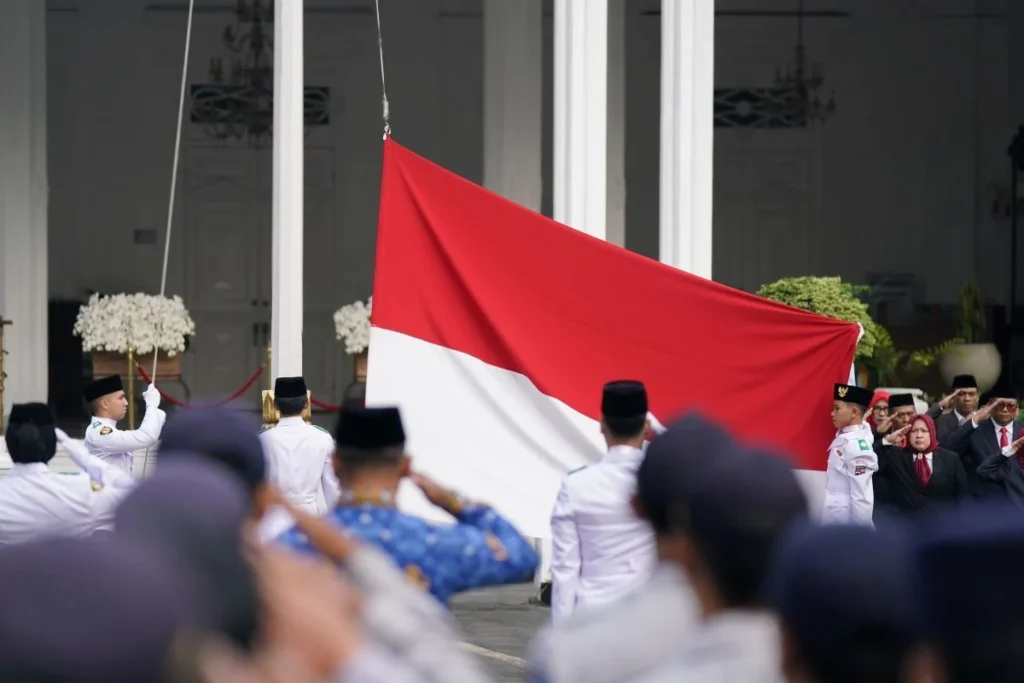
JAKARTA — As the calendar turns to October, the Indonesian populace solemnly observes Pancasila Sanctity Day (Hari Kesaktian Pancasila) on the first day of the month. However, this commemoration frequently encounters a common public misconception, often being confused with Pancasila Birth Day (Hari Lahir Pancasila), which is celebrated months earlier on June 1.
While both national observances are fundamentally intertwined with the genesis, evolution, and ideological endurance of Indonesia’s state foundation, they stem from vastly different historical epochs, carry distinct legal frameworks, and commemorate separate geopolitical milestones. Understanding the divergence between these two pivotal dates is essential for a comprehensive grasp of Indonesia’s modern political history.
Main Facts: The Core Distinctions
At its core, the confusion between the two observances arises from their shared nomenclature and their overarching connection to the national ideology, Pancasila. Yet, a closer examination reveals that they serve entirely different commemorative functions.
- Pancasila Birth Day (Hari Lahir Pancasila) is observed annually on June 1. It marks the conceptual inception of the state ideology, tracing back to a landmark speech delivered by independent Indonesia’s founding father, Sukarno, in 1945. It honors the intellectual and political process of formulating the philosophical foundation of the republic during the dying days of the Pacific War.
- Pancasila Sanctity Day (Hari Kesaktian Pancasila) is observed annually on October 1. It commemorates a dark, turbulent chapter in post-independence Indonesia: the thwarted coup attempt by the 30 September Movement (G30S) in 1965, which resulted in the tragic assassination of several high-ranking Indonesian Army generals. This day emphasizes the resilience of the state ideology against attempts to subvert it, reaffirming Pancasila as the unyielding bedrock of the nation.
Legally, both days are anchored in distinct presidential decrees signed in different eras of Indonesia’s political evolution. Pancasila Birth Day was institutionalized much later in contemporary history via Presidential Decree No. 24 of 2016, which also designated it as a national public holiday. Conversely, Pancasila Sanctity Day was codified shortly after the 1965 crisis through Presidential Decree No. 153 of 1967, issued on September 27, 1967—a legal framework that remains valid to this day.
Chronology: From Conception to Crisis
To fully appreciate why these two dates hold such profound reverence in the Indonesian collective memory, one must examine the chronological timeline that separates them by two decades.
The Genesis: June 1, 1945 (Pancasila Birth Day)
The historical timeline of Pancasila begins during the Japanese occupation, at a time when the tide of World War II was turning and the promise of Indonesian independence loomed on the horizon. The Investigating Committee for Preparatory Work for Independence (Badan Penyelidik Usaha-usaha Persiapan Kemerdekaan Indonesia, or BPUPKI) was established to lay the structural groundwork for a sovereign nation.
On June 1, 1945, during the second session of the BPUPKI, Sukarno took the podium to deliver a momentous address. In this speech, he formally articulated the five guiding principles that would unite a diverse archipelago:
- Belief in the One and Only God (Ketuhanan Yang Maha Esa)
- Just and Civilized Humanity (Kemanusiaan yang Adil dan Beradab)
- The Unity of Indonesia (Persatuan Indonesia)
- Democracy Guided by the Inner Wisdom in the Consensus arising out of Deliberations (Kerakyatan yang Dipimpin oleh Hikmat Kebijaksanaan dalam Permusyawaratan/Perwakilan)
- Social Justice for the Whole of the People of Indonesia (Keadilan Sosial bagi Seluruh Rakyat Indonesia)
Sukarno introduced the term "Pancasila" during this address. Following this conceptual breakthrough, the formulation underwent extensive refinement by a smaller committee (the Committee of Nine) and was later integrated into the Preamble of the 1945 Constitution (Undang-Undang Dasar 1945), which was officially ratified on August 18, 1945—one day after the proclamation of independence.
The Crucible: September 30 – October 1, 1965 (Pancasila Sanctity Day)
Fast forward twenty years to the post-independence era, the young republic faced existential threats amidst Cold War geopolitics and domestic political polarization.
Between the night of September 30 and the early hours of October 1, 1965, an operation carried out by the 30 September Movement (G30S) sent shockwaves through the nation. The movement led to the kidnapping and brutal murder of six prominent Indonesian Army generals and one officer. The victims’ bodies were discarded in a well in the area known as Lubang Buaya, located in East Jakarta.
This tragic event marked a severe turning point in Indonesian political history, precipitating a massive shift in the national leadership landscape and leading to the transition from the Old Order (Orde Lama) to the New Order (Orde Baru).
The state subsequently designated October 1 as Hari Kesaktian Pancasila—Pancasila Sanctity Day—to honor the fallen military heroes, condemn the communist-linked coup attempt, and underscore that Pancasila had successfully weathered an attempt to replace it with an alternative ideology. Annually, national ceremonies are held at the sacred Pancasila Monument (Monumen Pancasila Sakti) in Lubang Buaya to commemorate this resilience.
Supporting Data and Comparative Analysis
Differentiating between the two observances requires examining their core characteristics across several historical and legal dimensions:
| Parameter | Hari Lahir Pancasila (Birth Day) | Hari Kesaktian Pancasila (Sanctity Day) |
|---|---|---|
| Date of Observance | June 1 | October 1 |
| Historical Context | Preparation for independence (1945) | Post-independence political crisis (1965) |
| Primary Focus | The conceptual formulation and birth of the state ideology | The defense and survival of Pancasila against subversion |
| Key Historical Figure/Event | Sukarno’s speech before the BPUPKI | The G30S movement and the assassination of army generals |
| Legal Basis | Presidential Decree No. 24 of 2016 | Presidential Decree No. 153 of 1967 |
| National Holiday Status | Yes (Designated public holiday) | No (Observed via national ceremonies) |
| Primary Commemoration Site | National stage / general public reflections | Monumen Pancasila Sakti, Lubang Buaya, East Jakarta |
This clear structural divergence highlights that while June 1 celebrates the intellectual birth of the nation’s guiding principles, October 1 honors the ideological survival of those same principles through a period of national bloodshed and political transformation.
Official Responses and Institutional Perspectives
In recent years, various Indonesian state institutions, government officials, and civic leaders have continuously emphasized the importance of distinguishing between these two historic dates to ensure historical accuracy and deepen national identity among younger generations.
The Agency Pancasila Ideology Education (Badan Pembinaan Ideologi Pancasila, or BPIP), along with historical archives and academic circles, frequently issues educational reminders ahead of both June 1 and October 1. BPIP highlights that confusing the two dates undermines the distinct narratives of Indonesia’s journey—conflating the hopeful optimism of the 1945 independence struggle with the solemn trauma and political realignment of 1965.
High-ranking government officials have echoed these sentiments in various public addresses, tying the lessons of both dates to contemporary governance, national unity, and international diplomacy:
- The Ministry of Home Affairs, through statements by key leadership figures such as the Deputy Minister of Home Affairs, has repeatedly underscored that Pancasila serves not only as the ultimate unifier of a diverse archipelago comprising thousands of islands, but also as a foundational framework for global peace and cross-cultural tolerance.
- Regional Leaders and Municipalities, such as the Mayor of Palu, have actively appealed to the younger demographic to move beyond rote memorization and actively "actualize" the values of Pancasila in everyday life—translating abstract principles into tangible actions that counter radicalism, social division, and intolerance.
- The Creative Economy Sector, represented by ministries overseeing creative industries (such as the Ministry of Creative Economy), has noted that the fundamental values embedded within Pancasila can serve as a robust ethical and cultural anchor to strengthen the nation’s creative ecosystem, ensuring that modern innovation remains grounded in national identity.
Implications for Modern Indonesia
The persistent confusion surrounding June 1 and October 1 points to a broader challenge in historical education: the tendency of the public to blend major national narratives into a monolithic understanding of "Pancasila history." However, separating these two milestones carries profound implications for the nation’s political maturity and historical consciousness.
1. Nuanced Historical Awareness
By recognizing June 1, citizens engage with the democratic deliberations, compromises, and visionary ideals of the nation’s founders. It teaches modern Indonesians how unity in diversity was negotiated through intense intellectual discourse. Conversely, recognizing October 1 forces the nation to confront the fragility of democracy and the high price paid to protect the republic from internal ideological fracture.
2. Safeguarding Against Ideological Polarization
In an era marked by digital misinformation, identity politics, and global polarization, recalling the historical trials of Pancasila provides a stabilizing compass. Officials and sociologists argue that understanding Hari Kesaktian Pancasila reminds the public of the dangers of extremism, while Hari Lahir Pancasila reminds them of the inclusive, unifying spirit required to build a democratic state.
3. Fulfilling the Educational Mandate
Educational institutions bear the responsibility of imparting accurate historical timelines. Clarifying that Pancasila was conceptualized in the warm halls of the BPUPKI in June 1945 and defended in the grim aftermath of Lubang Buaya in October 1965 allows students to view history as a dynamic, continuous process rather than a static textbook entry.
Conclusion
Ultimately, neither date can substitute for the other. June 1 and October 1 represent two sides of the same historical coin: the creation and the preservation of the Indonesian state ideology. By honoring both with distinct understanding, historical accuracy, and due reverence, the people of Indonesia honor not just the dates on a calendar, but the resilient spirit of a nation built on dialogue, unity, and unwavering endurance.