
From Barren Sands to Green Oasis: The Coastal Transformation of Lembupurwo
By Investigative Desk
For decades, the coastal residents of Lembupurwo, located in the Kebumen Regency of Central Java, Indonesia, waged a silent war against the relentless elements. The shoreline was a harsh, unforgiving frontier where the ocean did not merely provide a livelihood; it actively encroached upon the land, carrying abrasive sands and stinging salt spray that rendered the soil infertile. Today, however, that narrative has shifted. A lush, resilient curtain of Casuarina equisetifolia—commonly known as the sea pine or sea fir—stands as a sentinel, transforming a once-desolate landscape into a thriving agricultural hub.
The Genesis of a Green Shield: Chronology of a Transformation
The metamorphosis of Lembupurwo did not happen overnight. It was the result of a decade-long commitment to ecological restoration that began in earnest in 2008. Before this initiative, the coastline was characterized by extreme heat, shifting sand dunes, and constant soil erosion.
The project was spearheaded by the local community, specifically the Lembupurwo Forest Farmers Group (Kelompok Tani Hutan Cemara Lembupurwo). Under the leadership of Munadi, the group recognized that if they wanted to secure their agricultural future, they first had to stabilize the environment.
"Back then, the beach was unbearable—it was scorching hot," recalls Munadi.
Beginning in 2008, the farmers initiated a massive planting campaign. The strategy was deliberate: planting Casuarina equisetifolia along the immediate coast to act as a windbreak, and mangrove species in the more tidal-influenced zones. Over the course of nearly two decades, this effort has expanded to encompass 70 hectares of managed land, consisting of 50 hectares of sea pines and 20 hectares of mangroves. This "green wall" has fundamentally altered the microclimate of the region, creating a buffer zone that shields inland farms from the aggressive maritime climate.
The Ecological Dynamics: Why the Sea Pine?
The selection of Casuarina equisetifolia was not accidental. As a coastal pioneer species, these trees are uniquely adapted to withstand high salt concentrations and nutrient-poor, sandy soils. However, their impact on the surrounding environment extends far beyond their own survival.
Research conducted by environmental expert Beny Harjadi in 2017 highlights the physical changes occurring beneath the canopy. According to the study, the dense foliage of the sea pine is capable of reducing solar radiation by up to 88 percent. This drastic reduction in light intensity creates a significantly cooler, more stable microclimate at ground level.
Furthermore, the physical structure of the trees serves as a mechanical barrier. The wind, which previously carried fine sand and salt particles deep into the fields, is forced to lose its kinetic energy when hitting the dense stands of trees. Consequently, the sand drops out of the air column and settles at the base of the trees, preventing it from burying the farmers’ crops. This natural filtration process allows the air behind the tree line to be significantly lower in salt content, protecting the delicate leaves of inland plants from chemical burns and dehydration.
Economic Implications: A New Era for Local Farmers
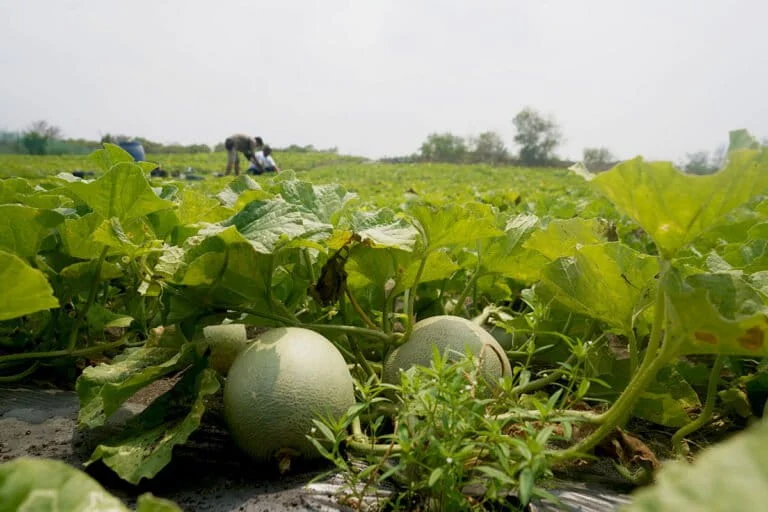
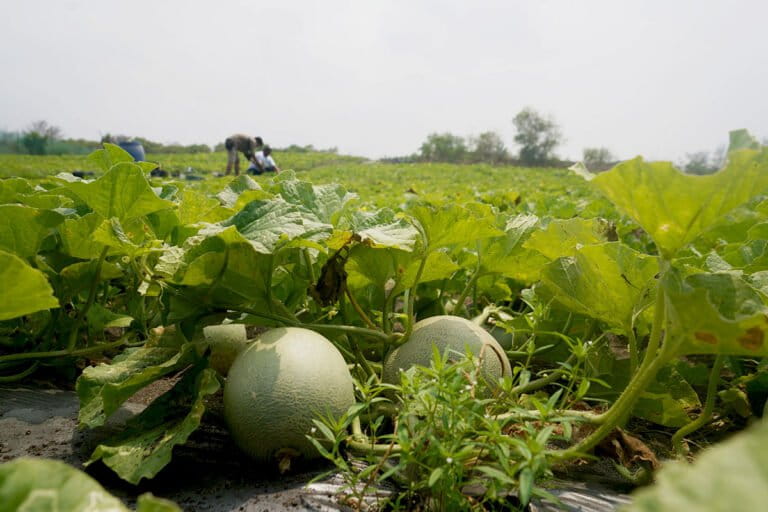
The most profound impact of this reforestation is visible in the agricultural output of the village. For farmers like Marsono Utomo, the change has been life-changing. Marsono, who currently cultivates a one-hectare plot of high-value melon, remembers a time when such an endeavor would have been considered impossible.
"In the past, we didn’t dare to plant melons because the seawater and the salt-laden spray would destroy the leaves," he explains. Today, with the protection of the sea pines, the landscape has changed. In optimal conditions, Marsono reports yields reaching 10 tons per harvest. While the trees provide the essential protection, Marsono notes that the work remains demanding, requiring intensive irrigation, especially during the peak of the dry season.
The success of the initiative has encouraged diversification. The area behind the tree line is now a mosaic of high-value crops, including chilies, eggplants, watermelons, and papayas. Tumijo, another local farmer, manages a 5,000-square-meter plot dedicated to papaya. During peak production cycles, he can harvest up to two tons of fruit.
These stories of success underscore a critical point: the trees do not eliminate the need for hard work, but they create the conditions under which that work can be rewarded. The reforestation has effectively expanded the agricultural frontier, proving that nature-based solutions can be the foundation for sustainable economic growth in rural Indonesia.
The Multi-Layered Benefits: Abrasion Control and Soil Stability
Beyond the immediate agricultural benefits, the reforestation of Lembupurwo serves as a critical defense against coastal erosion. Indonesia, as an archipelago, faces significant threats from rising sea levels and intensified weather events.
The Casuarina trees, combined with the mangrove belts, act as a primary defense line against abrasion. By stabilizing the shoreline, the trees prevent the loss of land to the sea, a process that was previously accelerating in the Kebumen region. The root systems of these trees anchor the shifting sands, while the litterfall—the shed needles of the pine trees—creates a layer of organic matter that slowly improves the soil quality over time.
This ecosystem-based approach to disaster risk reduction is increasingly recognized by local authorities as a cost-effective and sustainable alternative to hard-infrastructure solutions like concrete seawalls, which often exacerbate erosion in adjacent areas.
Challenges and Future Outlook
Despite the success, the path forward is not without challenges. The agricultural output remains highly sensitive to market fluctuations and the inherent unpredictability of climate patterns. While the sea pines provide a buffer, the dependency on water remains a significant concern. During extreme drought years, even with the cooling effect of the trees, the water table can drop, requiring farmers to invest in deeper wells and more efficient irrigation technology.
Furthermore, the long-term management of these 70 hectares requires sustained community engagement. The Lembupurwo Forest Farmers Group acts as the steward of this land, but as the trees age, they will eventually require thinning and replanting to maintain the density of the windbreak.
Official responses from regional agricultural and forestry offices in Central Java have been largely positive, citing the Lembupurwo project as a "model for coastal community empowerment." There is growing interest in scaling this model to other vulnerable coastal villages in the Kebumen Regency and beyond.
Conclusion
The story of Lembupurwo is a testament to the power of community-led environmental stewardship. What began as an act of desperation—a simple desire to keep the sand off their crops—has evolved into a sophisticated, nature-based strategy that balances human economic needs with ecological stability.
By reclaiming the land from the harshness of the sea, the farmers of Lembupurwo have proven that the environment is not a fixed barrier, but a dynamic system that can be nurtured. As they continue to harvest their melons and papayas under the cooling shade of the sea pines, they stand as a living example of how restoration can provide the essential foundation for a prosperous and resilient future.
The village now serves as a blueprint for other coastal communities facing similar threats. In an era of climate uncertainty, the "Green Wall" of Lembupurwo is a reminder that the most effective solutions to modern problems are often deeply rooted in the soil, built slowly, and maintained by the hands of those who call the land home.







