Seamless Mobility in the Urban Age: How Unified Digital Ecosystems Are Redefining Public Transportation Payments
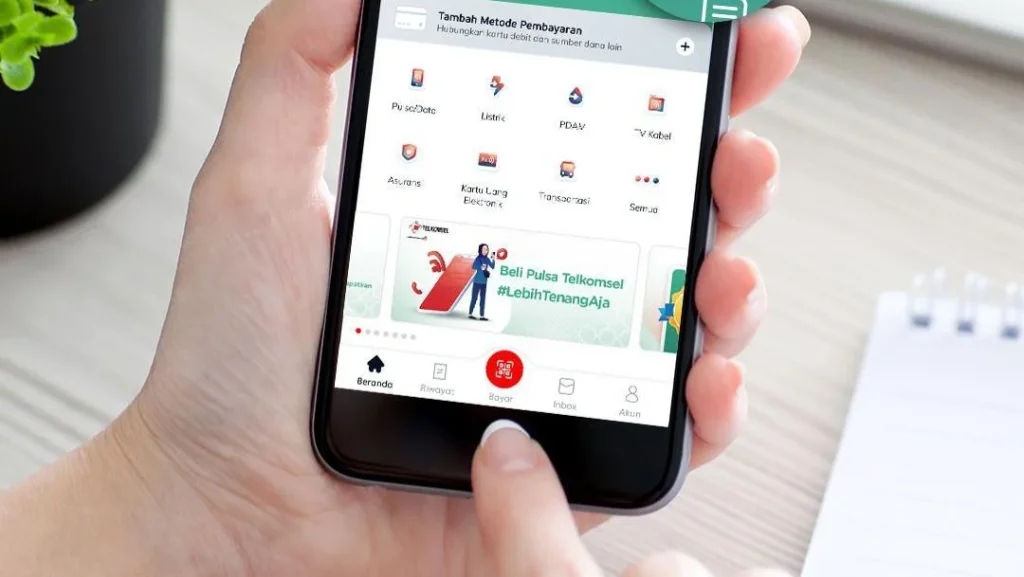
JAKARTA — In the modern rhythm of metropolitan life, mobility is no longer just a physical act of moving from point A to point B; it is the very pulse of economic and social survival. Every single day, millions of urban dwellers engage in a complex choreography of transit. Whether it is navigating the morning rush hour to reach corporate offices, embarking on cross-town journeys to reunite with family, or running critical logistical errands, the contemporary lifestyle demands constant, fluid movement.
Yet, this relentless drive for mobility comes with inherent costs. Every journey exacts a toll in three immutable currencies: time, money, and energy. For the hyper-mobile urbanite, successfully orchestrating these elements is the difference between a productive day and logistical gridlock. While physical infrastructure—such as rails, roads, and fleets—dictates how fast a commuter can travel, the friction of daily life often lies in the invisible micro-transactions that facilitate that travel. Purchasing tickets, topping up separate transit cards, hunting for exact change, and managing multiple payment instruments have long added unnecessary cognitive load to everyday commutes.
Enter the era of integrated digital financial services. Recognizing the friction embedded in traditional transit payment systems, platforms like LinkAja have stepped forward to transform how society pays for movement. By introducing a centralized digital ecosystem where a single balance serves a multitude of transportation needs, financial technology is quietly revolutionizing urban mobility across Indonesia.
Main Facts: The Anatomy of Unified Transit Payments
At its core, the modern challenge of commuting is not merely about covering distance, but about managing the transactional touchpoints along the way. The integration of financial technology into public and private transportation represents a paradigm shift from fragmented cash-and-card systems to centralized digital ecosystems.
- The Single-Balance Concept: The foundational premise of LinkAja’s transit solution is the elimination of payment fragmentation. Instead of maintaining separate balances for commuter rail, urban rapid transit, ride-hailing services, and toll roads, users leverage a single, consolidated digital wallet.
- Ecosystem Interoperability: Through strategic partnerships with various transportation providers within Indonesia’s infrastructure landscape, LinkAja bridges the gap between different modes of transit—from first-mile and last-mile motorcycle taxis to heavy rail and integrated bus networks.
- Operational Efficiency: By shifting transactions to a digital-first architecture, commuters bypass physical queues at ticket counters, reduce the risk of lost or damaged physical transit cards, and gain real-time visibility over their daily travel expenditures.
- The Ubiquity of Mobile Payments: With smartphone penetration continuing its upward trajectory in urban centers, mobile wallets have evolved from lifestyle novelties into critical utilities for daily survival and economic participation.
The overarching narrative is clear: while the physical realities of commuting—such as traffic congestion, wait times, and physical exhaustion—cannot be entirely eradicated by a payment app, the mental and operational friction of paying for these journeys can be systematically dismantled.
Chronology: The Evolution of Urban Mobility and Payment Integration
To understand the significance of a single-balance payment system, one must examine the chronological evolution of how urban commuters have paid for movement over the past few decades.
Phase 1: The Cash-Exclusive Era (Pre-2010s)
For generations, urban mobility in Indonesia was defined by physical currency. Commuters boarding city buses, microbuses (angkot), or traditional taxis relied entirely on physical banknotes and coins.
- The Challenges: This era was characterized by severe operational friction. Conductors and drivers acted as cashiers, slowing down boarding times. Passengers had to constantly ensure they carried adequate small change, leading to disputes, rejected fares, and heightened security risks associated with carrying physical cash in crowded public spaces.
Phase 2: The Rise of Closed-Loop Pre-Paid Cards (2010–2018)
Recognizing the inefficiencies of cash, transportation authorities and banking institutions introduced electronic money cards. Commuters could tap their way through turnstiles at train stations and toll gates.
- The Challenges: While these cards drastically improved gate-throughput speeds, they created a new kind of fragmentation. Commuters often found themselves carrying multiple cards—one for the commuter rail, another for the subway, and bank-issued cards for toll roads. Furthermore, topping up these cards often required specialized ATM machines, physical convenience stores, or NFC-enabled smartphones, creating bottlenecks when balances ran dry unexpectedly.
Phase 3: The Integration of Open-Loop Digital Wallets (2018–Present)
The maturation of QR code standards (such as QRIS) and mobile wallet infrastructures marked the dawn of open-loop digital payments. Platforms like LinkAja emerged to consolidate financial services, moving beyond peer-to-peer transfers and merchant checkouts into the realm of public mass transit and urban mobility.
- The Milestone Shift: Instead of tying funds to a single physical plastic card locked within a specific banking ecosystem, users could now fund a dynamic digital wallet via mobile banking, retail networks, or payroll deposits, and deploy those funds across an expansive array of transportation services on demand.
Supporting Data: The Economics of High-Mobility Commuting
To contextualize the necessity of streamlined transit payments, quantitative insights into modern urban mobility reveal the heavy toll exacted by daily commutes.
- Time Consumption: Urban studies in major Indonesian metropolitan areas indicate that the average commuter spends between 90 to 150 minutes daily in transit. Over a standard working month, this equates to roughly 40 to 50 hours spent moving from one location to another.
- Financial Fragmentation: Prior to digital consolidation, the average active urbanite utilized a minimum of three distinct payment methods weekly to navigate their commutes (e.g., cash for local microbuses, a bank card for commuter trains, and a dedicated e-money card for toll roads or parking). Managing the float across these platforms often resulted in idle, trapped capital—small sums of money left stranded on separate cards that could not be used elsewhere.
- Transaction Velocity: Digital wallet transactions within transit ecosystems have demonstrated a 40% reduction in boarding time compared to manual cash transactions, directly contributing to smoother station flow during peak rush hours.
- Adoption Metrics: Financial inclusion reports highlight a steady migration toward server-based digital wallets for micro-transactions, with transportation services consistently ranking among the top three use cases for recurring daily digital spend.
These data points underscore a fundamental truth: as urban populations grow denser and travel distances expand, the infrastructure supporting these movements must eliminate every micro-barrier to ensure economic fluidity.
Official Responses: Perspectives from Industry Leaders and Financial Technologists
The strategic shift toward unified transportation ecosystems is driven by a deliberate vision shared by financial service providers and urban planning advocates alike.
Bridging the Gap in Urban Mobility
Industry executives emphasize that the ultimate goal of digital financial integration is to become invisible. Technology succeeds when it steps out of the way of the user.
"Mobility is the heartbeat of society. Every day, millions of people move to build their livelihoods, connect with loved ones, and drive the economy forward," notes a senior representative from LinkAja’s product strategy division. "Our objective has always been to remove the friction from these essential routines. By consolidating transit payments into a single, reliable digital balance, we are ensuring that our users spend less time worrying about how to pay for their journey, and more time focusing on the destinations that matter to them."
The Ecosystem Advantage
Financial technologists point out that the strength of a modern digital wallet lies not in a single feature, but in the breadth of its ecosystem. By partnering with mass transit operators, municipal authorities, and private fleet providers, platforms like LinkAja create a symbiotic network.
"When a user boards a commuter train, catches an online motorcycle taxi for the final kilometer, and later pays for parking using the exact same digital wallet, we have achieved true financial and operational integration," the representative adds. "This is not merely about convenience; it is about building a cohesive urban infrastructure where digital finance acts as the invisible glue holding different modes of transit together."
Transportation analysts have also lauded this approach, noting that open-ecosystem mobile wallets reduce the capital expenditure required by transport operators to maintain proprietary ticketing hardware and physical distribution networks.
Implications: What Unified Transit Payments Mean for the Future
The widespread adoption of single-balance digital wallets for multi-modal transportation carries profound implications for consumers, urban planners, and the broader national economy.
1. Consumer Empowerment and Mental Relief
For the individual commuter, the psychological benefit of a unified payment system is profound. The phenomenon known as "payment fatigue"—the cumulative mental exhaustion of constantly authorizing, reloading, and managing disparate payment instruments—is significantly mitigated. Commuters no longer face the anxiety of being stranded at a turnstile due to an unexpected zero-balance on a single-purpose card. Everything is managed through the familiar interface of a smartphone.
2. Smarter Urban Planning and Data-Driven Transit
As transactions migrate to digital platforms, transportation agencies gain access to anonymized, aggregated data regarding commuter flows. Understanding peak travel corridors, transfer patterns between different modes of transport, and fluctuating demand allows urban planners to optimize routes, deploy additional fleet capacity where it is most needed, and design more resilient mass transit networks.
3. Advancing Financial Inclusion
Transportation is a universal necessity. By integrating digital wallets into the daily commute, platforms like LinkAja serve as a natural onboarding ramp for the unbanked and underbanked populations. When a commuter realizes that a digital wallet is not just a luxury, but an essential tool to get to work every day, adoption rates soar, bringing more citizens into the formal digital financial economy.
4. Environmental and Economic Efficiency
Fewer physical tickets mean less paper waste, reduced plastic card manufacturing, and a smaller environmental footprint. Economically, reducing the friction of movement lowers the indirect costs of doing business, enabling a more agile workforce that can traverse urban landscapes with maximum efficiency.
Conclusion
Mobility will always demand its tribute of time, physical energy, and financial resources. Commuters will continue to board trains, flag down rides, and navigate the bustling arteries of Indonesia’s dynamic cities. However, the nature of that journey is undergoing a permanent transformation.
By championing the concept of a single, unified balance for diverse transportation needs, digital financial platforms are successfully turning a historically fragmented chore into a streamlined, effortless experience. LinkAja’s integration into the daily transit routine demonstrates that while the physical miles of a journey cannot be shortened by an app, the administrative burdens of travel can be minimized to a single tap. In doing so, digital innovation is not just changing how people pay—it is empowering a nation on the move.