
The Sacred Call for Rain: How the Nunas Nede Ritual Safeguards Life in Lombok
Introduction: A Village United by Water
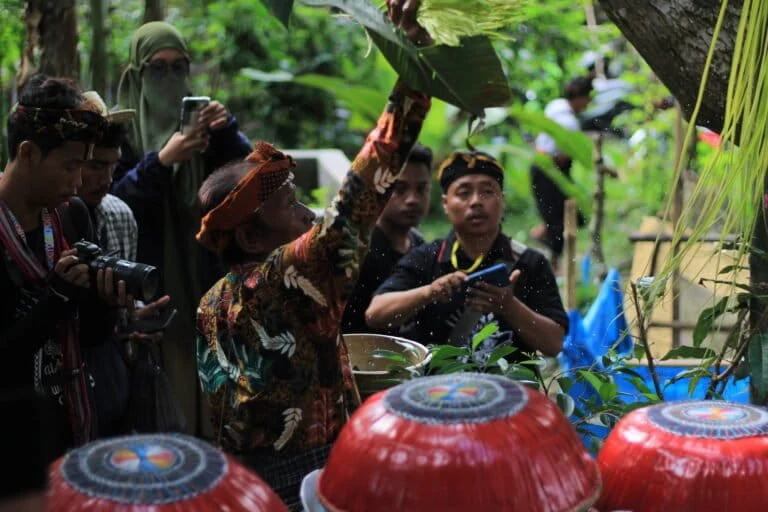
As the scorching heat of the long dry season begins to wane in the village of Kesik, located in the Masbagik district of East Lombok, West Nusa Tenggara, a profound sense of anticipation fills the air. In the courtyard of Amaq Marni, a 73-year-old traditional leader, the atmosphere is thick with the scent of freshly husked rice, glutinous rice, and grated coconut. These humble ingredients, harvested from the very earth that the villagers are fighting to protect, are being meticulously prepared for Nunas Nede—a sacred annual ritual that marks the transition from the dry season to the monsoon.
For the people of Kesik, whose livelihoods are tethered to the rhythmic cycles of agriculture, the arrival of rain is not merely a meteorological event; it is a lifeline. In recent years, as prolonged droughts have caused natural springs to recede and rice paddies to crack under the relentless sun, the ritual of Nunas Nede has evolved from a cultural duty into a desperate, beautiful, and necessary act of environmental preservation.
The Anatomy of the Ritual: A Chronology of Sacred Service
The Nunas Nede is not a singular moment of prayer, but a multi-day process that blends spiritual reverence with communal labor. The process unfolds with deliberate precision:
1. The Gathering of Waters: The ritual commences with the collection of water from seven distinct natural springs located within the village’s borders. This is a highly symbolic act; by gathering water from various sources and uniting them, the community reinforces the idea that water is a collective asset, a singular life force that nourishes the entire village without discrimination.
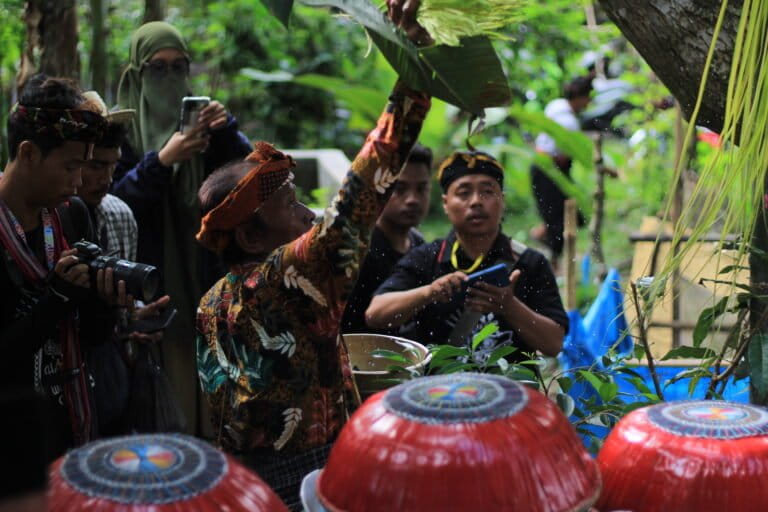
2. The Consecration: Once the water is gathered, the community convenes to offer prayers and zikir (remembrance of God). The atmosphere is one of solemn gratitude. The villagers present their agricultural produce, not as a sacrifice to be destroyed, but as a symbolic offering to express their dependency on the benevolence of nature.
3. Communal Feast: The culmination of the prayer is the shared meal. By eating together, the villagers solidify their bonds of gotong royong (mutual cooperation), reinforcing the social fabric that allows a small agricultural community to survive harsh conditions.
4. The Act of Stewardship: Following the spiritual observances, the ritual shifts toward tangible environmental action. The "Nunas Nede" is incomplete without the physical labor of restoration. Young and old alike head to the forest and the spring sites. They clear debris, dredge mud from the irrigation channels, repair structural leaks in the water flow systems, and—most importantly—plant new trees to fortify the watershed.
Environmental Stewardship: Traditional Wisdom as Policy
Amaq Marni, who has presided over the ritual for decades, views the ceremony as a moral compass for the village. "Water is not just for humans," Marni explains, his voice carrying the weight of generational experience. "Water is a living entity for all creatures. If the springs are destroyed, the fields will fail, and our lives will vanish alongside them."
This philosophy is codified into the village’s "unwritten laws." These traditional regulations serve as an informal but strictly enforced ecological charter. They include:
- The Taboo on Deforestation: Specific trees surrounding the water sources are strictly protected. They are seen as the "guardians" of the water, holding the soil in place and ensuring the aquifer remains recharged.
- Waste Management: There is a communal ban on littering near the springs. The village understands that pollution at the source translates to poisoned crops downstream.
- Maintenance Duty: Every resident is expected to contribute to the upkeep of the water infrastructure. It is a shared responsibility that ensures no household is left without access to water.
Marni often repeats the mantra of his ancestors: "If the trees are felled, the water departs. We are simply keeping our promise to the land."
The Climate Crisis: A Shifting Reality
While the ritual is steeped in ancient tradition, it is increasingly being tested by modern climate instability. In the last decade, the farmers of Kesik have faced unprecedented challenges. The predictable rhythm of the seasons—once a reliable clock for planting and harvesting—has been shattered by global climate change.
Amaq Sati, a lifelong farmer who has participated in Nunas Nede since childhood, reflects on the growing uncertainty. "In the old days, we knew exactly when the rains would arrive. We could plan our lives with confidence. Now, the rain is either dangerously delayed or it arrives in sudden, destructive bursts. As farmers, we are left in a state of constant, anxious confusion."
The data supports the villagers’ observations. Declining water tables, erratic rainfall patterns, and longer, more intense heatwaves have forced the village to be more proactive. For the people of Kesik, Nunas Nede is no longer just a ceremony; it is a tactical response to a changing climate. By cleaning the springs and planting trees, they are building a "buffer" against the unpredictability of the weather.
Official Perspectives and Institutional Support
Muhamad Kadri, the Head of Kesik Village, recognizes the vital role this tradition plays in governance. For Kadri, the ritual is the most effective way to ensure the sustainability of the village’s irrigation systems without the need for constant, costly government intervention.
"Our agriculture relies entirely on the irrigation provided by these natural springs," Kadri states. "If we lose our water, we lose our economy, our food security, and our community identity."
Kadri emphasizes that the village administration actively supports Nunas Nede because it serves as an educational bridge. "If we do not involve the younger generation in this ritual now, they will grow up thinking that water is an infinite resource that simply comes out of a tap. They need to understand the connection between the tree, the soil, the spring, and their dinner plate."
By involving children and teenagers in the cleaning and planting phases of the ritual, the village ensures that the knowledge of how to manage a watershed is passed down. It is a form of informal, hands-on education that is arguably more effective than any classroom lecture.
Implications: Beyond Folklore
The Nunas Nede ritual presents a fascinating case study for environmentalists and policymakers. It challenges the modern, often technocratic, view of environmental management. While modern systems often rely on concrete dams and industrial pumps, the people of Kesik rely on social cohesion and deep ecological empathy.
1. Preservation of Traditional Knowledge
The ritual proves that "traditional" does not mean "outdated." The indigenous knowledge regarding which tree species are best for water retention and how to maintain natural springs is a sophisticated form of ecological science that has kept the village alive for generations.
2. Social Cohesion as Climate Adaptation
The "gotong royong" aspect of the ritual serves as a social insurance policy. By constantly reinforcing the value of the community, the village is better prepared to deal with the shocks of drought or flood. When a crisis hits, the structures for helping one another are already in place.
3. The Challenge of Tourism
As the Nunas Nede gains wider attention, there is a looming threat of the ritual being "commoditized" for tourism. The villagers are wary of this. They are making a concerted effort to ensure that the ritual remains a sacred practice rather than a performance. They want visitors to understand the meaning behind the act, rather than just snapping photos of the spectacle. For the people of Kesik, the ritual is for the land and the people, not for the entertainment of outsiders.
Conclusion: A Legacy of Water
As the sun sets on the village of Kesik, the air feels slightly cooler, signaling the hope of the coming monsoon. The spring water flows steadily through the channels the villagers have just cleared. They have done their part. They have prayed, they have cleaned, they have planted, and they have remembered their ancestors.
The Nunas Nede remains a testament to the resilience of human culture in the face of environmental peril. It reminds us that humanity’s relationship with nature is not a one-way street of consumption, but a reciprocal partnership. As long as the people of Kesik continue to walk to their springs, clear the debris, and plant their trees, they are ensuring that the cycle of life continues for one more year. They are not just waiting for the rain; they are inviting it, honoring it, and—most importantly—protecting the path it takes to reach their homes.
In a world where climate anxiety is at an all-time high, the wisdom of the village of Kesik offers a simple, yet profound lesson: to save the future, we must first learn to respect the sources of our past.







