Real Madrid Demands Javier Tebas’s Resignation Following Escalating War of Words Over "Referee Conspiracy" Claims
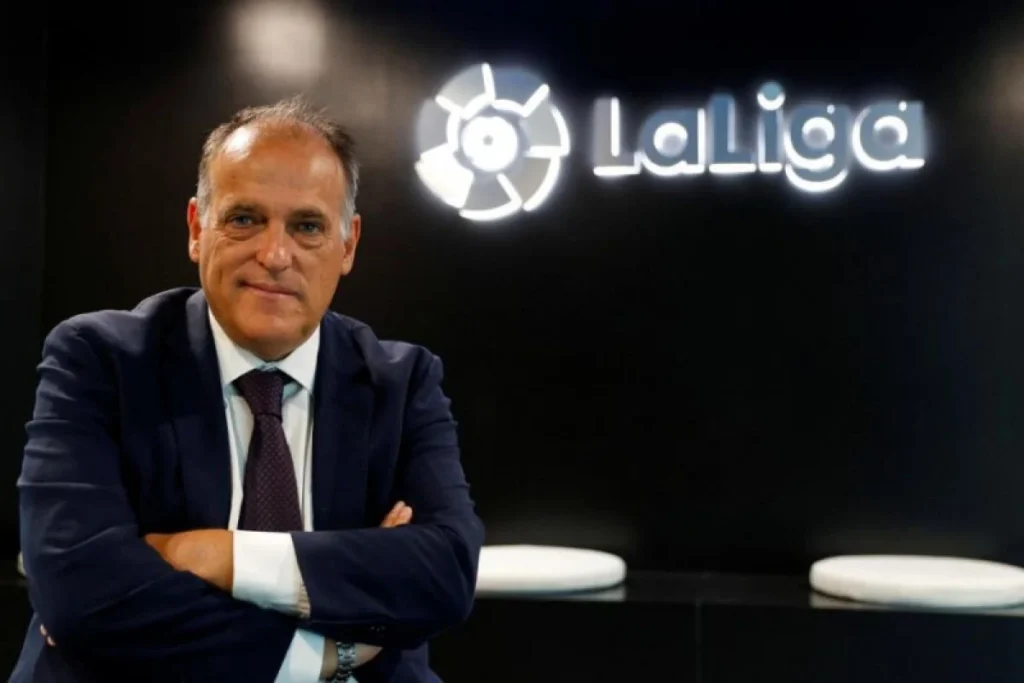
MADRID — The simmering tensions between Real Madrid and LaLiga have erupted into an outright institutional war. In a fiercely worded official statement released on Wednesday, the reigning Spanish and European giants launched a scathing attack on LaLiga President Javier Tebas, branding his conduct "intolerable" and demanding his immediate removal from office.
The unprecedented public escalation marks a new low in the already fractious relationship between Los Blancos and the governing body of Spanish professional football. Real Madrid’s leadership has accused Tebas of weaponizing his institutional position to systematically discredit and undermine the club, asserting that he lacks the neutrality and integrity required to lead the competition.
Main Facts
The latest flashpoint in Spanish football governance is rooted in a toxic mix of matchday results, institutional posturing, and ideological battles over the future of the sport.
- The Core Demand: Real Madrid has officially declared that Javier Tebas is unfit to continue as LaLiga President, calling for a leadership change to install an individual who upholds the principles of institutional neutrality.
- The Catalyst: The feud intensified following Real Madrid’s 2-1 defeat to city rivals Atlético Madrid in the Madrid derby on September 20, 2026.
- Tebas’s Accusations: Following the derby, Tebas publicly criticized Real Madrid, dismissing the club’s persistent claims of a "referee conspiracy" as absurd fabrications designed to mask poor sporting performances. He also took direct aim at Real Madrid TV, accusing the club-owned broadcaster of orchestrating a permanent campaign of pressure against match officials ahead of games.
- Real Madrid’s Retaliation: In response, Los Blancos accused Tebas of abusing his office, stepping outside his remit as a servant of the clubs, and behaving like an owner of the competition rather than an impartial administrator.
Chronology of Events: How the Crisis Unfolded
To understand how a domestic league defeat spiraled into a governance crisis, it is essential to trace the timeline of events leading up to Real Madrid’s explosive statement.
Mid-September 2026: The Madrid Derby
The immediate fuse was lit on September 20, 2026, during the high-stakes Madrid derby. Real Madrid traveled across the city to face Atlético Madrid at the Metropolitano Stadium. In a fiercely contested encounter, Los Blancos suffered a painful 2-1 defeat, denting their momentum at the top of the LaLiga standings.
Compounding the misery on the pitch, Real Madrid midfielder Fede Valverde suffered a severe ankle injury after absorbing what the club and media described as a "horror tackle" during the match. The combination of a derby loss and a major injury to a talismanic player created a volatile atmosphere within the Valdebebas training complex.
Post-Match: Tebas Intervenes
In the immediate aftermath of the derby, Javier Tebas addressed the media. Rather than limiting his commentary to standard post-match analysis, the LaLiga president directly targeted Real Madrid’s recurring complaints regarding refereeing standards.
For months, Real Madrid TV—the club’s official television channel—has broadcasted analytical segments scrutinizing referees appointed to officiate upcoming Real Madrid matches. These broadcasts have frequently highlighted past mistakes made by specific officials against Los Blancos, a strategy critics argue is designed to intimidate referees and influence public opinion.
Tebas did not mince words. He publicly labeled Real Madrid’s narrative of a "referee conspiracy" as a smoke-screen. According to the LaLiga chief, the club was manufacturing external excuses to deflect attention away from tactical shortcomings and sub-par performances on the pitch. Furthermore, Tebas condemned Real Madrid TV’s pre-match programming, labeling it an unhealthy and corrosive element for Spanish football.
September 22, 2026: Real Madrid’s Counter-Strike
Realized that an attack on their institutional integrity and media strategy could not go unanswered, Real Madrid’s board of directors convened and drafted a blistering official communique. Released via their website and social media channels on Wednesday, the statement sent shockwaves through European sport.
"Our club considers it intolerable that the president of LaLiga uses his institutional position to continuously discredit and attack Real Madrid, exactly as he does in every one of his public statements," the club stated.
The club argued that Tebas, who is charged with protecting and representing the collective interests of all twenty LaLiga clubs, was instead acting as an adversary to one of its most vital and historic members.
Supporting Data and Context
The friction between Florentino Pérez’s Real Madrid and Javier Tebas is not a sudden anomaly; it is the culmination of years of ideological, financial, and political warfare.
1. The Financial Disconnect and CVC Capital Partners
A primary driver of the animosity has been LaLiga’s commercial strategy, most notably the LaLiga Impulso agreement—a multi-billion-euro injection from private equity firm CVC Capital Partners in exchange for 8.25% of the league’s TV rights over 50 years.
While the vast majority of LaLiga and Segunda División clubs accepted the CVC deal to stabilize their finances in the wake of the COVID-19 pandemic, Real Madrid, alongside arch-rivals FC Barcelona, fiercely opposed it. Real Madrid labeled the agreement illegal and detrimental to the long-term economic health of Spanish clubs. Tebas championed the deal as a masterstroke of modernization, placing him on a direct collision course with Madrid’s executive suite.
2. The European Super League Project
Compounding the economic disagreements is the persistent ghost of the European Super League (ESL). Real Madrid and Barcelona remain the chief architects behind the breakaway project aimed at reshaping European club football outside the UEFA and domestic league frameworks.
Javier Tebas has been one of the most vocal, aggressive opponents of the Super League worldwide. He has repeatedly warned that the project would destroy domestic leagues, bankrupt non-elite clubs, and concentrate wealth among a microscopic group of mega-teams. Real Madrid views Tebas’s crusade against the Super League as an overreach of his mandate, believing that a league president should respect the independent business ambitions of its member clubs.
3. Refereeing Controversies in Spain
Refereeing standards in Spain have faced unprecedented scrutiny over the last three years, exacerbated by the ongoing Negreira Case—the scandal involving Barcelona’s historical payments to the former vice-president of Spain’s Technical Committee of Referees (CTA).
Against this backdrop of systemic paranoia and declining trust in officiating, Real Madrid chose to establish an aggressive defense mechanism through Real Madrid TV. While Madrid insists they are merely exercising free speech to expose systemic bias, Tebas and other league executives view it as an assault on the rule of law within Spanish sport.
Official Responses and Institutional Positions
The war of words has polarized Spanish football stakeholders, drawing reactions from rival clubs, player unions, and federation officials.
Real Madrid’s Stand on Neutrality
In their Wednesday statement, Real Madrid emphasized that the office of the LaLiga presidency demands absolute impartiality. The club argued that Tebas has overstepped the boundaries of his governance role:
"The president of LaLiga is not the owner of the competition, but rather a servant to the member clubs who have entrusted the direction of the competition to him. A new figure is needed who upholds the principles of neutrality."
By framing Tebas as an employee who has lost the confidence of his employer (the clubs), Real Madrid is attempting to rally a coalition of dissent among other clubs who may harbor grievances against Tebas’s centralized management style.
Javier Tebas’s Perspective
While Tebas has not yet issued a formal, point-by-point counter-statement to Real Madrid’s demand for his resignation, his previous remarks outline his core philosophy: league presidents must defend the integrity of the ecosystem as a whole. Tebas has long argued that institutional attacks on referees undermine the global brand of LaLiga, making the product less attractive to international broadcasters and sponsors. From Tebas’s viewpoint, calling out Real Madrid’s institutional posturing is not an attack on the club itself, but a defense of the legal and sporting framework that keeps Spanish football functioning.
Implications for Spanish Football
The open hostility between Spain’s most successful club and its governing body carries profound ramifications for the immediate and long-term future of the sport in the country.
1. Polarization of the League
The public breakdown threatens to deepen factionalism within Spanish football. While some clubs quietly share Real Madrid’s frustrations regarding Tebas’s authoritarian communication style and commercial decisions, others rely heavily on LaLiga’s centralized financial distributions and value Tebas’s vocal defense of economic control (such as LaLiga’s strict Financial Fair Play rules).
2. Impact on the Global Brand
LaLiga has spent the last decade trying to position itself as a premier global entertainment product capable of competing with the English Premier League. High-profile civil wars between the league’s crown jewel (Real Madrid) and its chief executive project an image of instability and institutional dysfunction to international markets, potentially impacting future broadcasting rights renewals and sponsorship values.
3. The Referees in the Crosshairs
With Real Madrid doubling down on its stance and refusing to back down from its media scrutiny of officials, matchday referees will operate under an even more intense microscope. The psychological pressure on Spanish match officials—already heightened by intense social media scrutiny and political polarization—will make the remainder of the 2026/27 LaLiga season a high-wire act for the federation.
Conclusion
As the dust settles on Real Madrid’s explosive manifesto, the question remains whether this is merely political saber-rattling or the opening salvo in a sustained campaign to oust Javier Tebas. With neither side showing any inclination toward compromise, Spanish football finds itself navigating one of the most turbulent institutional crises in its modern history.