Military Intelligence Uncovers Trans-Regional Arms Supply Network Following Arrest of TPNPB-OPM Commander in Papua
TIMIKA — In a significant breakthrough highlighting the persistent clandestine supply chains fueling armed conflict in Indonesia’s easternmost provinces, military authorities have revealed intricate details regarding an intercepted arms-procurement operation.
Abdon Kisamdu, the Wakil Komandan Batalyon (Wadanyon)—or Deputy Battalion Commander—of the West Papua National Liberation Army-Free Papua Organization (TPNPB-OPM) Kodap 35 Bintang Timur, has confessed to orchestrating multiple financial transfers to secure illicit firearms. According to high-ranking military officials, Kisamdu admitted to transferring funds on three separate occasions to an intermediary in Yahukimo Regency, Papua Pegunungan Province, specifically to acquire military-grade weaponry.
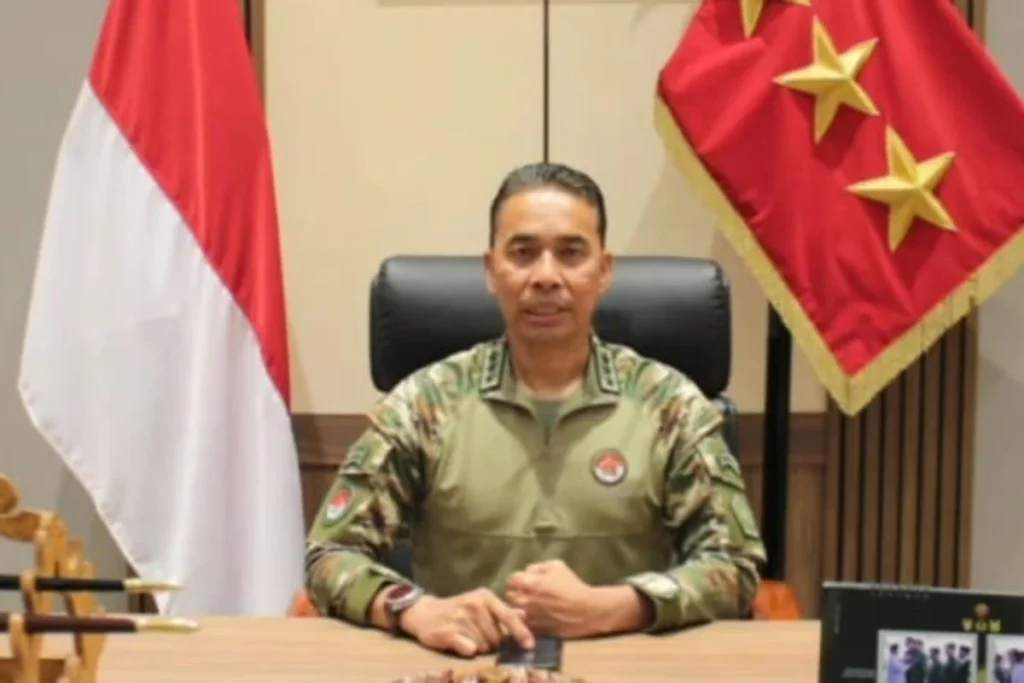
The revelations were officially disclosed by the Commander of the Joint Regional Defense Command (Pangkogabwilhan) III, Lieutenant General TNI Lucky Avianto, during a press briefing in Timika. The arrest and subsequent interrogation of Kisamdu have opened a broader window into the logistical mechanics, financial methodologies, and inter-regional networks sustaining insurgent groups operating within the rugged terrain of the Papua highlands.
1. Main Facts of the Operation
The apprehension of Abdon Kisamdu was executed with high precision at the Nop Goliat Dekai Airport in the capital of Yahukimo Regency. The operation was a collaborative effort involving specialized units under the operational control of Kogabwilhan III, notably the 426th Kopasgat Battalion and the Mandala Operations Command (Koops TNI Habema).
Key Elements of the Case:
- Target: Abdon Kisamdu, Wadanyon TPNPB-OPM Kodap 35 Bintang Timur.
- Arrest Date: Saturday, September 19.
- Location of Arrest: Nop Goliat Dekai Airport, Yahukimo, Papua Pegunungan.
- Status Prior to Arrest: Long-standing inclusion on the Indonesian National Police (Polri) Wanted List (DPO).
- Core Offense: Conspiracy and financial transactions aimed at illicit arms trafficking.
- Key Accomplices/Associates:
- BA: An individual based in Yahukimo identified as the primary arms contact/supplier.
- KP: Kisamdu’s brother-in-law, designated to facilitate local transit and logistics upon the commander’s arrival.
Lieutenant General Lucky Avianto emphasized that Kisamdu’s presence in Yahukimo represented a strategic departure from his customary operational zone. Kodap 35 Bintang Timur, led by Ananias Ati Mimin, traditionally maintains its stronghold, training camps, and operational footprints within the administrative boundaries of neighboring Pegunungan Bintang Regency, also located in Papua Pegunungan. The decision to source weapons outside this traditional territory underscores an evolving logistics strategy by the armed wing of the OPM, likely driven by heightened military pressure within their home territory.
2. Chronology of Events
The intelligence-led operation that culminated in Kisamdu’s detention on September 19 was the result of weeks of electronic surveillance, informant network activation, and coordinated inter-agency tracking.
Phase 1: Digital Surveillance and Intelligence Gathering
Prior to the physical interdiction, military cyber and intelligence units detected suspicious communications originating from electronic devices associated with Abdon Kisamdu. Forensic analysis of data retrieved from Kisamdu’s smartphone revealed extensive coordination conducted via encrypted messaging platforms, notably WhatsApp, alongside other social media applications.
The digital footprint mapped out a clear operational trajectory:
- Financial Transmissions: Kisamdu initiated three separate money transfers to an individual operating under the initials BA, stationed in Yahukimo. These funds served as down payments and installment payments for the targeted firearms.
- Geographical Mapping: Communications explicitly directed Kisamdu to travel outside the Kodap 35 Bintang Timur territory into the Dekai District of Yahukimo. The agreed-upon rendezvous point for the physical handover of the weapons was designated as the banks of the Kali Seng (Seng River) in Yahukimo.
- Logistics Coordination: The messages outlined travel specifics, including Kisamdu’s arrival via commercial air transport into Nop Goliat Dekai Airport.
Phase 2: Interception at Nop Goliat Dekai Airport
Acting on actionable intelligence regarding Kisamdu’s impending travel itinerary, security forces preemptively secured all access points, check-in zones, and arrival gates at Nop Goliat Dekai Airport.
Kisamdu had meticulously planned his arrival. According to the investigation, upon touching down in Dekai, he was scheduled to be met directly at the terminal by his brother-in-law, identified by the initials KP. KP’s designated role was to provide immediate logistical support, safe passage, and transportation to transport the high-ranking insurgent commander directly to the clandestine arms-handing location near Kali Seng.
However, the precision of the military intelligence apparatus short-circuited the plan. As soon as Kisamdu disembarked and entered the terminal area, combined elements of the Satgas Kopasgat and Satgas Mandala Koops TNI Habema moved in. Surprised and unable to access local armed backup, Kisamdu was detained without a shot being fired, neutralizing a critical logistics link before the weapons could change hands.
3. Supporting Data and Forensic Findings
The seizure of Abdon Kisamdu yielded a trove of physical and digital evidence that security analysts are currently leveraging to dismantle the broader procurement network.
Financial Trails and Intermediaries
Interrogation sessions conducted following his arrest corroborated what military investigators discovered during the initial extraction of data from Kisamdu’s digital devices. Kisamdu freely admitted to the mechanics of the transaction:
- The "BA" Connection: The recipient of the funds, known only by the alias BA, is currently the primary target of an intensive manhunt. Military investigators are probing whether BA operates as an independent opportunistic arms merchant, a corrupt civilian smuggler, or part of a structured underground syndicate bridging conflict zones in Papua.
- Transaction History: The confirmation of three distinct transfers indicates that the arms-buying process was not a spur-of-the-moment decision, but a structured financial commitment requiring sustained capital accumulation and laundering mechanisms within local economies.
Tactical Deviations
Military analysts note that Kodap 35 Bintang Timur has historically relied on smuggling routes traversing the rugged, porous international border between Papua New Guinea (PNG) and Indonesia’s Pegunungan Bintang Regency. The shift toward Yahukimo—located hundreds of kilometers away and requiring air travel or arduous cross-district trekking—suggests several critical vulnerabilities or adaptations within the TPNPB-OPM logistics chain:
- Supply Compression: Intensified security operations along the PNG border may have choked off traditional cross-border arms pipelines, forcing commanders to look inward toward domestic black markets.
- Inter-Kodap Collaboration: The use of Yahukimo as a procurement hub raises questions regarding potential logistical cooperation between Kodap 35 Bintang Timur and local TPNPB factions operating within Yahukimo, creating a decentralized pooling of resources.
4. Official Responses and Statements
The arrest of a high-value target like Wadanyon Abdon Kisamdu has prompted high-level reactions from military command structures, reflecting both tactical satisfaction and a renewed strategic push toward regional pacification.
Pangkogabwilhan III Perspective
Lieutenant General TNI Lucky Avianto framed the successful interdiction as a testament to the effectiveness of integrated military-intelligence operations under the Kogabwilhan III framework.
"Sesuai kesepakatan dengan BA, Abdon Kisamdu akan menerima senjata api tersebut di kali Distrik Dekai, Yahukimo. Pelaku mengaku baru pertama kali membeli senjata api di Yahukimo yang bukan menjadi daerah operasi Kelompok TPNPB-OPM yang dipimpinnya," stated Lt. Gen. Lucky Avianto during his official briefing.
Furthermore, emphasizing the ongoing scope of the operation, the Pangkogabwilhan confirmed that the apparatus is actively pursuing all leads connected to the case. "Saat ini aparat TNI tengah menelusuri keberadaan BA yang disebut Abdon Kisamdu sebagai salah satu pemasok senjata api, khususnya bagi TPNPB-OPM," he added, signaling that the network eradication process is far from complete.
Broader Institutional Context
The military’s operational successes on the ground continue to be paired with parallel diplomatic and humanitarian outreaches. Institutions operating in the region, including Koops TNI Habema, have consistently maintained a dual-track strategy. Alongside rigorous law enforcement actions against armed combatants, military commands have repeatedly issued public appeals urging remaining separatist elements to abandon armed struggle, lay down weapons, and pursue peaceful resolution within the framework of the Unitary State of the Republic of Indonesia (NKRI).
Concurrently, government bodies and human rights desks have maintained strict oversight regarding security protocols, reacting strongly to acts of violence—such as recent civilian killings in Yahukimo—thereby underscoring the necessity of dismantling illegal arms networks that directly threaten civilian populations and community safety.
5. Implications for Security and Regional Stability
The capture of Abdon Kisamdu and the disruption of his Yahukimo-based arms procurement pipeline carry significant tactical, strategic, and legal implications for the security landscape of Papua Pegunungan.
1. Disruption of Command and Combat Readiness
As the Deputy Battalion Commander of Kodap 35 Bintang Timur, Kisamdu’s removal from the command structure delivers a severe blow to the operational continuity and morale of Ananias Ati Mimin’s faction. Without experienced leadership coordinating logistics, the group’s capacity to execute planned attacks, maintain field camps, or sustain armed resistance is materially diminished.
2. Targeting the Underground Economy of Conflict
Arms trafficking in remote Papuan regencies relies heavily on cash liquidity, informal courier networks, and corruptible intermediaries. By exposing the role of individuals like "BA" and tracing financial transfer histories, security forces are mapping the vital economic arteries that keep insurgent groups armed. Dismantling these financial facilitators is often more effective in the long term than battlefield engagements alone, as it starves militant groups of the lethal hardware required to project force.
3. Heightened Intelligence Sharing and Border-to-Interior Tracking
The operation demonstrates an advanced capability in signals intelligence (SIGINT) and digital forensics by Indonesian security forces in the field. The ability to extract chat logs, map rendezvous points, and deploy rapid-reaction interdiction teams (such as Kopasgat and Habema) to commercial airports proves that insurgent communications are increasingly vulnerable to state surveillance. This reality forces separatist leaders into operational paranoia, complicating their ability to utilize modern communication channels for coordination.
4. Outlook for Yahukimo and Papua Pegunungan
While Yahukimo is not the primary home turf of Kodap 35 Bintang Timur, the fact that it serves as an active commercial and logistical crossroad makes it a prime target for underground syndicates seeking to profit from the conflict. The exposure of this cross-regional supply route will likely prompt a tightening of security checks, financial monitoring of digital remittances, and tighter oversight of local transport hubs throughout the Papua Pegunungan province.
As the Indonesian National Police process Kisamdu regarding his long-standing DPO status, and as TNI units close in on the elusive arms supplier BA, the case stands as a pivotal milestone in the ongoing efforts to secure the region, stem the flow of illegal weaponry, and restore lasting stability to the communities of Papua.