50,000 Workers Across 30 Regions to Stage Massive Protests on September 10, 2026, Demanding Overhaul of Labor Bill
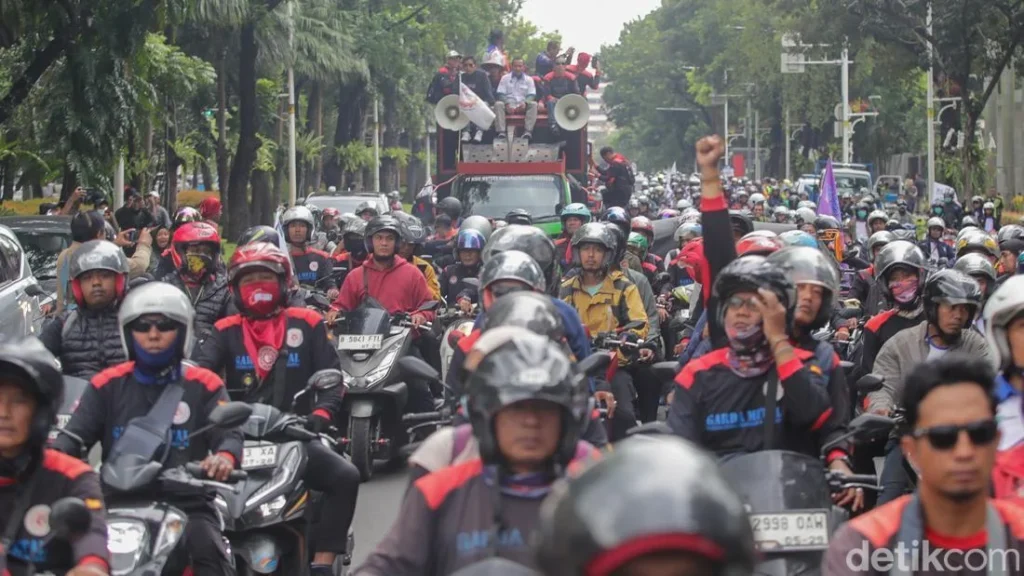
JAKARTA — Labor unions across Indonesia are gearing up for a major nationwide mobilization. The Great Coalition of the Indonesian Labor Struggle (Koalisi Besar Perjuangan Buruh Indonesia, or KBPBI) has announced plans to deploy approximately 50,000 workers in synchronized protests across 30 cities and regencies on Thursday, September 10, 2026.
Beyond mass demonstrations on the streets, the labor coalition plans to stage institutional pressure by conducting formal audiences with Regional House of Representatives (DPRD) offices, regency and city governments, and provincial administrations. The primary objective is to deliver direct, uncompromised demands regarding the substance of the controversial Labor Bill currently making its way through the legislative pipeline.
The mobilization marks a critical escalation in the ongoing tug-of-war between labor organizations and the state over national labor policy, highlighting deep-seated anxieties that legislative reform is failing to protect the socioeconomic welfare of the Indonesian workforce.
Main Facts
The core of the upcoming September 10 protests revolves around the legislative deliberation of the newly proposed Labor Bill, an initiative originating from the House of Representatives (DPR). According to KBPBI, the current draft of the bill is fundamentally flawed, falling drastically short of worker expectations and allegedly preserving the much-reviled spirit of the previous Omnibus Law on Job Creation, which has been a primary target of labor resistance for years.
Key facts regarding the planned mobilization and the core grievances include:
- Date of Action: Thursday, September 10, 2026.
- Scale: Estimated 50,000 workers participating in coordinated demonstrations.
- Geographic Spread: At least 30 cities and regencies across Indonesia.
- Action Format: Street rallies paired with formal institutional hearings (audiences) with local legislative and executive bodies.
- Core Organizations Involved: Confederation of the Indonesian Labor Alliance Confederation (KASBI) and the Indonesian Labor Union Movement (GSBI), operating under the umbrella of KBPBI.
- Primary Legislative Concerns: Apprenticeship schemes, Fixed-Term Employment Agreements (PKWT), excessive delegation of legislative power via ministerial and government regulations, and minimum wage calculation formulas.
Chronology of the Labor Mobilization
The road to the September 10 protests represents the culmination of mounting frustration among grassroots labor organizers who feel sidelined in the national legislative process.
Pre-Mobilization Phase (Early September 2026)
As legislative discussions regarding the Labor Bill progressed, regional labor chapters within KBPBI began identifying critical loopholes and unfavorable articles within the draft bill. Grassroots pressure rapidly mounted, with local worker bases across various provinces urging union leadership to execute an immediate, massive march directly on the national capital in Jakarta to pressure the central government and the DPR.
Strategic Decisions (Wednesday, September 9, 2026)
Recognizing the explosive potential of grassroots anger, top union leadership convened to strategize the most effective path forward. Rather than funneling all forces immediately into Jakarta, leadership opted for a decentralized yet synchronized nationwide approach.
On Wednesday, September 9, 2026, KASBI General Chairperson Sunarno formally released a written statement confirming the scope of the upcoming mobilization. He emphasized that the September 10 protests serve as an initial warning shot and a vital mechanism to channel grassroots demands directly to regional power structures before escalating further if legislative bodies fail to respond.
D-Day Mobilization (Thursday, September 10, 2026)
The synchronized actions are scheduled to unfold across 30 distinct municipalities and districts. Protesters will combine public demonstrations with targeted institutional lobbying, compelling local lawmakers and regional heads to formally document and forward worker grievances up to the central government in Jakarta.
Supporting Data and Technical Grievances
Labor leaders have pointed to specific structural flaws within the DPR’s initiative bill, citing alarming statistical vulnerabilities embedded within the legislative text.
1. The Apprenticeship Loophole and Cheap Labor
GSBI General Chairperson Rudi HB Daman highlighted that the provisions governing apprenticeships (pemagangan) within the bill are dangerously broad. Labor unions argue that these articles create a backdoor for institutionalized cheap labor practices and unregulated outsourcing.
- The Union Demand: KBPBI demands the complete abolition of general apprenticeship clauses in the bill. If retained at all, apprenticeships must be strictly restricted to genuine educational contexts involving active students, capped at a maximum duration of three months.
2. Fixed-Term Employment Agreements (PKWT)
The current draft permits Fixed-Term Employment Agreements to stretch up to four years, a timeline labor organizations find unacceptable as it normalizes chronic job insecurity.
- The Union Demand: While the coalition’s ideal stance is the total elimination of flexible contract loopholes, they have offered a strict compromise: if PKWT must be regulated within the law, the maximum duration should be slashed to a single year.
3. Legislative Delegation and "Democratic Deficit"
One of the most profound structural criticisms leveled by KBPBI involves the rampant delegation of legislative authority. A detailed review of the bill reveals that critical worker protections are deliberately omitted from the primary statute and instead deferred to secondary executive regulations. Rudi highlighted the following breakdown of deferred articles:
- 43 articles delegated to Government Regulations (PP).
- 16 articles delegated to Ministerial Regulations (Permen).
- 3 articles delegated to Presidential Regulations (Perpres).
According to labor representatives, pushing vital labor standards into executive rule-making rather than open parliamentary debate strips the legislative process of transparency, severely undermining the core essence of industrial democracy.
4. Minimum Wage Formulation and the "Alfa" Variable
The controversy over wage calculations remains a bleeding wound for the Indonesian labor movement. The state’s continued inclusion of the "alfa" variable within the minimum wage adjustment formula is viewed as a systemic mechanism to suppress real wage growth, failing to reflect actual inflation and rising living costs.
- The Union Demand: KBPBI insists that the government and the DPR completely discard the alfa variable, pushing instead for a transparent index that guarantees measurable improvements in worker purchasing power and overall welfare.
Official Responses and Union Stance
Labor leadership has framed the September 10 protests not as an act of defiance, but as a necessary democratic intervention to rescue a legislative process they believe has been captured by corporate interests.
Sunarno of KASBI underscored that the decentralized actions are designed to keep the government accountable. "On September 10, 2026, we will carry out monitoring actions in various regions across Indonesia. At least 30 city/regency regions will take to the streets. For tomorrow’s initial action, we estimate around 50,000 workers will participate," Sunarno stated.
Rudi HB Daman of GSBI echoed these sentiments, directly challenging the legislative legitimacy of the DPR’s initiative bill. "This DPR initiative bill is still far from the expectations of workers. One of the core flaws of this bill is that it still preserves the spirit of the Omnibus Law," Rudi asserted. He stressed that the widespread use of executive delegations represents an evasion of legislative responsibility. "When a law delegates too much to Government Regulations, the essence of democratization is lost."
Crucially, union leadership revealed that they exercised immense restraint in organizing regional actions rather than a singular capital-city siege. Grassroots members had overwhelmingly demanded an immediate, massive mobilization in Jakarta. However, union executives deliberately chose a decentralized approach to allow local DPRD offices and regional governments a chance to listen and act, while giving the central government a final opportunity to course-correct before industrial relations sour further.
Implications of the Mobilization
The synchronized actions on September 10, 2026, carry profound political, economic, and social implications for the administration and the national legislature.
1. Political and Legislative Fallout
The massive turnout of 50,000 workers across 30 regions signals that labor resistance cannot be neutralized simply through bureaucratic containment or closed-door lobbying. By taking the fight to regional parliaments (DPRDs), the coalition is forcing local politicians to take a public stance on national labor laws. This grassroots pressure complicates the central government’s ability to fast-track the bill without facing severe political friction across multiple provinces.
2. Economic and Industrial Stability
The ongoing dispute over wages, outsourcing, and contract labor directly impacts investor sentiment and industrial stability. If the DPR and the government ignore the demands presented on September 10, labor coalitions have threatened to escalate their tactics. A prolonged standoff could lead to broader, indefinite general strikes, paralyzing key manufacturing hubs, industrial estates, and logistics corridors across the archipelago.
3. The Future of Indonesian Industrial Democracy
At its heart, the conflict over the Labor Bill is a referendum on the social contract between the Indonesian state and its working class. The heavy reliance on executive regulations and the retention of flexible labor mechanisms point to an ongoing technocratic push for economic competitiveness at the expense of labor security. How the state responds to the September 10 mobilization will set a definitive precedent for the balance of power between capital and labor in Indonesia for years to come.