The Eternal Rhythm of Barranquilla: How Shakira Became a Monumental Icon of Colombian Pride
JAKARTA – In the heart of Barranquilla, the vibrant port city on Colombia’s Caribbean coast, stands a testament to global stardom that transcends mere musical charts. It is a 6.5-meter-tall bronze tribute to Shakira Mebarak, the city’s most famous daughter. As the world witnessed her electrifying performance during the 2026 World Cup halftime show, where she commanded the stage alongside Burna Boy to perform the tournament’s official anthem, "Dai Dai," the global spotlight once again turned toward her roots.
While her repertoire has evolved over the decades, the essence of Shakira—her fluid, hypnotic belly dancing and the rhythmic precision of her hips—remains the defining hallmark of her career. In Barranquilla, this legacy is not just recorded in audio files or streaming statistics; it is cast in bronze, immortalized as a permanent landmark that draws thousands of visitors annually.
The Legacy in Bronze: A Monumental Tribute
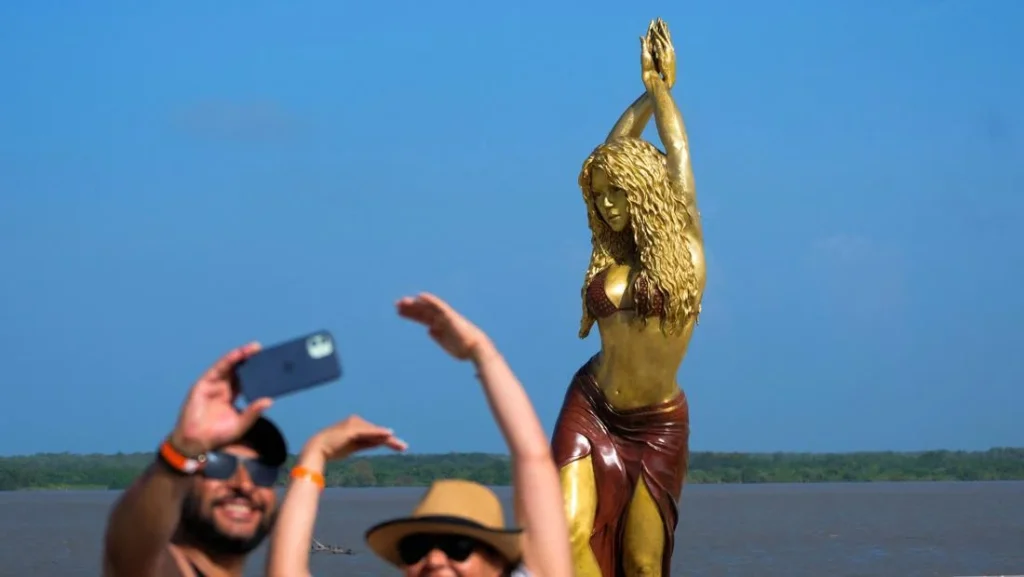
The statue, unveiled in December 2023, is a masterpiece of public art created by local sculptor Yino Márquez. Standing at 6.5 meters (approximately 21 feet) and weighing a staggering six tons, the monument captures the singer mid-performance. Her pose is unmistakable: her torso arched, her arms reaching toward the heavens, and her hips captured in that signature, fluid motion that defined the global phenomenon of "Hips Don’t Lie."
The Artistic Narrative
The construction of the statue was a labor of love that spanned five months of intensive craftsmanship. Márquez, a renowned local artist, sought to incorporate the geography of Barranquilla into the very fabric of the sculpture. The lower portion of the statue, crafted from aluminum, is designed to mimic the swirling, rhythmic waves of the Caribbean Sea and the flowing currents of the Magdalena River—the two lifeblood waterways of the city.
This design choice serves as a visual metaphor for Shakira’s relationship with her hometown: just as the rivers and the sea shaped the city, Shakira’s origins shaped the woman who would go on to conquer the world stage.
Chronology: From Local Talent to Global Icon
To understand the significance of this monument, one must look at the timeline of Shakira’s ascent and her enduring relationship with her birthplace.
- February 2, 1977: Shakira Isabel Mebarak Ripoll is born in Barranquilla, Colombia.
- Early 1990s: Shakira rises to national prominence in Colombia with albums like Magia and Pies Descalzos.
- 2006: The city of Barranquilla unveils its first tribute to the singer—a 4.8-meter-tall iron statue depicting a young Shakira playing an acoustic guitar.
- 2006-2023: Shakira cements her status as a global superstar, breaking records, winning multiple Grammys, and performing at major events like the Super Bowl and the World Cup.
- December 2023: The city government of Barranquilla unveils the new, larger-than-life bronze statue to honor her continued global influence and philanthropic work.
- 2026: Shakira commands the halftime stage at the World Cup, reminding the world of her undying relevance and connection to the global soccer community.
Supporting Data: More Than Just a Pop Star
The pedestal of the bronze statue bears a poignant inscription that encapsulates why Barranquilla chose to honor her so profoundly:
"A heart that composes, hips that do not lie, an unmatched talent, a voice that moves masses and bare feet that march for the good of children and humanity."
This inscription is vital to understanding the "Why" behind the monument. While the statue honors her musical prowess, it explicitly highlights her humanitarian efforts. Through her Pies Descalzos (Barefoot) Foundation, Shakira has built numerous schools in Colombia, providing education to thousands of displaced and underprivileged children. The city does not just celebrate a singer; it celebrates a philanthropist who has used her platform to advocate for systemic change in her home country.
Tourism and Economic Impact
Since the unveiling of the 2023 statue, Barranquilla has seen a noticeable uptick in "pop-culture tourism." The site has become a mandatory pilgrimage for fans of Latin music. For the city, the monument acts as a "soft power" anchor, drawing international media attention and bolstering the city’s identity beyond its traditional status as the home of the world-famous Barranquilla Carnival.
Official Responses and Civic Pride
The unveiling of the statue was an event of national importance. During the ceremony, representatives from the Barranquilla municipal government emphasized that the monument was a response to the "unwavering pride" citizens feel for their daughter.
"Shakira has taken the name of Barranquilla to every corner of the planet," said a city official during the unveiling. "She is the mirror in which our youth look at themselves. She represents the resilience, the creativity, and the joy of our Caribbean culture."
The response from the public has been overwhelmingly positive. Locals often gather around the statue, taking photos and sharing stories of how they remember the young Shakira performing in local plazas before she became a household name in the United States, Europe, and Asia.
Implications: The Intersection of Art, Culture, and Identity
The existence of two separate monuments to the same individual in a single city is a rare phenomenon. It signifies a transition in how cities define their heroes.
The Evolution of Public Memory
The first statue (2006) depicted a young, budding musician—a symbol of potential. The second statue (2023) depicts a woman in her prime, powerful and kinetic. It suggests that Barranquilla views Shakira not as a static figure of the past, but as a living, breathing part of their current identity.
Global Soft Power
In the context of the 2026 World Cup performance, the statue serves as a reminder that Shakira is a cultural diplomat. By maintaining a strong, visible connection to her hometown, she elevates the global profile of Barranquilla. For many international tourists, the "Shakira Statue" is their entry point into understanding Colombian culture, leading them to discover the city’s rich history, its famous carnivals, and its unique Caribbean heritage.
A Legacy Beyond the Stage
The implications of this artistic tribute extend into the world of philanthropy. By enshrining her "bare feet" (a reference to her foundation) on the statue, the city is signaling to the world that it values social responsibility as much as it values artistic success. It challenges the traditional narrative of celebrity worship, shifting the focus toward the tangible impact that artists can have on their communities.
Conclusion: A City’s Heart in Bronze
As the final notes of the 2026 World Cup halftime show fade into the memory of history, the bronze statue in Barranquilla remains. It is a silent observer of the city’s progress, a permanent fixture that grounds the global superstar back to the earth of her origins.
Shakira’s journey—from the streets of Barranquilla to the biggest stages on the planet—is a narrative of persistence. Her hips may not lie, but more importantly, her heart has never left the place that raised her. For the residents of Barranquilla, the statue is not just a tourist attraction; it is a mirror reflecting their own potential to reach the world while keeping their feet firmly planted on the soil of their ancestors.
In the intersection of music, dance, and bronze, Barranquilla has found a way to make their pride eternal. As long as the Magdalena River flows and the Caribbean wind blows, the image of the woman who taught the world how to move will remain, forever dancing in the heart of the city that gave her the rhythm to begin with.