The Dawn of Universal Mobile AI: Samsung Reports 95% Adoption Rate Across Southeast Asia
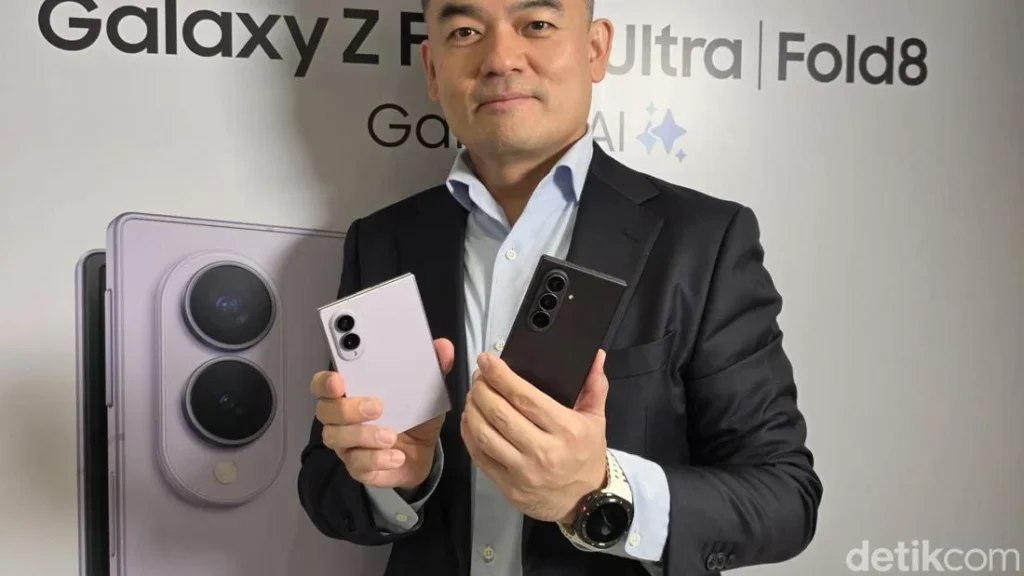
LONDON – In a landmark announcement during the Galaxy Unpacked 2026 event held in the heart of London, Samsung Electronics revealed a staggering shift in consumer behavior. The South Korean tech giant confirmed that mobile Artificial Intelligence (AI) has moved from a niche luxury to a daily necessity, with usage rates hitting unprecedented levels in Southeast Asia.
According to data released by the company, approximately 95% of Galaxy smartphone users in the region—a territory that encompasses major markets such as Indonesia, Thailand, Vietnam, and the Philippines—now actively incorporate Galaxy AI into their daily routines. This surge underscores a fundamental transformation in how consumers interact with their mobile devices, signaling the end of the "traditional" smartphone era and the beginning of the AI-centric epoch.
Main Facts: A Paradigm Shift in Southeast Asia
The core of Samsung’s revelation lies in the sheer velocity of AI integration. While many industry analysts predicted a gradual multi-year rollout for AI features, the reality in Southeast Asia has outpaced global expectations. Chon Hong, Head of Marketing for Samsung Electronics Southeast Asia & Oceania, provided the primary data points that illustrate this trend.
"We are seeing a profound and powerful engagement with Galaxy AI across the Southeast Asian landscape," Hong stated during an exclusive interview on the sidelines of the London event. "Our mission was to understand, monitor, and listen to how our customers utilize these experiences. The data tells us that AI is no longer a ‘plus-one’ feature; it is the core experience."
Key highlights from the report include:
- Universal Adoption: 95% of all Galaxy users in Southeast Asia are active AI users.
- Foldable Dominance: Users of the Galaxy Z7 series lead the charge, with a 96% adoption rate.
- Rapid Growth: A significant jump from 84% usage recorded in late 2025.
- Feature Preference: "Circle to Search" and "Now Brief" have emerged as the most utilized tools, highlighting a demand for speed and contextual information.
Chronology: From Innovation to Ubiquity (2024–2026)
To understand how Samsung reached a 95% adoption rate, one must look at the timeline of the "Galaxy AI" evolution.
The Genesis (Early 2024)
The journey began with the launch of the Galaxy S24 series, which introduced the world to the first iteration of Galaxy AI. At that time, features like "Live Translate" and "Generative Edit" were seen as experimental tools. Samsung’s strategy focused on educating the market on the potential of on-device AI combined with cloud-based processing.
The Expansion Phase (2025)
By September 2025, Samsung had successfully integrated AI across its mid-range and flagship tiers. The adoption rate in Southeast Asia was already impressive, sitting at 84%. During this period, the company focused on localizing AI capabilities, ensuring that languages such as Bahasa Indonesia, Thai, and Vietnamese were seamlessly supported in real-time translation and transcription services.
The Maturity Phase (2026)
As of the current Galaxy Unpacked 2026 in London, the ecosystem has reached a tipping point. The jump from 84% to 95% within less than a year suggests that AI has become a "sticky" feature—once users experience the efficiency of AI-driven search and summarization, they rarely return to manual methods. The launch of the Z7 series acted as a catalyst, pushing the boundaries of how AI interacts with foldable form factors.
Supporting Data: Analyzing the Numbers Behind the Trend
The data provided by Samsung offers a granular look at why Southeast Asia has become a global leader in AI adoption.
The Foldable Factor
One of the most striking statistics is the 96% adoption rate among Galaxy Z7 series users. Industry experts suggest this is due to the "productivity-first" mindset of foldable phone owners. The larger screen real estate of the Z Fold7, for instance, allows for more complex AI interactions, such as multi-window "Note Assist" or using the S Pen with "Circle to Search."
Growth Metrics
The 11% increase in usage between September 2025 (84%) and the present (95%) represents millions of new active AI users. This growth is attributed to:
- Software Optimization: One UI updates that made AI features more intuitive and less hidden in sub-menus.
- Hardware Efficiency: Newer NPU (Neural Processing Unit) chipsets that allow AI tasks to run faster with less battery drain.
- Consumer Awareness: Marketing campaigns that shifted from "What is AI?" to "How AI helps your day."
Preferred Features: The "Contextual" King
Samsung identified Circle to Search and Now Brief as the two pillars of current usage.
- Circle to Search: This feature allows users to identify anything on their screen—from a pair of shoes in a video to a landmark in a photo—by simply circling it. It eliminates the need to switch apps or type queries.
- Now Brief: A contextual summarization tool that provides users with a quick overview of their emails, news feeds, and daily schedules. In the fast-paced urban environments of Jakarta, Bangkok, and Singapore, this tool has become an essential time-saver for professionals.
Official Responses: Samsung’s Strategic Vision
In his address in London, Chon Hong emphasized that these numbers are a testament to Samsung’s "human-centric" approach to technology.
"It is very, very encouraging," Hong remarked, reflecting on the 95% figure. "The fact that usage increased so significantly in such a short window shows that we are hitting the right notes in terms of utility. When you see a 96% usage rate on our premium Z7 series, it proves that our most demanding customers find these tools indispensable."
Hong further elaborated on the shift in consumer psychology. "We are seeing the birth of new behaviors. Whenever a consumer needs to understand something or find something, they no longer think about the process; they simply act with the AI. It has become an instinctual extension of the user."
Looking forward, Hong teased the next phase of this evolution. "We are not stopping here. There are so many more features being baked into the hardware as we speak. We are incredibly excited to show consumers the new experiences that will arrive with the Galaxy Z Fold8."
Implications: What 95% AI Adoption Means for the Industry
The high adoption rate in Southeast Asia carries significant implications for the global smartphone market, software developers, and the competitive landscape.
1. The Death of the "Gimmick" Label
For years, skeptics labeled mobile AI as a marketing gimmick. However, a 95% adoption rate in a diverse and massive market like Southeast Asia effectively silences those critics. If nearly every user is engaging with the technology, it has officially transitioned into a core utility, similar to the camera or the web browser.
2. Competitive Pressure on Rivals
Samsung’s success places immense pressure on competitors like Apple and Google, as well as rising Chinese brands like Xiaomi and Oppo. To compete in the Southeast Asian market, rivals must now offer AI experiences that are not only functional but also deeply integrated into the OS. Samsung’s first-mover advantage in localized AI for Southeast Asian languages provides them with a significant "moat" against competitors.
3. The Data and Privacy Challenge
With 95% of users relying on AI, the volume of data being processed is astronomical. This will likely lead to increased scrutiny regarding how Samsung handles data privacy. Samsung’s "Knox" security branding will become even more critical as users entrust AI with summarizing private emails (Now Brief) and analyzing personal photos.
4. Hardware Evolution: The Z Fold8 and Beyond
The mention of the Galaxy Z Fold8 by Chon Hong suggests that Samsung is moving toward "AI-First" hardware design. Future devices will likely be designed around the requirements of Large Language Models (LLMs), with even larger batteries, more robust cooling systems for sustained AI processing, and specialized sensors that feed contextual data to the AI.
5. A Shift in Digital Literacy
The high adoption rate indicates that Southeast Asian consumers are becoming highly "AI-literate." This shift could spur a broader digital transformation in the region, influencing how education, e-commerce, and digital banking are delivered. If the smartphone is the primary gateway to the internet in Indonesia and neighboring countries, and that gateway is now 95% AI-powered, the entire digital economy will inevitably pivot toward AI-driven interactions.
Conclusion
The data from the London Galaxy Unpacked 2026 event confirms one thing: the AI revolution is not a future prospect—it is the current reality. With a 95% adoption rate, Samsung has successfully turned Southeast Asia into a blueprint for the rest of the world. As the company prepares for the launch of the Z Fold8 and continues to refine its "Contextual AI" philosophy, the boundary between the user and the machine continues to blur, promising a future where the smartphone is not just a tool, but an intelligent partner in every aspect of life.