
Market Resilience Amidst Currency Volatility: IHSG Opens Strong as Investors Await BI Interest Rate Decision
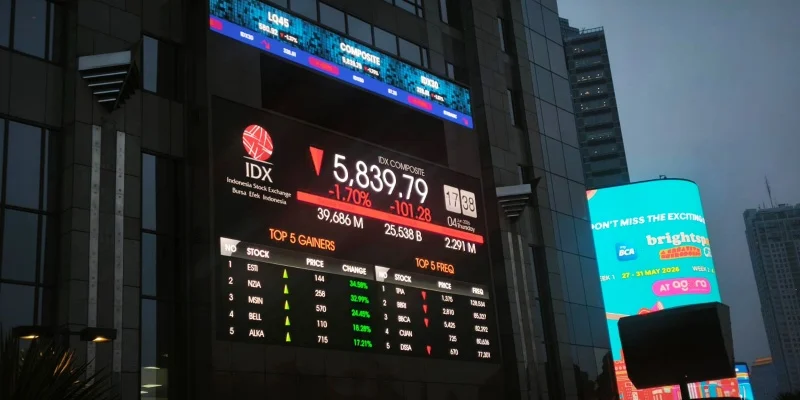
JAKARTA – The Indonesian capital market kicked off the trading session on Wednesday, July 22, 2026, with a display of resilience, as the Jakarta Composite Index (JCI)—or Indeks Harga Saham Gabungan (IHSG)—opened in the green. Despite the looming pressure on the national currency, investor optimism remained high during the morning session, buoyed by strong performance in key sectors.
Main Facts: A Robust Opening
As the Indonesia Stock Exchange (IDX) bell rang at 09:00 AM WIB, the JCI opened at 6,366, marking a significant gain of 25.9 points, or a 0.41 percent increase from the previous day’s close. This positive trajectory continued throughout the early morning, signaling a bullish sentiment among market participants.
Within the first 20 minutes of trade, the index further solidified its position, climbing 0.53 percent to reach the 6,373 level. This momentum reflected a broader market appetite for risk, as domestic investors navigated a complex macroeconomic landscape. The total market capitalization surged to a staggering Rp11,158 trillion, underscoring the depth and liquidity currently present in the Indonesian equity market.
Chronology of the Morning Trade
The trading activity in the first hour was characterized by high volume and intense participation. By the time the market had been open for only 20 minutes, data from the IDX indicated:
- Transaction Volume: 8 billion shares traded.
- Transaction Value: Rp3 trillion.
- Transaction Frequency: 543,000 individual trades.
The breadth of the market was also notably positive. Out of the total stocks traded, 309 shares recorded gains, while 212 shares experienced downward pressure. Another 215 shares remained stagnant, indicating a period of consolidation for many mid-cap entities. This distribution suggests that while the index is driven by large-cap stocks, there is widespread participation across various sectors, ranging from financial services to consumer goods and infrastructure.
Supporting Data and Market Dynamics
The divergence between the stock market and the foreign exchange market remains a critical point of analysis for economists. While the JCI shows strength, the Indonesian Rupiah is facing significant headwinds.
According to data compiled by Bloomberg, the Rupiah was trading at Rp17,913 per US Dollar as of mid-morning, reflecting a depreciation of 25 points, or 0.14 percent, from the previous close. The currency is currently hovering dangerously close to the psychological threshold of Rp18,000 per US Dollar.
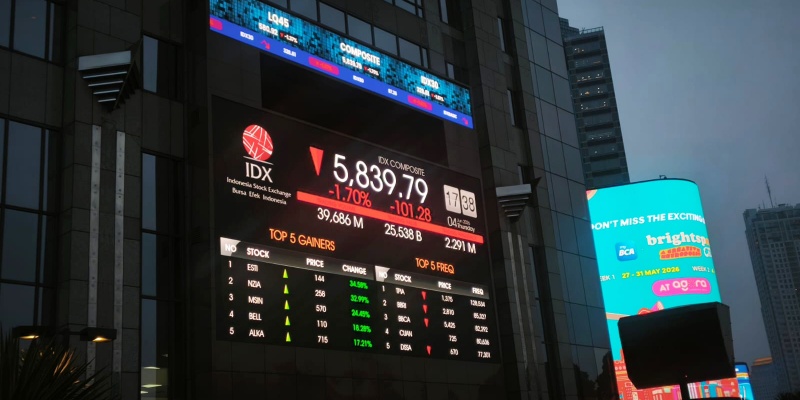
This pressure is largely attributed to the market’s "wait-and-see" approach ahead of the Bank Indonesia (BI) Board of Governors’ meeting, which is scheduled to conclude with an interest rate announcement this afternoon. Financial analysts suggest that the market is pricing in the possibility of a policy shift, as the central bank attempts to balance the need to support domestic economic growth with the necessity of stabilizing the Rupiah against a strengthening greenback.
Official Responses and Monetary Policy Context
While the official statement from Bank Indonesia is yet to be released, the anticipation surrounding the BI rate decision has become the primary driver of market sentiment today. Historically, when the Rupiah experiences volatility, investors closely monitor the central bank’s stance on interest rates.
Economists are divided on the potential outcomes. Some argue that an interest rate hike could be necessary to stem the outflow of capital and provide support for the currency. However, others warn that increasing the cost of borrowing could stifle the economic recovery momentum that has been building throughout the first half of 2026.
A spokesperson for a major local brokerage noted, "The JCI’s resilience is a testament to the fundamental strength of Indonesian corporations. Despite the currency weakness, investors are looking beyond the immediate noise of the FX market, focusing instead on long-term earnings potential and the resilience of the domestic consumer market."
Implications for Investors and the Economy
The current market environment presents both opportunities and risks for domestic and international investors.
The Impact of Currency Depreciation
The weakening of the Rupiah typically impacts sectors that rely heavily on imports, as the cost of raw materials increases. Conversely, export-oriented companies, particularly in the commodities and natural resources sectors, often benefit from a weaker currency. Investors are currently adjusting their portfolios to account for these shifts, which explains the high frequency of transactions observed in the early morning session.
The Role of Bank Indonesia
The outcome of the BI meeting will have a ripple effect across the entire financial system. If BI decides to maintain the current rate, it signals confidence in the current economic recovery path. However, a surprise hike or cut would likely trigger significant volatility in the bond and equity markets.

For the average investor, the current environment necessitates a defensive yet opportunistic strategy. High-frequency trading, as evidenced by the 543,000 transactions, suggests that institutional players are actively rebalancing their portfolios ahead of the policy announcement.
Future Outlook: Navigating the Uncertainty
As we look toward the remainder of the trading day, the JCI is expected to remain sensitive to the incoming BI announcement. If the central bank provides a clear, hawkish outlook, the Rupiah may stabilize, which would likely provide further fuel for the equity market rally. However, if the announcement is perceived as ambiguous, investors may choose to lock in profits, leading to a late-day correction.
Sectoral Analysis
- Financial Sector: Usually the bellwether for the JCI, financial stocks are currently under scrutiny as investors gauge how interest rate changes will impact net interest margins.
- Infrastructure and Commodities: These sectors are expected to remain volatile as they are most sensitive to macro-policy changes and commodity price fluctuations.
- Consumer Goods: Generally seen as a safer haven during periods of currency volatility, these stocks may see increased demand if the broader market remains uncertain.
Conclusion: A Delicate Balance
The morning of July 22, 2026, serves as a snapshot of the current Indonesian economic condition: a robust and optimistic equity market existing in tandem with a pressured and cautious currency market. The market’s ability to sustain the 0.53 percent gain within the first 20 minutes is a strong indicator of investor confidence.
However, as the clock ticks toward the Bank Indonesia announcement, the focus remains firmly on the central bank. Market participants are advised to exercise caution and monitor for volatility in the afternoon session. The ability of the JCI to hold the 6,300 support level will be the primary metric for the remainder of the week.
For more real-time updates and expert analysis on the Indonesian financial landscape, follow RMOL.ID on Google News. Click the star icon to stay informed about the latest market developments and economic policy shifts as they happen.
Disclaimer:
This report is intended for informational purposes only and does not constitute financial or investment advice. The market data provided is based on the morning session of July 22, 2026. Investors should conduct their own research or consult with a qualified financial advisor before making any investment decisions.