Transforming Trash into Treasure: The Growing Trend of DIY Bottle Piggy Banks
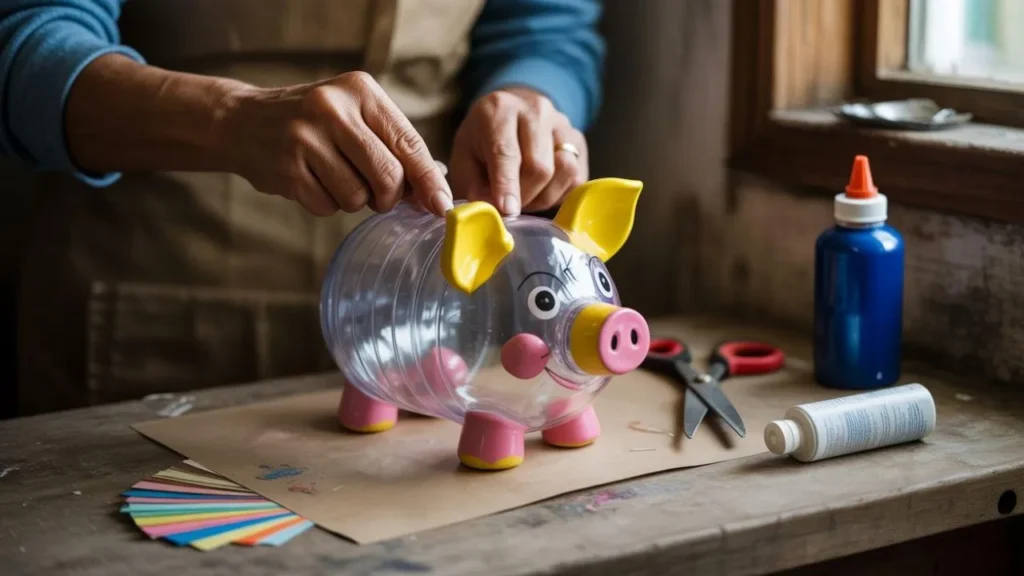
Published: September 28, 2026, 17:17 WIB
In an era defined by rapid consumption and increasing environmental awareness, the humble plastic bottle—often discarded after a single use—is finding a second life. A creative and practical movement is gaining momentum: the DIY "Upcycled Piggy Bank." By repurposing plastic bottles, families are not only reducing their household waste but are also fostering essential financial literacy and creativity in children.
What was once considered mere refuse is now being recognized as a versatile raw material. Experts in sustainability and environmental management have long advocated for the "upcycling" of PET (polyethylene terephthalate) plastics, as these materials can take hundreds of years to decompose in landfills. Transforming these items into functional objects like piggy banks, pencil holders, or planters is a tangible step toward a circular economy at the household level.
The Environmental Imperative: Why Upcycling Matters
The global plastic crisis is a pressing issue. According to the NOAA Marine Debris Program, plastic waste poses a significant threat to our ecosystems. On a larger scale, the National Renewable Energy Laboratory (NREL) has highlighted the urgent need for "second-life" technologies. Gregg Beckham, a Senior Research Fellow at NREL, notes that the true objective is to develop systems that render single-use plastics valuable enough to be harvested and repurposed rather than discarded.
With approximately 26 million tons of PET produced annually, much of which ends up in landfills, the DIY movement serves as a practical, accessible, and immediate solution for individual households. By choosing to craft a piggy bank rather than purchasing a mass-produced plastic one, consumers prevent new plastic from entering the market while extending the life cycle of existing polymers.
Chronology of a Craft: From Waste to Savings
The process of turning a bottle into a savings vessel is a multi-stage creative journey. The transformation typically follows this sequence:
- Preparation and Cleaning: The bottle must be thoroughly rinsed and dried. Removing labels and adhesive residue is essential for a professional finish.
- Structural Modification: Using a cutter or heavy-duty scissors, a slot is created for coin insertion. This stage requires precision to ensure the aperture is wide enough for coins but not so large that it weakens the bottle’s integrity.
- Artistic Design: This is the phase where children take the lead. Whether painting the bottle to resemble a pig, a cat, or a space-themed rocket, this stage turns a utilitarian object into a personalized treasure.
- Final Assembly: The addition of legs (often made from bottle caps), ears (from felt or cardboard), and other decorative elements finalizes the project.
Step-by-Step: Crafting a "Piggy" Bank for Beginners
The "Piggy Bank" remains the most popular model for beginners. The ergonomic nature of a 500ml to 1-liter mineral water bottle makes it the perfect size for a child’s hands.
Essential Materials:
- Plastic Bottle: A 500ml or 1-liter bottle with a rounded base.
- Adhesive: A high-quality glue gun or specialized plastic adhesive is recommended for durability.
- Cutting Tools: A craft knife (to be handled strictly by adults).
- Decorative Media: Acrylic paints, permanent markers, felt fabric, or googly eyes.
Technical Tips for Success:
To ensure the piggy bank lasts, it is crucial to understand how to bond materials to plastic. Many beginners struggle with paint peeling or decorations falling off. Using a primer or lightly sanding the surface of the bottle before painting ensures the acrylic pigment adheres permanently. Furthermore, when attaching legs, ensure the bottle is perfectly balanced so it does not tip over when it begins to accumulate the weight of coins.
The Psychological and Financial Benefits for Children
Beyond the environmental impact, the DIY piggy bank serves as a powerful pedagogical tool. Financial experts like LeBaron-Black, a researcher in family finance, have long championed the "three-jar" or "segmented" approach to teaching children about money. By creating a physical, visual, and tactile representation of savings, children develop a sense of ownership over their finances.
A 2024 study on the intersection of craft activities and mental health revealed that engaging in hands-on creative projects significantly reduces stress and anxiety in both children and adults. The process of building a piggy bank is not just about saving money; it is about the "pride of production." When a child saves coins in a container they built with their own hands, the act of saving becomes an extension of their personal identity and discipline.
Expert Perspectives and Official Guidance
The shift toward DIY crafts is supported by educational psychologists who emphasize the importance of "literacy in action." Financial literacy is often abstract for children; however, a transparent or personalized bottle piggy bank makes the accumulation of wealth visible.
"The goal is to move from the abstract concept of ‘saving’ to the concrete reality of ‘seeing’ the growth of one’s resources," says a representative from the family financial advisory group. When families combine this project with lessons on goal-setting, the piggy bank becomes a gateway to understanding long-term planning and the value of currency.
Implications for the Future
The implications of this movement are twofold:
- Financial Resilience: By instilling the habit of saving through accessible methods, families can build a foundation of financial independence that carries over into adulthood.
- Sustainable Living: As more households embrace upcycling, the demand for new consumer goods decreases. Small, consistent actions by millions of people can lead to a significant reduction in the volume of waste destined for landfills.
For those looking to expand their DIY repertoire, the principles learned in building a bottle piggy bank—cutting, bonding, decorating, and planning—are transferable to other projects, such as creating desk organizers, vertical gardens, or even complex art installations.
Frequently Asked Questions (FAQ)
What is the ideal bottle size?
For a standard piggy bank, a 500ml to 1-liter bottle is optimal. It is large enough to hold a significant amount of currency but remains portable for children. For those with larger financial goals, a 5-liter water jug can be repurposed as a "master savings bank."
Is this activity safe for young children?
Safety is paramount. All cutting and preparation involving sharp edges should be performed by adults. Children should be involved in the design, painting, and decoration phases. It is also recommended to use low-temperature glue guns to prevent burns and to sand down any sharp edges on the coin slot to avoid accidental cuts.
How can I make the piggy bank more durable?
The longevity of the project depends on the quality of the finish. Applying a thin layer of clear varnish or mod-podge over the finished painting will protect it from scratches, moisture, and the wear-and-tear of daily use.
Can this project be turned into a business?
Many small-scale entrepreneurs have found success by elevating these basic DIY crafts into "upcycled art." By adding intricate details, high-quality finishes, and branding, these items can be sold at craft fairs or online marketplaces, proving that sustainability can also be economically viable.
In conclusion, the DIY plastic bottle piggy bank is more than a simple craft project. It is a synthesis of environmental stewardship, artistic expression, and financial education. As we look toward a future that demands greater responsibility toward our planet and our wallets, these small, creative interventions serve as a reminder that we hold the power to reshape our world, one bottle at a time.