The Silent Threat: Decoding the Rise of Zoonotic Malaria in Sumatra’s Changing Landscapes
In the global battle against malaria, human-to-human transmission has seen a significant decline over the past several decades. However, a shadow looms over Southeast Asia: the emergence of zoonotic malaria, specifically Plasmodium knowlesi. This parasite, which naturally circulates among long-tailed macaques (Macaca fascicularis) and langurs, has successfully breached the species barrier, posing an evolving challenge to public health in regions where deforestation and agricultural expansion bring humans and primates into increasingly close contact.
In Indonesia, the first human case of P. knowlesi was documented in South Kalimantan in 2010. Since then, the parasite has been detected across various provinces in Kalimantan and Sumatra, including Aceh and North Sumatra. While North Sumatra reported 377 human cases in 2017 alone, the specific mosquito vectors responsible for this transmission remained a biological mystery—until now. A groundbreaking study published in the journal Scientific Reports has finally unmasked the culprits, confirming the presence of two key mosquito species in Indonesia for the first time and revealing their potential role in spreading both monkey and human malaria.
The Search for the Vector: A Study in Langkat
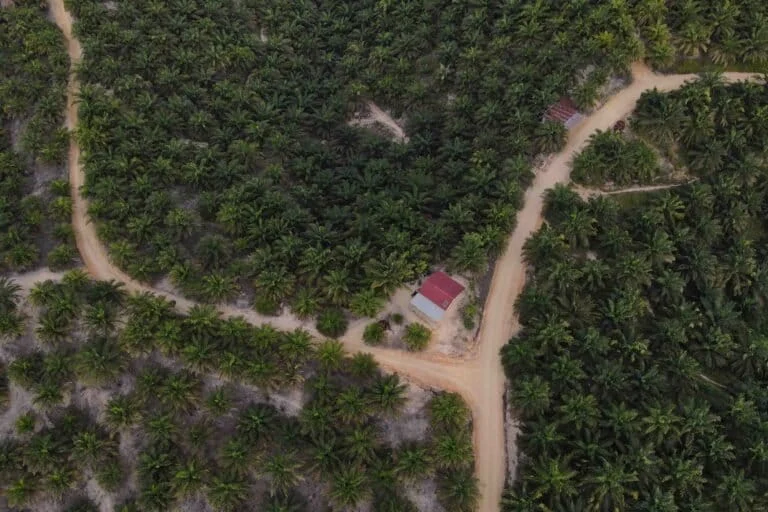
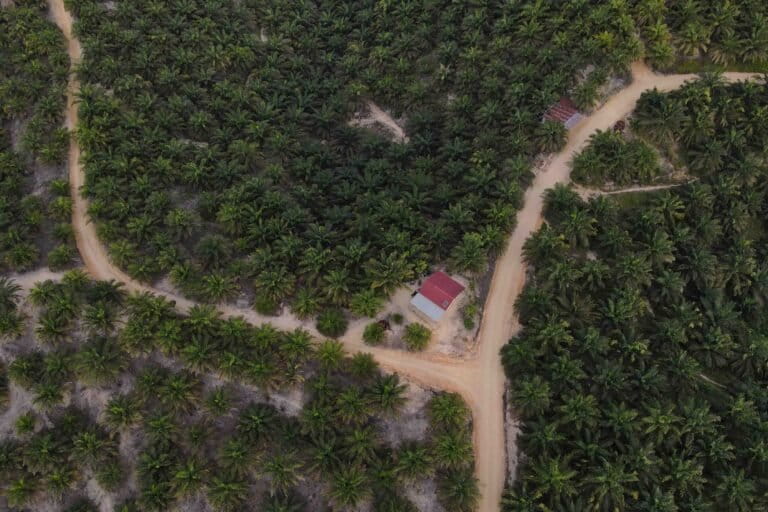
The research, conducted in the Ujung Bandar village of the Salapian district, focused on a region that serves as a microcosm of the environmental shifts occurring across Sumatra. Situated in hilly terrain at an elevation of 300 to 600 meters above sea level, the village is bordered by a complex mosaic of palm oil plantations, communal gardens, and degraded forest patches. This location was specifically chosen for its epidemiological history, with documented human cases of P. knowlesi occurring between 2022 and 2023.
To identify the transmission mechanism, researchers employed the "human landing catch" method—the gold standard recommended by the World Health Organization (WHO) for sampling host-seeking mosquitoes. Between July 2022 and June 2023, field teams remained in the designated observation areas from 6:30 PM until 6:00 AM, collecting mosquitoes as they landed on their skin. This rigorous process yielded 597 mosquitoes belonging to a notoriously difficult-to-identify group, known for their role in spreading malaria across Southeast Asia.
Two Species, One "Near-Twin" Challenge
The primary challenge faced by the research team was morphological similarity. The species within the Anopheles group captured are nearly indistinguishable to the naked eye. This "near-twin" status is not merely a taxonomical nuisance; it is a critical hurdle for disease control. Because closely related species often exhibit different behavioral patterns—such as preferred biting hours, resting habitats, and varying levels of susceptibility to insecticides—misidentification can lead to the failure of vector control strategies.
To bypass the limitations of physical inspection, the researchers conducted a comprehensive DNA analysis of the 597 specimens. The results were revelatory:
- 584 mosquitoes (97.8%) were confirmed as Anopheles dirus.
- 13 mosquitoes (2.2%) were confirmed as Anopheles scanloni.
Prior to this study, An. dirus had been recorded in Thailand, Myanmar, Cambodia, Laos, Vietnam, and Hainan Island (China), while An. scanloni was known only to exist along the border regions of Myanmar and Thailand. This study not only confirms the presence of these species in Indonesia for the first time but also suggests that previous attempts to map malaria vectors in the region may have been inaccurate, potentially conflating multiple species under a single misidentified label.
Chronology of Discovery and Molecular Evidence
The journey to this discovery began with the increasing frequency of P. knowlesi cases in North Sumatra. Recognizing that human cases were rising despite standard malaria control efforts, the team hypothesized that the transmission was being driven by forest-dwelling mosquitoes that were not being targeted by traditional indoor residual spraying.
Once the mosquitoes were identified via DNA barcoding, the researchers shifted their focus to the presence of pathogens. By analyzing the heads and thoraces of the captured mosquitoes—the areas where the malaria parasite resides before transmission—they uncovered startling evidence. Out of the 584 An. dirus specimens, six were found to carry DNA from malaria parasites.
Crucially, these mosquitoes did not carry just one type of parasite. Three specimens contained DNA of Plasmodium knowlesi, the zoonotic monkey malaria. Even more concerning was the discovery that four of these mosquitoes also carried Plasmodium vivax, a common parasite responsible for human malaria. The overlap of monkey and human parasite DNA within the same vector species strongly indicates that An. dirus is acting as a bridge, potentially facilitating the movement of parasites between wildlife and human populations in these disturbed landscapes.

Implications: The "Potential Vector" and Public Health Strategy
It is vital to distinguish between the presence of parasite DNA and the capacity for transmission. The detection of DNA confirms the parasite’s presence, but it does not definitively prove that the parasite has matured into its infectious stage (sporozoites) within the mosquito’s salivary glands. Therefore, the researchers have labeled An. dirus as a "potential vector."
However, given that this species is a well-established vector of both monkey and human malaria in mainland Southeast Asia, the implication for North Sumatra is clear: the risk is real. While the infection rate in the captured mosquitoes (0.5%) is lower than the 0.9% recorded in Sabah, Malaysia, in 2015, it represents the first definitive evidence of the mechanism of transmission in this part of Indonesia.
For a province like North Sumatra, which is home to approximately 15.3 million people—more than half of whom reside in rural, potentially high-risk areas—this discovery mandates a shift in public health strategy. Traditional malaria control, which often focuses on indoor transmission, may be insufficient against An. dirus, which typically exhibits different biting behaviors.
The Road Ahead: Why More Data is Needed
The study concludes with a call for more intensive surveillance. The researchers emphasize that much remains unknown about the biology of An. dirus in the Sumatran context. Key questions include:
- Biting Preferences: Are these mosquitoes primarily feeding on humans, or are they opportunistic feeders that shift between monkeys and humans?
- Environmental Triggers: How do the specific land-use patterns, such as the conversion of forests to palm oil plantations, correlate with the density of these mosquito populations?
- Behavioral Ecology: What are the exact peak activity hours for An. dirus in Sumatra, and how does this affect the efficacy of bed nets and protective clothing?
The researchers advocate for larger-scale sampling to better understand the ecological niche of these mosquitoes. Furthermore, they stress the need for updated diagnostic tools that can distinguish between "near-twin" mosquito species in the field, rather than relying solely on post-hoc DNA analysis in a lab.
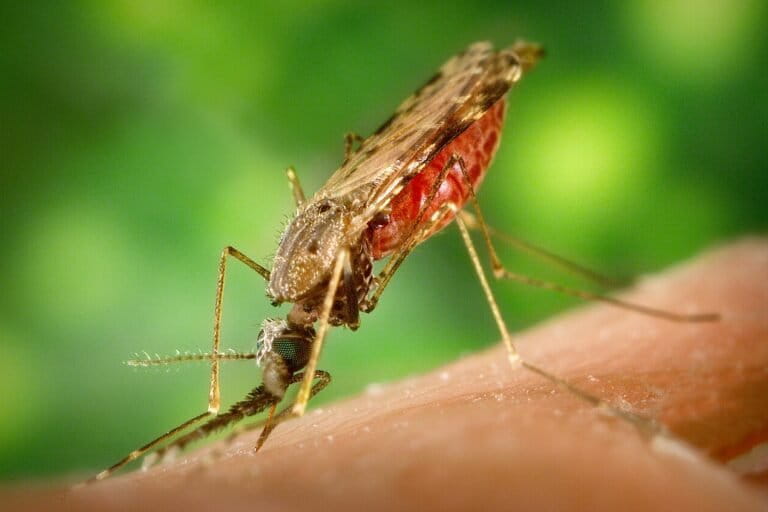
As Indonesia continues to grapple with the complexities of zoonotic diseases, the identification of An. dirus and An. scanloni provides a vital piece of the puzzle. It serves as a reminder that the environment and human health are inextricably linked. By understanding the vectors that bridge the gap between primate reservoirs and human hosts, health authorities can begin to design more targeted interventions to protect rural communities from the encroaching threat of monkey malaria.
Reference
Sebayang, B. F., van de Straat, B., Kurniawan, A., Haq, A. M., Garjito, T. A., Saeung, M., Manguin, S., Lubis, I. N. D., Grigg, M. J., Russell, T. L., & Burkot, T. R. (2026). First molecular confirmations of Anopheles dirus and Anopheles scanloni in Indonesia, with DNA of zoonotic, enzootic and human malarias detected in An. dirus. Scientific Reports, 16, 11572. https://doi.org/10.1038/s41598-026-42478-z