The Battery Trap: Jogja’s Electric Pedicab Ambition Collides with Reality
By Editorial Staff
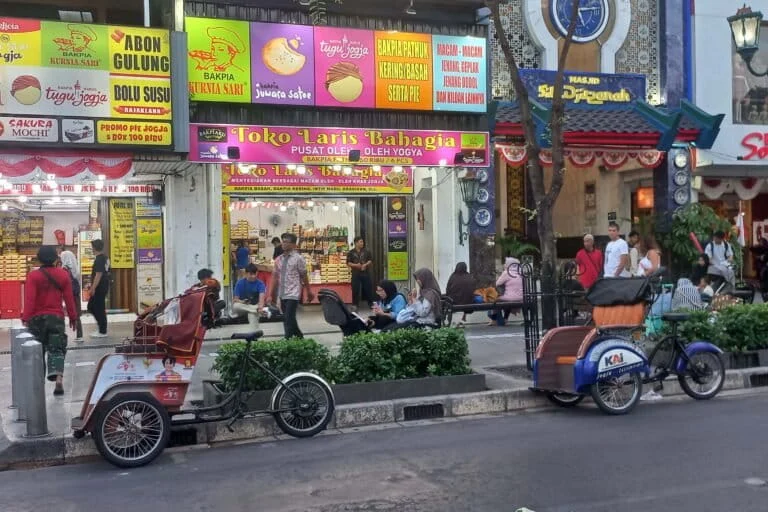
Under the sweltering afternoon sun of Yogyakarta, the vibrant streets of the city—a cultural heartbeat of Indonesia—are witnessing an unsettling evolution. For Ponijo, a 72-year-old pedicab driver, the promise of modernization has turned into a financial and logistical nightmare. As he maneuvered his electric pedicab from the historic Pasar Ngasem toward the Pojok Benteng Wetan, a sharp, metallic clack signaled the end of his day. The drivetrain of his state-sponsored electric vehicle had failed.
This incident is not an isolated mechanical quirk; it is a symptom of a broader, systemic failure in Yogyakarta’s ambitious transition to "green tourism." As the local government moves to phase out traditional motorized pedicabs in favor of 1,000 electric units, the human and environmental costs are beginning to outweigh the idealized vision of a cleaner Malioboro.
The Human Cost of "Green" Innovation
Ponijo’s experience illustrates the precarious reality for the city’s informal transport workers. When his electric pedicab’s dynamo shattered, he was left stranded. The frame of the electric unit is significantly heavier than a traditional pedicab, making it impossible to pedal manually once the power assist fails. His colleague, Kamsi, had to "stut"—a local term for pushing a disabled vehicle with a foot from a motorcycle—across 8.7 kilometers of heavy traffic to reach a specialized repair shop.

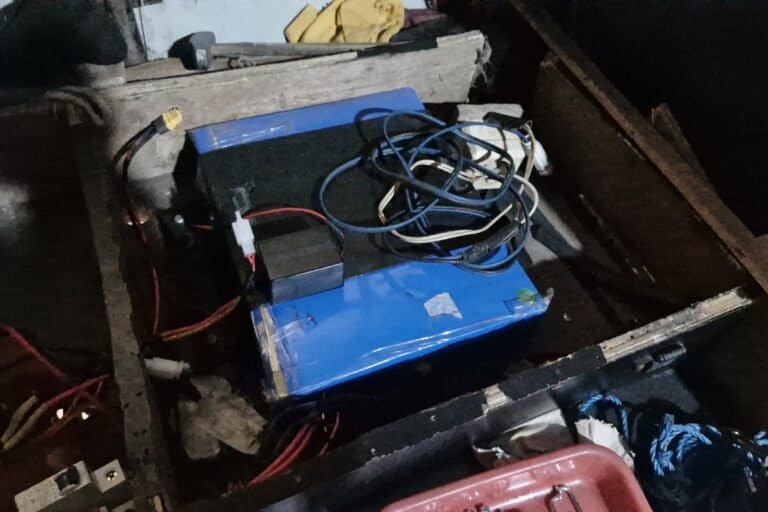
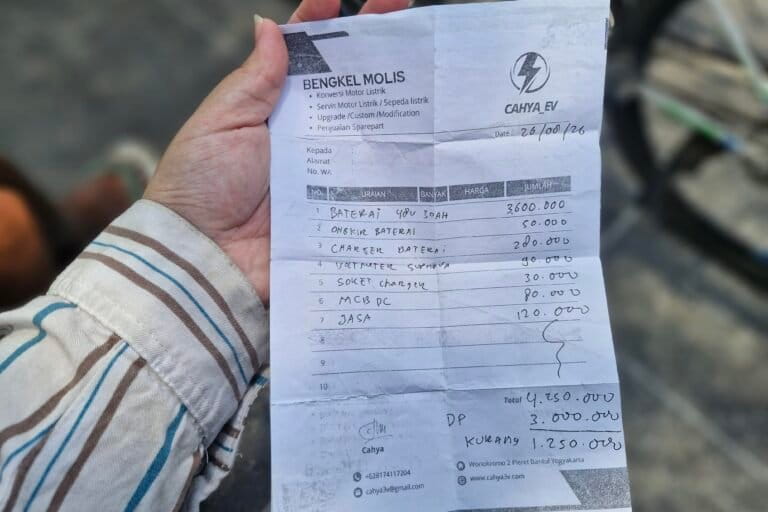
The financial burden is staggering. Shortly after replacing the costly dynamo, Ponijo’s battery array suffered a catastrophic failure. Seven out of 16 lithium-ion battery cells died, rendering the vehicle useless. The repair shop quoted him Rp350,000 per cell. With a total cost nearing Rp10 million, Ponijo was left paralyzed; his daily income, hovering between Rp60,000 and Rp100,000, makes such repairs an insurmountable mountain.
"I’ve been borrowing Kamsi’s motorbike-pedicab for two months just to put food on the table," Ponijo lamented. His story is repeated across the city, where roughly 350 electric pedicabs now operate, often plagued by wiring issues, fragile chassis, and a chronic lack of charging infrastructure.
Chronology of a Failed Rollout
The push for electric pedicabs in Yogyakarta is a multi-stakeholder initiative involving the provincial government, central ministry grants, universities, and political entities. The initiative aims to modernize the tourist experience in Malioboro, yet the implementation has been marred by a lack of foresight.
- Initial Implementation: The government announced a phased replacement of motorized pedicabs with electric units to reduce local emissions.
- The Infrastructure Gap: Despite hundreds of units being deployed, the city only provides one centralized charging station in the Ketandan parking area, forcing drivers into long, unproductive queues.
- Maintenance Crisis: The technical complexity of these vehicles has outpaced the local repair ecosystem. Drivers are left to navigate a fragmented market of repair shops that often lack the expertise or parts to handle the proprietary technology of the electric units.
- The Tipping Point: As the government plans to ban traditional motorized pedicabs, the economic pressure on drivers has reached a critical juncture.
The Toxic Legacy: Where Do the Batteries Go?
The most chilling aspect of this transition is the absence of a circular economy for battery waste. A single electric pedicab relies on 16 battery cells. When one fails, the entire pack is often compromised, necessitating total replacement.
When asked about the management of this hazardous waste, Agha Perdana Putro, Head of the Non-Route Transport Section at the Yogyakarta Transportation Agency (Dishub), offered a vague response, stating that they are "coordinating" with the Environmental Agency (DLH). However, this claim was promptly dismissed by the DLH.
"We have never been involved in the planning function for this program," stated Very Tri Jatmiko, Head of Environmental Planning and Control at the Yogyakarta DLH. He noted that the city’s current "drop boxes" are designed for household waste, such as small light bulbs or remote-control batteries, and are entirely unequipped to handle the heavy-metal-laden, high-capacity batteries used in electric vehicles.
Industry Silence and Regulatory Voids
Even the manufacturers seem caught in a loop of denial. PT Langit Biru Indonesia and PT Yogya Presisi Teknikatama Industri, the entities responsible for the design and manufacturing of these pedicabs, pride themselves on "green tourism" innovation. However, when pressed on the lifecycle of the batteries they produce, their defense is purely hands-off.
"We are manufacturers, not waste processors," said Petrus Tedja, an executive at the manufacturing firm. "The government should command the process through clear regulations."
This lack of accountability creates a "tragedy of the commons." If these batteries are dumped into landfills like the TPA Piyungan, the toxic leachate will inevitably contaminate groundwater, leading to long-term ecological destruction.
Scientific Solutions vs. Policy Inertia
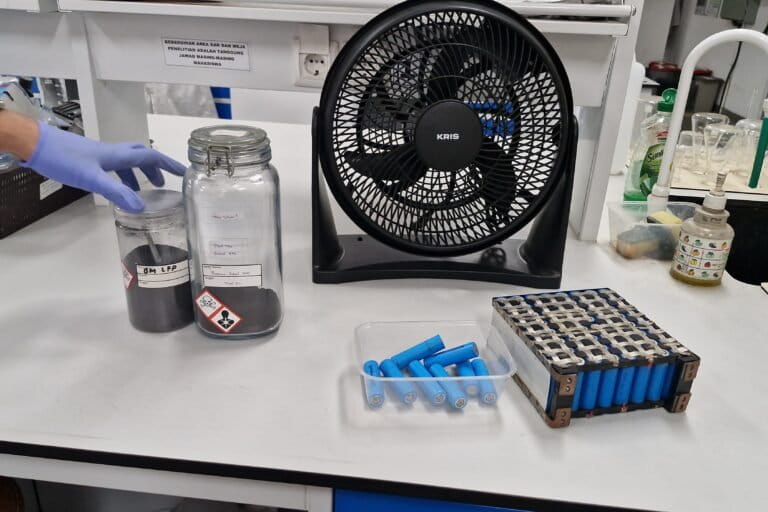
Dr. Indra Perdana, a researcher at the Department of Chemical Engineering at Universitas Gadjah Mada (UGM), argues that these batteries are not "waste" but "resources." He advocates for the concept of "second-life batteries," where cells that no longer hold enough charge for heavy-duty propulsion are repurposed for stationary solar energy storage or smaller electronic devices.
"If you have a battery that can no longer move a vehicle, it can still power a flashlight," Dr. Perdana explains. "There is value to be extracted—lithium, nickel, cobalt, and manganese—if we have the infrastructure to process them."
Yet, such a system requires an Extended Producer Responsibility (EPR) model, similar to those found in the European Union. Under the EU’s "New Battery Law," manufacturers are legally obligated to take back spent batteries, ensuring they are recycled via advanced hydrometallurgy. Indonesia, conversely, lacks any such roadmap. By 2030, the country is predicted to generate 120,000 tons of electric vehicle battery waste, while its domestic recycling capacity remains stuck at a mere 20,000 tons per year.
Implications: A "Green" Veneer for Social Injustice
Advocacy groups like WALHI Yogyakarta and Jatam National are sounding the alarm. They argue that the electric pedicab program is an example of "green-washing" that prioritizes optics over systemic change.
"If the government truly wanted a just energy transition, they would strengthen public transportation," says Rizky Abiyoga, Advocacy Coordinator at WALHI. "Instead, they have forced informal workers into a predatory business model that traps them in debt while ignoring the environmental destruction caused by the mining of nickel in other parts of the country."
Novita Indri of Trend Asia echoes these sentiments, noting that the policy is fundamentally flawed. "The electricity powering these pedicabs is likely generated by coal-fired power plants. We aren’t reducing emissions; we are just moving the smokestack from Malioboro to a remote mining region."
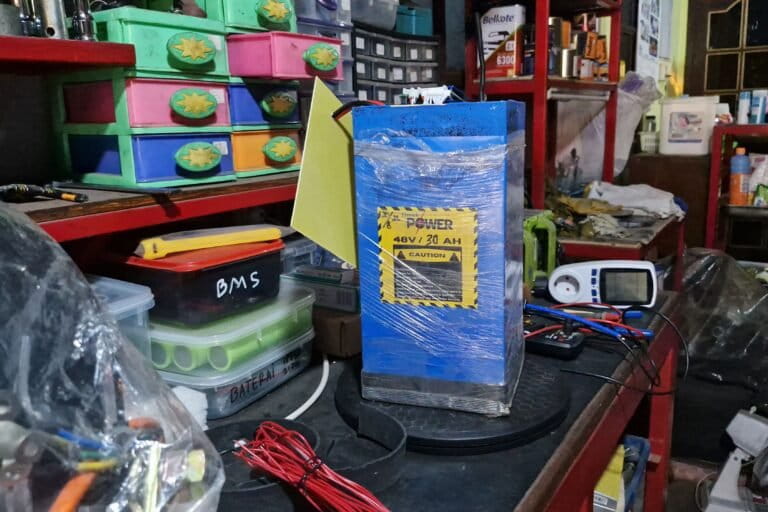
The policy lacks an economic analysis of the driver’s plight. By failing to subsidize maintenance or provide a sustainable disposal route for batteries, the government has essentially socialized the costs of a private-sector-led technological experiment onto the shoulders of the most vulnerable workers.
Conclusion: The Need for Accountability
Yogyakarta’s electric pedicab program serves as a cautionary tale. While the ambition to modernize and "green" a city is noble, the execution has been marred by a lack of institutional coordination, regulatory absence, and a disregard for the socio-economic welfare of the operators.
Unless the government shifts its focus from performative technology deployment to a comprehensive, circular-economy-based infrastructure that includes waste management and social protection for drivers, the "green" vision for Malioboro will remain a hollow promise, paid for by the sweat and debt of men like Ponijo. The transition to electric energy must be more than just a change in propulsion; it must be a change in how we value human labor and environmental health.