Beyond the Beads: The Timeless Relevance of the Abacus in Modern Numeracy
Jakarta – In an era dominated by digital calculators and artificial intelligence, one might assume that ancient manual tools have been relegated to the pages of history books. However, the sempoa—or abacus—is proving to be an enduring titan in the world of mathematics. Far from being a relic, this ancient device is currently undergoing a renaissance in primary education, serving as a powerful catalyst for enhancing numerical literacy and cognitive development in children.
As educators and researchers continue to explore methods to combat "math phobia" and bridge the gap in fundamental numeracy, the abacus stands out as a bridge between tangible physical movement and abstract mental calculation.
The Historical Genesis of the Abacus
The abacus, known by various names such as swipoa, sipoa, or dekak-dekak, is perhaps humanity’s first "computer." According to research published in the INNOVATIVE: Journal of Social Science Research (2024), the origins of the device trace back to the Babylonian civilization around 2,400 BCE.
In its earliest iteration, it was not the polished wooden frame we recognize today, but rather a simple board covered in sand. Historians suggest that these early tools allowed the Babylonians to perform basic addition and subtraction with remarkable efficiency for their time. As trade and commerce expanded, so did the reach of the abacus. Civilizations across the globe—including the Greeks, Romans, Russians, and Japanese—adopted and adapted the tool to fit their unique counting systems.
However, it was the Chinese iteration that solidified the tool’s modern design. By developing a frame with two beads on the upper deck and five on the lower, they created a system that was both intuitive and mathematically comprehensive. This specific model became the gold standard, providing the structural foundation that remains the most widely used configuration in modern educational programs.
Cognitive Implications: More Than Just Counting
The resurgence of the abacus in primary schools is not merely about finding a "fun way to add." Scientific literature suggests that the method has profound implications for brain development.
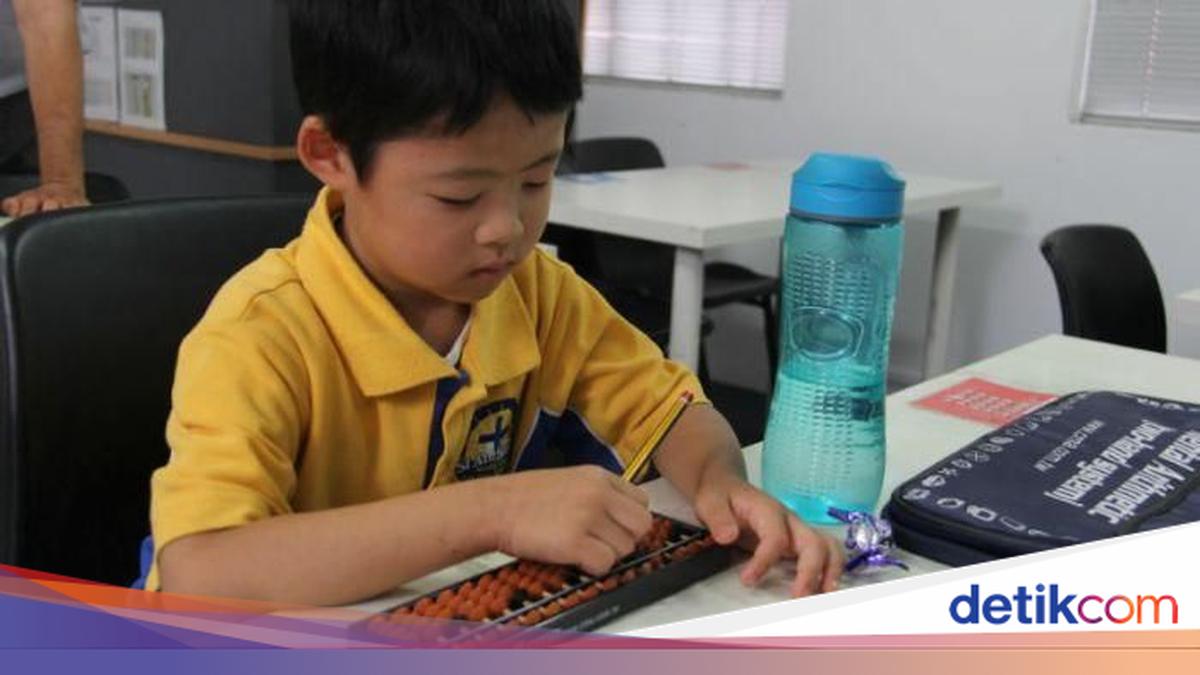
According to a study titled “Using the Abacus to Improve Student Interest and Numeracy Skills” published in the Jurnal Bakti Masyarakat Indonesia (2024), the act of manipulating beads engages the brain in a unique, multisensory way. When a child moves a bead, they are not just performing a calculation; they are coordinating their tactile motor skills with visual processing and logical reasoning.
Balancing the Brain
One of the most significant benefits of the abacus method is its ability to foster a balanced engagement between the left and right hemispheres of the brain. While traditional rote learning often leans heavily on the analytical, left-brained approach, the abacus integrates:
- The Left Brain: Handles logic, sequencing, and analytical processing.
- The Right Brain: Utilizes spatial visualization, pattern recognition, and imaginative calculation.
This synergy allows students to transition from physical manipulation to "mental arithmetic." Once a child becomes proficient with the beads, they can "see" the abacus in their mind’s eye, performing complex operations—from square roots to long division—in seconds. This mental agility is the hallmark of advanced abacus training and often results in students gaining an unprecedented level of confidence in their mathematical abilities.
Educational Impact: Tackling Math Phobia
For many primary school students, mathematics is a source of anxiety. The abstract nature of numbers can feel disconnected from reality. The abacus acts as a "physical anchor" for these abstract concepts.
A 2025 study published in Bilangan: Jurnal Ilmiah Matematika, Kebumian dan Angkasa highlights how the abacus is effectively used to overcome "mathematics phobia." By converting numbers into physical objects, the threat of the "wrong answer" is mitigated. The student can see the math happening, move the beads back to correct an error, and visualize the process of regrouping or carrying.
Beyond pure mathematics, the practice of using the abacus has been observed to improve non-academic traits, including:
- Discipline: The structured nature of the device requires focus and adherence to specific operational protocols.
- Concentration: Mastering bead movement necessitates a high degree of sustained attention.
- Problem-Solving: By treating a calculation as a puzzle to be solved, students develop a resilience and systematic approach that they later apply to more complex, non-mathematical problems.
Mastering the Mechanism: A Guide to Implementation
To understand why the abacus is so effective, one must understand its structure. As detailed in Soehartanti’s Panduan Dasar Belajar Berhitung dengan SEMPOA, the device is essentially a physical map of our decimal system.
The Structural Layout
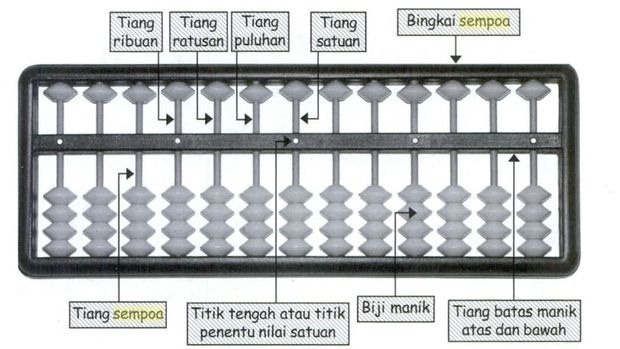
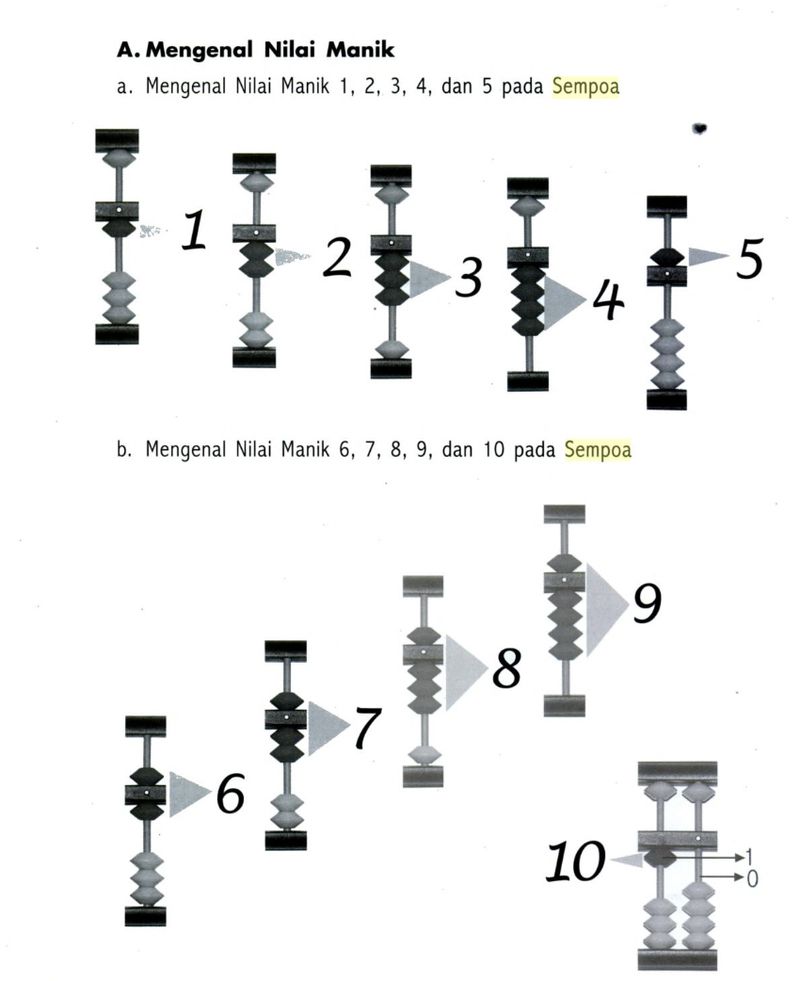
- The Upper Beads: These represent values of five.
- The Lower Beads: These represent the values of one through four.
- The Central Beam: This acts as the boundary; beads moved toward the beam are "active," while those moved away are "inactive."
The Methodology of Movement
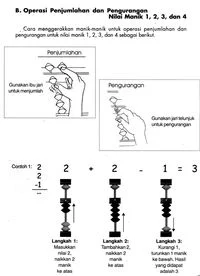
The teaching process begins with tactile muscle memory. Educators emphasize using the thumb for addition and the index finger for subtraction. This consistency is vital for developing the fluid, rapid hand movements that characterize expert users.
Handling Units and Tens:
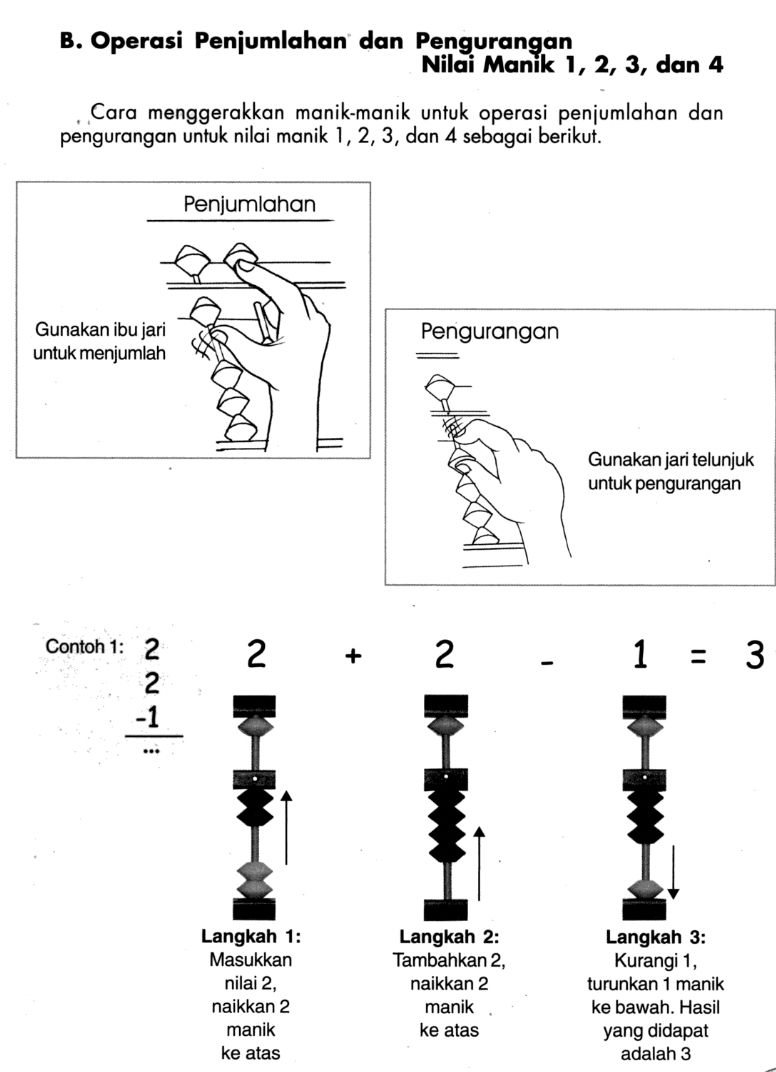
- Units (1-4): To represent the number four, a student pushes four lower beads toward the central beam.
- The Number Five: To represent five, the student pushes the upper bead down toward the beam while resetting the lower four.
- Tens and Beyond: The columns to the left of the unit column represent tens, hundreds, and thousands. For example, to represent "30," a student would leave the unit column at zero and move three beads up in the "tens" column.
This positional notation mirrors the way we write numbers on paper, reinforcing the relationship between the physical device and the written symbol.
Supporting Data and Research Trends
Recent scholarly output from Indonesian universities, such as the Universitas Pendidikan Indonesia (UPI) and Universitas Tarumanagara, underscores a clear trend: schools that integrate abacus training report higher scores in standardized numeracy assessments.
The data suggests that the "learning curve" for the abacus is steep initially, but once the logic is grasped, the rate of calculation acceleration is exponential. Unlike rote memorization, which is fragile and prone to lapses, the mental visualization developed through the abacus is robust. Students who have mastered this method often report a permanent shift in how they perceive numbers—they no longer see them as static, intimidating symbols, but as dynamic, manageable quantities.
Implications for Future Curricula
The evidence presented in these academic journals points to a clear recommendation: the integration of traditional tools like the abacus into modern primary school curricula is not a step backward, but a strategic enhancement.
Strengthening Human Capital
As the global economy becomes increasingly data-driven, the ability to perform mental calculations with speed and accuracy is becoming a valued cognitive asset. Even with calculators at our fingertips, the process of calculation—the deep neural pathways formed by mental math—cannot be replaced. By fostering these skills early, we are essentially "future-proofing" students, giving them a sharper, more agile mind capable of handling the demands of a high-tech society.
Pedagogical Flexibility
The beauty of the abacus lies in its scalability. It can be used as a simple counting frame for a six-year-old learning to add, or as a sophisticated tool for an older student exploring complex algorithms. Its versatility makes it an ideal pedagogical companion in classrooms with mixed ability levels, allowing students to progress at their own pace without the pressure of a "one-size-fits-all" digital software.
Conclusion
The abacus remains one of the most elegant examples of human engineering. Its longevity is a testament to the fact that while technology changes, the fundamental requirements of the human brain—tactile engagement, visual representation, and systematic logical progression—remain constant.
By embracing the sempoa, educators are providing students with more than just a tool for arithmetic; they are providing a foundation for cognitive mastery. Whether it is overcoming the fear of math, improving concentration, or simply mastering the art of the count, the beads continue to tell a story of progress. As we look toward the future of education, perhaps the most innovative tool we have is one that has been with us for over four thousand years.
For those interested in implementation, the guidance of established manuals like Soehartanti’s, combined with consistent practice, offers a clear path toward unlocking the mental potential that lies within every student. It is, quite literally, a hands-on approach to building a smarter generation.