Clearing the Skies: BMKG Deploys Innovative ‘Dry Ice’ Strategy to Combat Kalimantan’s Persistent Wildfire Smog

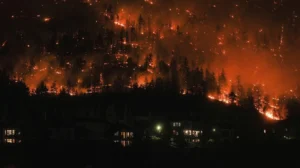
JAKARTA – As the horizon over Central Kalimantan remains shrouded in a thick, hazardous blanket of smoke, the Indonesian Agency for Meteorology, Climatology, and Geophysics (BMKG) has escalated its intervention efforts. Faced with the persistent threat of forest and land fires (karhutla), the agency has launched an advanced Weather Modification Operation (OMC) that departs from traditional cloud-seeding methods, turning instead to the strategic use of solid carbon dioxide, or "dry ice."
This technological pivot marks a critical moment in Indonesia’s battle against seasonal air pollution, as authorities seek not just to create rain, but to physically disrupt the atmospheric conditions that keep toxic pollutants trapped at ground level.
The Atmospheric Dilemma: Why the Smog Won’t Clear
To understand the urgency behind the BMKG’s current operations, one must first understand the meteorological phenomenon known as an "inversion layer."
According to the Deputi of Weather Modification at BMKG, Tri Handoko Seto, the region has been suffering from a stubborn atmospheric state where air temperature increases with altitude within a specific layer. Under normal conditions, warm air rises and carries pollutants away. However, during an inversion, a "lid" of warmer air forms over the cooler, smoke-filled air near the ground.
"This condition effectively traps smoke and particulate matter, preventing vertical mixing," Seto explained. "When the air cannot circulate, the pollutants remain concentrated near the surface, leading to hazardous air quality that poses a direct threat to public health."
The use of dry ice is a targeted intervention designed to "break" this atmospheric lid. By seeding the atmosphere with dry ice, meteorologists aim to induce cooling and trigger instability, allowing the trapped pollutants to disperse and facilitating the development of cloud formations that lead to precipitation.
Chronology of the Intervention
The current campaign is not a spontaneous reaction but a calculated response to a worsening crisis. The deployment of dry ice in Central Kalimantan follows successful pilot testing conducted during recent wildfire crises in South Sumatra.
Phase 1: Preparation and Mobilization (Early October 2026)
As satellite monitoring and ground stations, particularly the Tjilik Riwut Meteorological Station, began recording critical declines in air quality, the BMKG coordinated with national stakeholders to mobilize a massive fleet of aircraft. By mid-October, the logistics were in place to shift from standard cloud-seeding materials—such as salt (NaCl)—to the more volatile and scientifically demanding dry ice.
Phase 2: Execution of Dry Ice Seeding (October 18 – 23, 2026)
Operations commenced in earnest on October 18. Over the course of six days, specialized flight crews targeted the airspace directly above Palangka Raya and the vital Tjilik Riwut Airport. The primary goal was to dissipate the inversion layer, which had reduced visibility to dangerously low levels.
Phase 3: Evaluation and Escalation (October 24 – Present)
By October 25, preliminary data indicated that the intervention was bearing fruit. Meteorologists began evaluating the impact on PM2.5 concentrations and ground-level visibility. As of late October, the operation continues, with radar and satellite imagery providing real-time feedback to guide the flight paths of the eight-plane fleet.
The Arsenal: A Fleet Against the Flames
The scale of the operation is unprecedented. BMKG is utilizing a fleet of eight aircraft to cover the vast, fire-prone territories of Central Kalimantan. The composition of this aerial task force includes:
- Tactical Transport: Three Casa 212 aircraft (registrations A-2107, A-2103, and A-2119).
- Heavy Lift/Strategic Support: One CN-295 (A-2904) and one Hercules (A-1328).
- Support and Monitoring: Two Caravan aircraft and one Pilatus.
"We are adjusting our materials based on real-time atmospheric conditions," stated Budi Harsoyo, Director of Weather Modification Operations. "While dry ice is our primary tool for disrupting the inversion layer, we continue to utilize Sodium Chloride (NaCl) where cloud development is favorable for natural rainfall generation."
Between October 18 and October 23 alone, the operation consumed 12.8 tons of dry ice and 3.6 tons of NaCl. This substantial investment in resources reflects the government’s commitment to mitigating the environmental disaster that has defined the 2026 dry season.
Supporting Data: Evidence of Impact
The BMKG’s approach is heavily data-driven. The agency has been tracking several key performance indicators (KPIs) to measure the effectiveness of the dry ice seeding:
1. PM2.5 Reduction
Data suggests that the OMC is effectively flushing the air. Records show that within just a few days of consistent dry ice application, the concentration of PM2.5—the fine particulate matter most dangerous to human lungs—has dropped by between 30% and 58%. The "isotherm" state (where temperature remains constant) has begun to dissipate, allowing for healthier air circulation.
2. Visibility Improvements
The most immediate relief for residents of Palangka Raya has been the improvement in visibility. On October 25, measurements from the Tjilik Riwut station showed a dramatic shift. While visibility had been restricted to a mere 200 meters at the height of the smog, the intervention helped clear the air, pushing visibility back toward the 900-meter mark.
3. Precipitation Mapping
Radar and satellite data, including the Global Satellite Mapping of Precipitation (GSMaP), confirm that the operations have successfully induced rainfall. Significant showers have been recorded across the regencies of Seruyan, East Kotawaringin, West Kotawaringin, Barito Timur, and Katingan. This rainfall is critical, as it serves the dual purpose of scrubbing the air of pollutants and saturating the moisture-starved peatlands, which are the primary fuel source for the fires.
Official Responses and Strategic Implications
The leadership at BMKG remains cautiously optimistic. Head of BMKG, Teuku Faisal Fathani, emphasized that the goal is not merely a temporary fix, but a sustainable model for disaster mitigation.
"We hope that these efforts provide immediate relief for the community," Fathani stated on Thursday, October 29, 2026. "By improving the quality of the air, we are protecting the public, particularly those vulnerable to respiratory illnesses. However, this is a complex atmospheric challenge that requires constant vigilance."
Implications for Future Disaster Management
The success of this operation carries significant implications for how Indonesia handles future climate-related emergencies:
- Precision Meteorology: The move toward "intervening" in the atmosphere (rather than just waiting for rain) signals a maturing of Indonesia’s weather modification capabilities.
- Cross-Sector Collaboration: The integration of military aircraft (TNI AU) with scientific data from BMKG provides a robust model for inter-agency disaster response.
- Peatland Preservation: By focusing on both air quality and ground-level moisture, the operation addresses the root cause of the fires. The reduction in "hotspots" noted in recent days suggests that the strategy of "wetting the land" via induced rain is the most effective way to prevent the fire cycle from reigniting.
Conclusion: A Long Road Ahead
While the 12.8 tons of dry ice and the subsequent rainfall have provided a much-needed reprieve, the BMKG warns that the wildfire season is not yet over. The atmospheric conditions remain volatile, and the risk of new hotspots emerging in the dry peatlands persists.
The agency continues to monitor the situation around the clock, utilizing every tool from advanced satellite imagery to ground-based radar to ensure that the "lid" of the inversion layer does not return. For the people of Kalimantan, the sight of aircraft crisscrossing the sky is a symbol of hope—a technological shield deployed to reclaim the horizon from the smoke and ensure that the air remains breathable during these testing times.
As the operation enters its next phase, the world watches to see if this innovative application of dry ice will become the gold standard for atmospheric intervention in tropical forest fire zones globally. For now, the focus remains clear: monitor, intervene, and clear the skies.