
BPJS Kesehatan Open to Partnering with Red White Cooperative Clinics to Expand Rural Healthcare Access
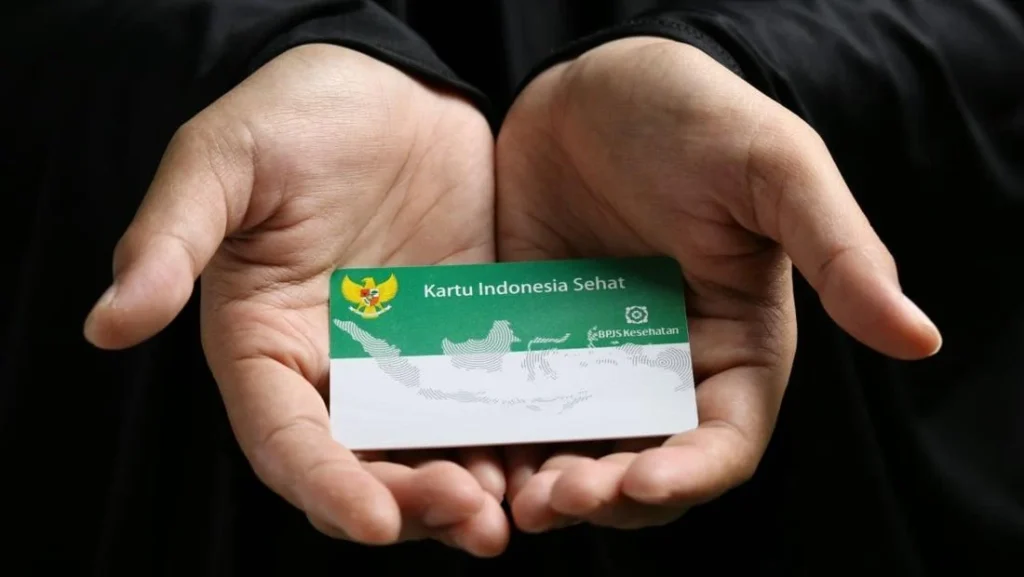
JAKARTA — Indonesia’s national health insurance administrator, Badan Penyelenggara Jaminan Sosial (BPJS Kesehatan), has expressed its readiness to establish operational partnerships with clinics managed by the newly initiated Koperasi Merah Putih (Red White Cooperative). The institution emphasized its openness to integrating these community-based health facilities into the National Health Insurance (Program Jaminan Kesehatan Nasional—JKN) ecosystem, provided all regulatory and licensing requirements are fully met.
The statement was delivered by the Director of Health Service Guarantee at BPJS Kesehatan, Abdi Kurniawan Purba, during a media briefing at the BPJS Kesehatan Central Office in Central Jakarta. As the implementing agency of statutory mandates, Abdi stressed that the state-owned social security administrator operates under the direct purview of relevant regulatory bodies, primarily the Ministry of Health.
The emergence of the Red White Cooperative Clinics is part of a broader structural push by the government to decentralize and improve basic welfare services at the village and sub-district levels. Governed under Presidential Regulation (Perpres) No. 82 of 2026 concerning the Governance of Red White Village/Sub-district Cooperatives, these clinics represent a multi-sectoral strategy to bring essential public services directly to rural communities.
1. Main Facts
- Official Stance: BPJS Kesehatan has officially declared its willingness to collaborate with Klinik Koperasi Merah Putih, alongside other private or public healthcare facilities, subject to compliance with national health regulations.
- Regulatory Dependency: Integration into the BPJS network is contingent upon the clinics securing operational permits from the Ministry of Health and adhering strictly to established statutory frameworks.
- Legal Foundation: The establishment of these clinics is mandated by Presidential Regulation (Perpres) No. 82 of 2026, which outlines the governance framework for Red White Cooperatives across villages and sub-districts throughout Indonesia.
- Service Portfolio: The clinics function as integrated business and social units within the cooperative framework, sitting alongside village grocery outlets (gerai sembako), village pharmacies (apotek desa), savings and loan units, and logistics centers.
- Primary Objective: The initiative aims to decentralize and democratize healthcare access, reducing the physical and logistical distance between rural populations and primary healthcare facilities such as Community Health Centers (Puskesmas) and Integrated Health Posts (Posyandu).
2. Chronology of Events
The dialogue surrounding the integration of cooperative-run health facilities into the national social security framework has developed through a series of key policy milestones and institutional responses:
- Early 2026 (Drafting and Issuance of Perpres No. 82/2026): The executive branch formulated and enacted Presidential Regulation No. 82 of 2026 to govern the structural operations of Red White Village and Sub-district Cooperatives. Within this framework, healthcare delivery was explicitly designated as a core cooperative service unit to tackle chronic regional healthcare deficits.
- Mid-2026 (Infrastructure Planning and Local Rollout): Regional administrations, in coordination with cooperative councils, began mapping out the physical infrastructure required for the multi-service cooperatives. Local communities started planning the construction and outfitting of cooperative units, including community pharmacies and clinical outposts.
- October 28, 2026 (Official BPJS Kesehatan Response): Addressing media inquiries at the BPJS Kesehatan Central Office in Jakarta, Abdi Kurniawan Purba formally articulated the health administrator’s operational stance. He clarified that while the institutional appetite for collaboration is high, administrative prerequisites must be satisfied first.
- Present Phase (Regulatory Alignment): Stakeholders across the Ministry of Health, local cooperative boards, and BPJS Kesehatan are currently reviewing the procedural pathways for facility accreditation, credentialing, and patient paneling to ensure seamless integration once the physical clinics open their doors.
3. Supporting Data and Structural Context
To understand the strategic significance of integrating Red White Cooperative Clinics into the BPJS Kesehatan network, one must examine the socio-economic and geographic landscape of Indonesia’s healthcare delivery system.
Geographic Disparities in Healthcare Access
Despite aggressive infrastructure expansion over the past decade, Indonesia’s archipelagic geography poses continuous challenges for universal healthcare delivery. While urban centers boast dense concentrations of hospitals and private clinics, remote and outer islands often rely on a single Puskesmas to serve tens of thousands of residents spread across rugged terrain or vast bodies of water.
- The Distance Barrier: Data from public health observatories indicates that a significant percentage of rural citizens spend over an hour traveling to the nearest formal health facility. This physical barrier frequently discourages preventative check-ups, resulting in late-stage diagnoses for chronic and acute conditions.
- Complementing Existing Structures: The Red White Cooperative Clinics are not designed to replace existing public institutions like Puskesmas and Posyandu. Instead, they serve as decentralized satellites designed to absorb primary triage, basic curative care, and pharmaceutical distribution, thereby relieving congestion at overburdened public health centers.
The Cooperative Business Model
Under Perpres No. 82/2026, the Red White Cooperatives operate on an integrated community enterprise model. By housing multiple essential services under one organizational umbrella—such as micro-credit, basic foodstuffs, affordable medicines, and primary healthcare—the cooperatives achieve operational synergies that lower overhead costs and ensure long-term financial sustainability.
+---------------------------------------------------------------+
|             Red White Cooperative Business Unit               |
+---------------------------------------------------------------+
       |                  |                |               |
       v                  v                v               v
[Grocery Outlets]  [Savings & Loans]  [Village Pharmacies] [Primary Clinics]
       |                  |                |               |
       +------------------+----------------+---------------+
                          |
                          v
         Integrated with BPJS Kesehatan Network
            (Subject to Ministry of Health Permit)
4. Official Responses and Policy Statements
The willingness of BPJS Kesehatan to embrace cooperative-run clinics marks a pragmatic shift toward inclusive healthcare partnerships. Speaking directly to journalists, Abdi Kurniawan Purba emphasized that the institution’s mandate is bound by legislative frameworks, positioning regulatory compliance as the ultimate benchmark for partnership.
"Namanya klinik tentu harus mengikuti izin dari Kementerian Kesehatan. Tentu saja kami sebagai pelaksana undang-undang mengikuti para regulator," stated Abdi Kurniawan Purba during the October 28 press briefing.
(Translated: "As a clinic, it must naturally follow the licensing requirements set by the Ministry of Health. Naturally, we, as the implementers of the law, follow the regulators.")
Abdi further elaborated that the administrative machinery of BPJS Kesehatan is fully prepared to execute partnership agreements (perjanjian kerjasama) the moment formal authorization is granted.
"Bila para regulator memberikan izin dan sesuai dengan peraturan yang diperlukan maka BPJS Kesehatan akan bisa segera mengkerjasamakan apakah dari merah putih atau milik swasta lainnya," he added.
(Translated: "If the regulators grant permission and it complies with the necessary regulations, BPJS Kesehatan will be able to immediately establish partnerships, whether with the Red White [clinics] or other private entities.")
Ministry of Health officials, speaking on background regarding the implementation of Perpres No. 82/2026, noted that clinical standards, doctor-to-patient ratios, and medical waste management protocols will remain non-negotiable prerequisites. Cooperative clinics seeking JKN accreditation must pass rigorous credentialing evaluations similar to those applied to private clinics and independent medical practices across the country.
5. Implications for the National Health System and Society
The potential integration of Red White Cooperative Clinics into the BPJS Kesehatan ecosystem carries profound implications for policy makers, healthcare providers, and rural citizens alike.
1. Acceleration of Universal Health Coverage (UHC)
Indonesia has made remarkable strides toward achieving Universal Health Coverage through the JKN program, covering over 98% of the population. However, enrollment numbers alone do not guarantee service utilization. By bringing accredited clinics directly into villages via the cooperative framework, the physical accessibility gap is bridged, ensuring that active JKN members can actually utilize their benefits locally without incurring high transportation costs.
2. Economic and Health Synergies at the Village Level
The multi-unit structure of the Red White Cooperatives creates a mutually reinforcing ecosystem. A citizen visiting the cooperative to buy daily staples (sembako) or access micro-credit can simultaneously pick up prescription refills or consult a general practitioner. This high-frequency community interaction normalizes preventative healthcare and medication adherence.
3. Challenges in Quality Control and Standardization
While the decentralized model offers clear logistical advantages, healthcare experts caution that maintaining clinical quality across thousands of village-level cooperative clinics will be a formidable administrative challenge. Ensuring that every clinic meets Ministry of Health standards regarding medical equipment, pharmaceutical cold-chain storage, and qualified medical personnel requires robust, continuous supervision.
- Credentialing Rigor: BPJS Kesehatan will need to deploy extensive auditing and digital monitoring tools to ensure that cooperative clinics do not compromise on clinical governance in pursuit of administrative expansion.
- Financial Sustainability: The economic viability of these clinics depends heavily on prompt capitation payments from BPJS Kesehatan and transparent financial management by cooperative boards.
4. A New Paradigm for Public-Private-Community Partnerships
If successfully executed, the collaboration between BPJS Kesehatan and the Red White Cooperatives could serve as a pioneering model for developing nations seeking to leverage community-based economic organizations for public welfare delivery. It redefines the boundaries of healthcare provision, shifting from a centralized, highly institutionalized model to a decentralized, community-integrated network.
Conclusion
The announcement by BPJS Kesehatan regarding its openness to partnering with Klinik Koperasi Merah Putih signals a progressive step toward solving Indonesia’s rural healthcare deficits. Anchored by Presidential Regulation No. 82 of 2026 and subject to strict regulatory oversight by the Ministry of Health, these cooperative clinics hold the promise of bringing quality medical services closer to millions of underserved citizens. As administrative frameworks are finalized and licensing protocols take effect, the successful realization of this partnership will depend on rigorous quality control, seamless digital integration, and unwavering commitment to universal healthcare equity.