The Silent Sentinel of the Canopy: Unveiling the World of the Harlequin Tree Frog
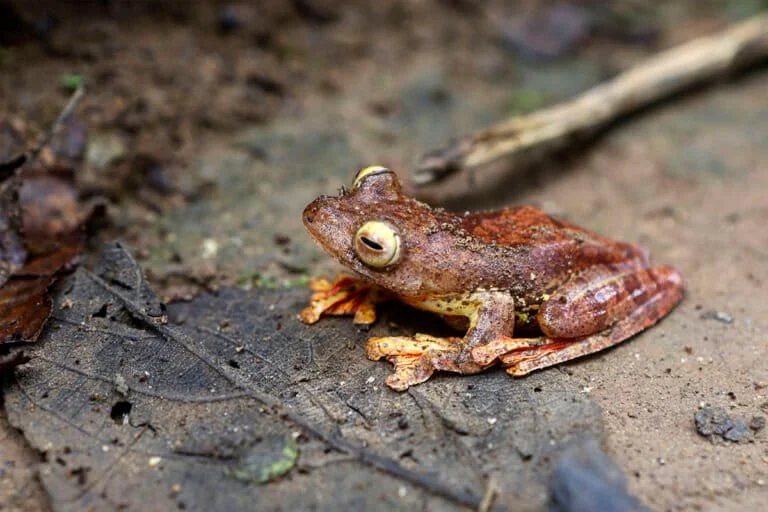
Deep within the lush, verdant expanse of the Jantho Nature Reserve in Aceh Besar, Sumatra, exists a creature that embodies both the beauty and the fragility of the rainforest ecosystem. It is the Harlequin Tree Frog (Rhacophorus pardalis), a small, elusive amphibian that spends its life navigating the shadows of the high canopy. Often overlooked, this species serves as a vivid reminder of the intricate biological tapestry that defines the Sumatran wilderness.
Main Facts: A Master of Disguise
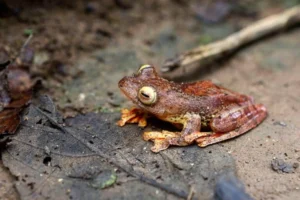
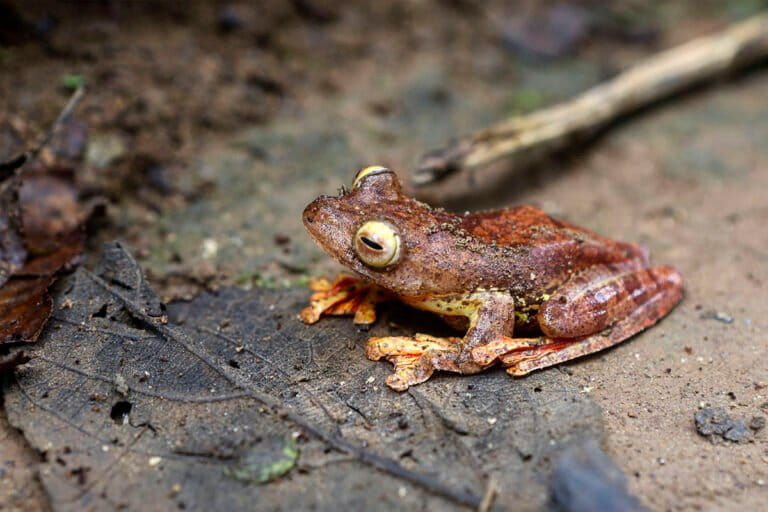
The Harlequin Tree Frog is a marvel of evolutionary adaptation. To the untrained eye, it is nearly invisible against the backdrop of the rainforest. Its dorsal side is painted in a rich, reddish-brown hue, serving as the perfect camouflage against tree bark. However, when caught in the beam of a researcher’s flashlight, the frog reveals a hidden, vibrant secret: flashes of bright yellow along its flanks.
As described by experts, the adult male of the species typically measures between 4 to 5.5 centimeters from the tip of its snout to the cloaca. Beyond its size, the species is distinguished by its intricate color patterns; while the flanks are often marked with dark, yellowish spots, the ventral side and thighs can shimmer with shades of orange to deep red.
Physically, the frog is built for life in the treetops. Its long, muscular hind legs are engineered for powerful leaps, while the webbing between its digits serves a dual purpose. In the genus Rhacophorus, these webs act as aerodynamic stabilizers. When the frog launches itself into the void between branches, these membranes allow it to slow its descent and steer its flight, effectively gliding through the forest air.
Chronology: A Rare Encounter in Aceh
The recent documentation of Rhacophorus pardalis in the Jantho Nature Reserve serves as a poignant case study for field biologists. Because the species is strictly nocturnal and prefers the upper tiers of the forest vegetation, sightings are sporadic and often fortuitous.
For many years, the presence of these frogs was inferred rather than observed. The recent expeditions into the Aceh forest have provided a rare window into their behavior. These encounters underscore a broader trend in herpetology: the realization that low frequency of sightings does not necessarily equate to a dwindling population. Rather, the "detectability" of the species is tethered to a complex set of variables, including the timing of surveys, the specific behavioral patterns of the frogs during the rainy season, and the overall health of the micro-habitat.
Supporting Data: The Biological Nexus
The life of the Harlequin Tree Frog is a paradox of aerial existence and aquatic dependency. While commonly referred to as a "tree frog," its reproductive cycle is inextricably linked to the presence of standing water.
The Reproductive Strategy
Herpetologist Amir Hamidy of the National Research and Innovation Agency (BRIN) explains that the canopy is merely a refuge, not a total home. "Even though they live in trees, to spawn, they require pools of water," Hamidy notes.
In many Rhacophorus species, this process is highly specialized. The frogs deposit their eggs in foam nests attached to vegetation directly overhanging bodies of water. This strategic placement ensures that when the eggs hatch, the tadpoles fall directly into the water below, where they undergo their metamorphosis into juvenile frogs. This reliance on both the vertical structure of trees and the horizontal presence of water creates a "biological bridge" that the species cannot cross if either component is missing.
Environmental Requirements
The habitat of Rhacophorus pardalis requires more than just trees; it demands high humidity and specific micro-environments. The frogs do not require massive rivers or permanent ponds. Often, they utilize small, ephemeral pools—depressions in the forest floor that catch rainwater. These "pocket wetlands" are vital nurseries, yet they are the most vulnerable to environmental shifts.
Official Responses and Expert Insights
Mistar, a prominent amphibian and reptile expert from the Yayasan Ekosistem Lestari (Sustainable Ecosystem Foundation), emphasizes that while the Harlequin Tree Frog is widespread across Sumatra, it remains a rare sight. This scarcity, he argues, is a byproduct of their specialized ecological niche.
"The Harlequin tree frog’s distribution is broad, but their population density in any single location is tempered by their specific needs," Mistar says. He warns that the scientific community must be cautious when interpreting "rarity." A lack of data should not be mistaken for an abundance of individuals, nor should it be used to downplay the threats facing the species.
The consensus among experts like Hamidy and Mistar is that the frog acts as an "indicator species." Because they are sensitive to changes in moisture, water quality, and forest density, their health serves as a proxy for the health of the entire forest floor and canopy. When the forest is degraded, the frogs are often the first to vanish, long before the larger mammals or birds begin to show signs of stress.
Implications: The Fragility of the Sumatran Forest
The conservation implications for the Harlequin Tree Frog are profound. The primary threat to the species is not direct hunting, but habitat fragmentation.
The Impact of Deforestation
"If the forest is damaged, their life is severely disrupted," says Amir Hamidy. The chain reaction is simple yet devastating:
- Loss of Canopy: Penebangan (logging) removes the vertical highways the frogs use to travel and hunt.
- Loss of Micro-climates: The removal of tree cover leads to lower humidity and increased ground temperature, which can cause the small, ephemeral water pools to evaporate prematurely, destroying the next generation of frogs.
- Loss of Connectivity: As the forest becomes a mosaic of patches rather than a continuous corridor, populations become isolated, limiting genetic diversity and increasing the risk of local extinction.
The Network of Life
The Harlequin Tree Frog is a vital component of the Sumatran forest’s food web. As an insectivore, it keeps populations of small invertebrates in check, preventing outbreaks that could harm the vegetation. Simultaneously, the frog and its tadpoles serve as a critical food source for predators ranging from small birds and snakes to larger mammals.
When a species like the Rhacophorus pardalis disappears, it leaves a "ghost" in the ecosystem—a niche that is no longer filled, leading to a ripple effect that destabilizes the food chain.
Looking Forward: Protecting the Unseen
The presence of the Harlequin Tree Frog in the Jantho Nature Reserve is a testament to the importance of protected areas. However, as researchers have noted, simply designating a plot of land as a "protected forest" is not enough. Effective conservation must account for the granular details of the landscape.
Maintaining the structural integrity of the forest—ensuring that trees are not just standing, but that the understory is kept intact and that water sources are protected from pollution and drainage—is essential.
As we continue to explore the depths of the Sumatran rainforest, the Harlequin Tree Frog serves as a gentle, yet firm, reminder. It reminds us that conservation is not only about protecting the "charismatic megafauna" like the Sumatran tiger or the orangutan. It is about the small, the nocturnal, and the unseen. Every leaf, every drop of water, and every fleeting flash of yellow in the night is a thread in the complex, living fabric of our planet. Protecting the Harlequin Tree Frog is, in essence, protecting the very foundation upon which the entire Sumatran ecosystem stands.
The task ahead is clear: move beyond passive observation to active, habitat-specific management. Only by ensuring that the canopy remains unbroken and the forest floor remains moist can we guarantee that this tiny, leaping sentinel will continue to grace the forests of Sumatra for generations to come.