Amidst Raging Wildfires, President Prabowo Overhauls Cabinet and Restores Key Environmental Agency
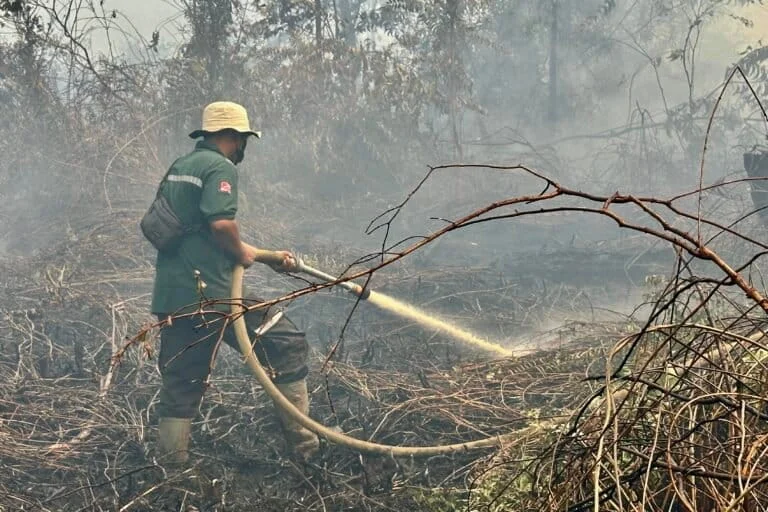
Jakarta – In a significant move aimed at curbing the devastating environmental and economic impact of rampant forest and land fires (karhutla), President Prabowo Subianto has implemented a major cabinet reshuffle. The strategic restructuring, which took place in mid-October at the State Palace, marks a pivotal shift in the administration’s approach to disaster management and ecological preservation.
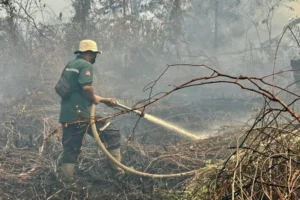
The move comes at a time when Indonesia is grappling with a severe climate crisis. With millions of hectares of land ablaze and toxic smog choking not only Indonesian cities but also neighboring ASEAN nations, the President has moved to restore the Badan Pengelolaan Gambut dan Mangrove Nasional (BPGMN)—a direct successor to the previously dissolved Peatland and Mangrove Restoration Agency (BRGM)—and has installed new leadership at the helm of the National Disaster Management Agency (BNPB).
The New Guard: A Shift in Leadership
President Prabowo’s reshuffle serves as a direct response to the escalating fire crisis. Satyawan Pudyatmoko, a prominent academic and Professor of Forestry at Universitas Gadjah Mada (UGM), has been appointed as the Head of the BPGMN, with Major General Sriyanto serving as his deputy. Pudyatmoko, a renowned expert in wildlife management and forest conservation, brings a wealth of scientific expertise to an agency tasked with one of the nation’s most complex challenges: restoring the hydrologic integrity of peatlands.
Simultaneously, Lieutenant General Kristomei Sianturi has been named the new head of the BNPB, replacing Lieutenant General (Ret.) Suharyanto. The appointment of Sianturi, who brings extensive experience in territorial operations and military communications, signals a more aggressive, command-oriented approach to disaster response. Sianturi will also concurrently serve as the Head of the National Border and Remote Areas Management Agency.
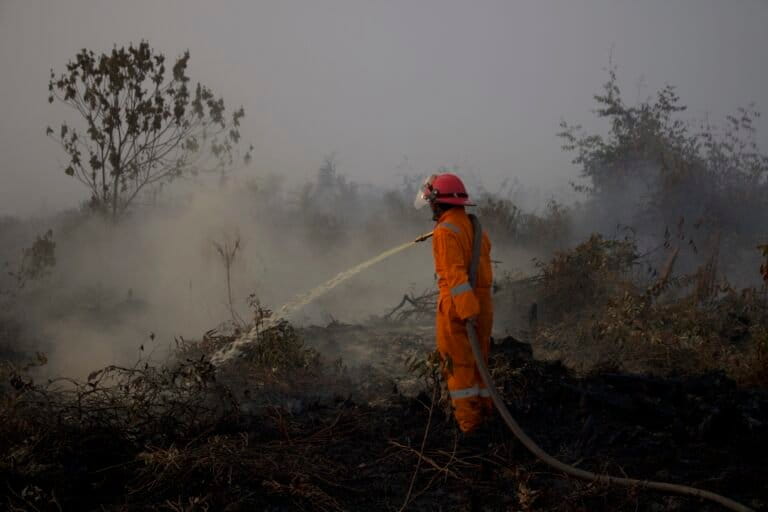
Further changes were seen in the defense and agricultural sectors, with high-ranking military officials such as Air Marshal Yusuf Jauhari and General Richard Taruli Horja Tampubolon appointed as Deputy Ministers of Defense, underscoring the administration’s focus on national security and stability in the face of widespread environmental crises.
Chronology of a Crisis
The decision to bring back the peatland management agency—shortly after it was dismantled during the early days of the Prabowo administration—highlights a recognition of the policy missteps that occurred when environmental oversight was downsized.
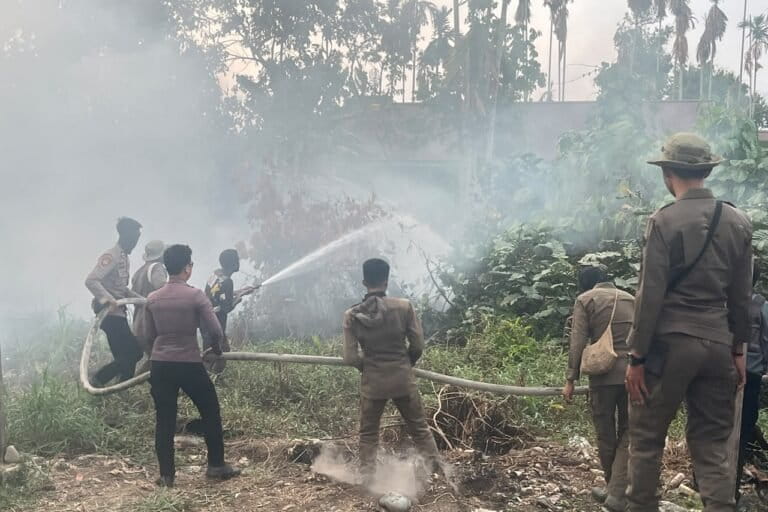
The current crisis reached a breaking point in September 2026. Data from the Nusantara Atlas reveals that by mid-October, the cumulative burnt area had surged past 1.9 million hectares, with over 1.1 million hotspots detected. The Ministry of Health reports that as of September, over 12.5 million Indonesians have been impacted by the smoke, with several fatalities recorded due to respiratory complications.
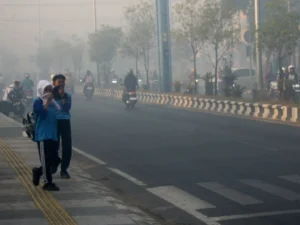
The crisis is not limited to rural forest zones. The Meteorology, Climatology, and Geophysics Agency (BMKG) has detected smoke haze blanketing almost every corner of the archipelago, from Aceh to Papua. Even more concerning, NASA satellite data from mid-October showed extremely high concentrations of carbon monoxide (CO) spreading across the country, a clear indicator of the intensity of the peatland fires.
Supporting Data: The Anatomy of the Destruction
The root of the disaster, as identified by experts, lies in the systematic drainage of peatlands for industrial use. Peatlands act as nature’s "water towers," storing vast amounts of carbon and moisture. However, the proliferation of drainage canals has stripped these ecosystems of their protective layers.
Findings from Pantau Gambut indicate that canals have sliced through Indonesian peat ecosystems for over 281,000 kilometers—a distance equivalent to circling the Trans-Java Toll Road 120 times. These canals are primarily located within palm oil concessions and industrial forest plantations.
As of July 2025, an estimated 8.3 million hectares of the total 24.2 million hectares of peatland hydrologic units (KHG) in Indonesia are under corporate control. Of this, 16.4 million hectares are classified as highly prone to fire, and 6 million hectares are at severe risk of flooding. The data from Pantau Gambut shows that between January and September 2026, over 500,000 hotspots were recorded, with more than 90% occurring in August and September alone.
Official Responses and Strategic Directions
In his first briefing following the appointment, Head of the BPGMN, Satyawan Pudyatmoko, emphasized that the agency’s priority is to halt the drainage process. "Peatland fires are not a random occurrence; they are the result of man-made dehydration," Pudyatmoko stated. "Our strategy involves intensive mapping of critical peat hydrologic units and the immediate installation of canal blocks to prevent further drainage."
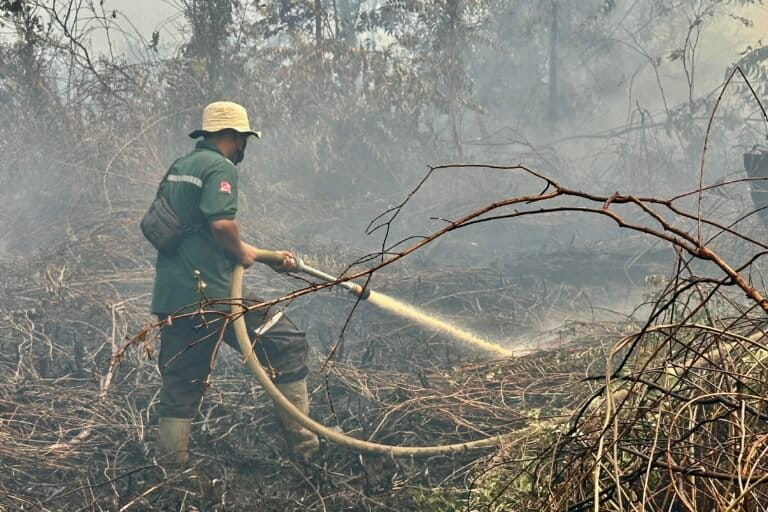
Pudyatmoko noted that the agency is assembling a team of hydrologists, revegetation experts, and sociologists to ensure that restoration efforts are scientifically grounded. The administration is also planning a massive expansion of the forest ranger corps (Polhut), with plans to increase personnel from 21,000 to 70,000 to improve patrol and community engagement.
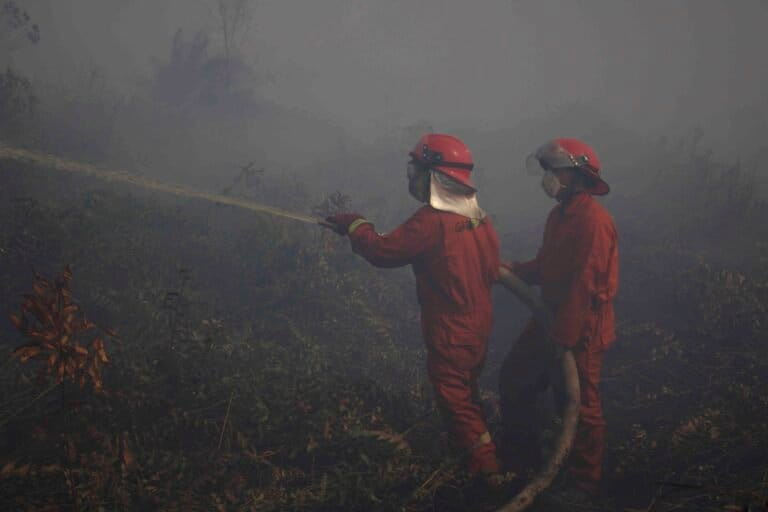
BNPB’s new chief, Kristomei Sianturi, has adopted a "rope analogy" strategy, emphasizing that disaster management must be a synchronized effort between the military, police, local government, and the community. When asked about the potential for declaring a national emergency, Sianturi stated that the government is evaluating indicators but prioritizes rapid, effective action over bureaucratic labels. "The goal is clear: zero casualties," he asserted. The President has also authorized the acceptance of foreign aid, with the BNPB currently coordinating the logistics of international support.
Implications: The Shadow of Corruption
The cabinet reshuffle occurs under the cloud of a major corruption scandal. The Corruption Eradication Commission (KPK) recently conducted a sting operation involving the misuse of "Ready-to-Use Funds" (DSP) at the BNPB, totaling Rp148 billion. The arrest of five individuals, including high-level aides, has sparked concerns among transparency advocates.
Seira Tamara, of Indonesia Corruption Watch (ICW), warns that the nature of disaster response—which often bypasses standard procurement procedures to ensure speed—creates a "breeding ground" for graft. "Corruption in disaster management is not just a financial crime; it directly impacts the lives of vulnerable citizens who are deprived of the resources they desperately need," Tamara noted.
The ICW has called for a comprehensive audit of all DSP usage throughout 2026. The risk, they argue, is that the current emergency, while requiring urgent action, could be exploited by actors seeking to inflate prices or award fictitious contracts. The challenge for the new BNPB leadership will be to balance the need for rapid intervention with the necessity of rigorous, transparent financial oversight.
A Call for Systemic Reform
For environmentalists, the restoration of the BPGMN is a welcome but insufficient step if not accompanied by a structural shift in how land concessions are managed. Putra Septian of Pantau Gambut insists that the government must stop viewing restoration as a secondary activity.
"Restoration cannot be a justification for previous damage, nor should it allow corporations to offload their responsibilities," Septian argued. "The government must enforce strict ecological evaluations. As long as the hydrological damage and the practice of draining peatlands continue, we will be stuck in a cycle of fighting fires rather than preventing them."
The path forward for the Prabowo administration is fraught with difficulty. The dual challenges of a changing climate and the need for internal institutional reform require a level of political will rarely seen in past administrations. Whether the newly appointed officials can navigate these waters—and whether the BPGMN can truly protect the nation’s remaining peatlands—will determine the environmental legacy of this government.
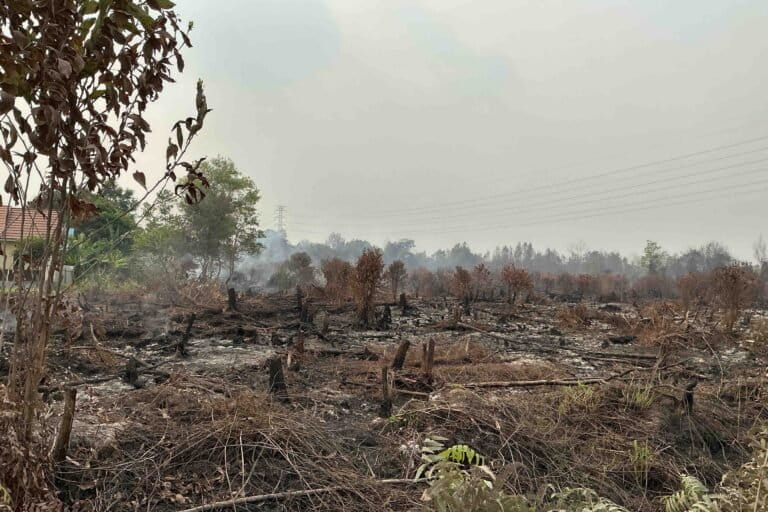
As the smoke continues to drift across borders and the fires continue to smolder underground, the urgency of the situation cannot be overstated. For the millions of Indonesians living under the haze, the promises of the new cabinet must translate into immediate, tangible, and transparent results on the ground. The era of reactive firefighting must end, and the era of sustainable, science-based landscape management must begin.