The Hollow Promise of Malioboro’s Electric Pedicabs: A Transition Built on Broken Wheels
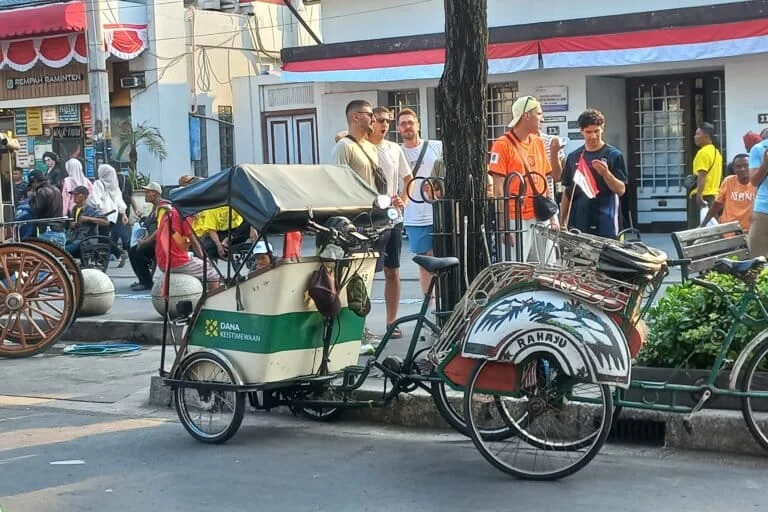
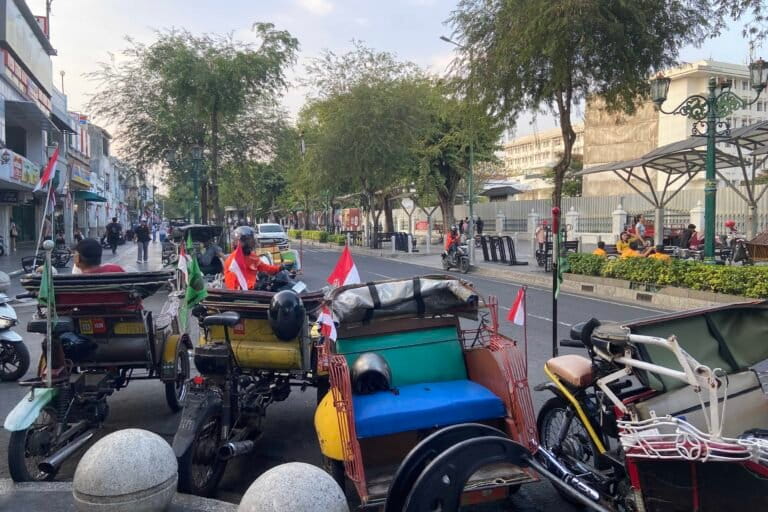
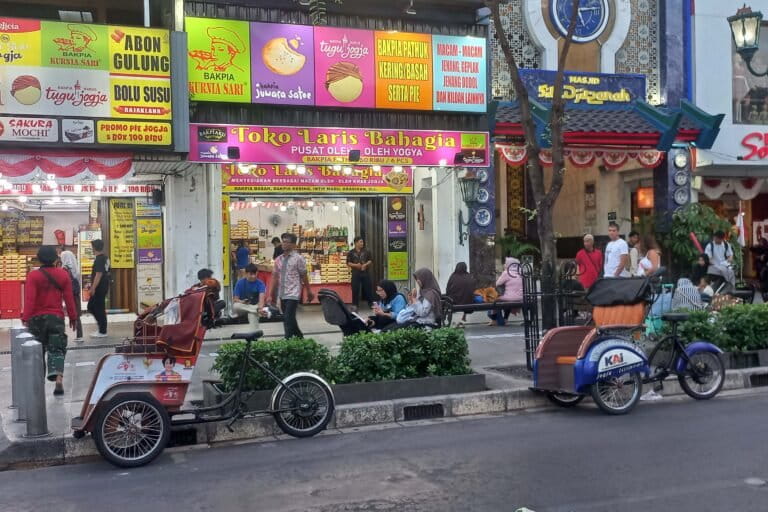
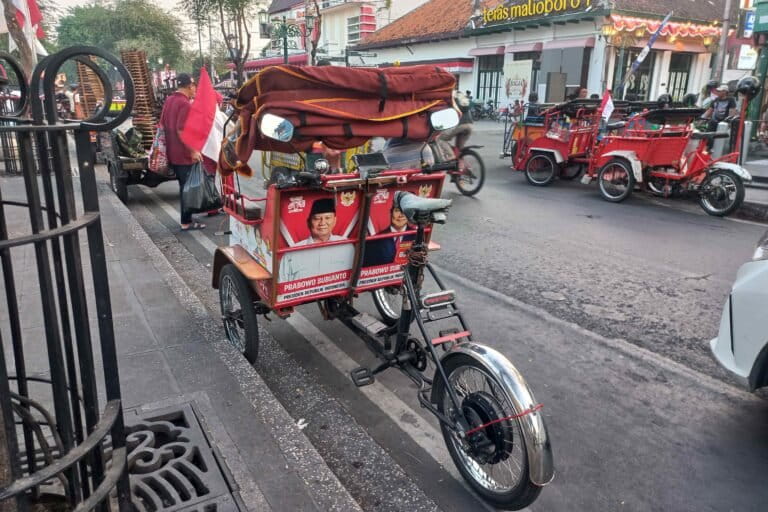
In the heart of Yogyakarta, the iconic becaks (pedicabs) of Malioboro are undergoing a radical transformation. Once the rhythmic, human-powered symbols of the city’s heritage, they are being replaced by electric-assisted units. While the government markets this transition as a bold step toward a greener, low-emission future, the reality on the asphalt tells a grimmer story. For the drivers, this “green transition” has become a daily struggle against mechanical failure, economic precarity, and a lack of institutional empathy.
The Illusion of Inclusion
The transition program has been marred by a fundamental flaw from its inception: the systemic exclusion of the very people who power the city’s tourism sector. Giyono, a veteran becak driver, describes the consultative process as a mere bureaucratic formality.
“There was no real dialogue,” Giyono laments. “It was all deception. We were just expected to nod and agree.” For men like Giyono, the transition was not a negotiated change but a top-down mandate. The drivers, once the sole owners of their motorized becaks, have been coerced into accepting new units without any input on specifications, power requirements, or maintenance logistics.
The realization that they have become casualties of "visual aesthetics disguised as energy transition" hit home only after their original, reliable vehicles were dismantled and fed into industrial shredders. The modern, sleek facade of the new electric becaks hides a fragile interior that is failing under the weight of daily operation.
Chronology of Failure: From Design to Breakdown
The technical failures currently plaguing the fleet are not merely unfortunate accidents; they are the predictable consequences of poor engineering and a lack of standardization. Abdullah, founder of the E-Clont Yogyakarta workshop, has spent months repairing these "state-of-the-art" vehicles.
“It isn’t just bad luck,” Abdullah explains. “It’s the result of sectoral ego and a lack of basic technical standards.”

The design process appears to have suffered from a fundamental miscommunication between manufacturers and end-users. Manufacturers designed the units assuming they would function as light-assist vehicles for occasional use. However, drivers who rely on these vehicles for their livelihood—often navigating heavy traffic and carrying passengers for long distances—treat them as full-time, high-demand commercial vehicles.
The consequence is a recurring pattern of mechanical distress:
- Wiring Failures: Manufacturers frequently used undersized cables incapable of handling the required current (KHA), leading to wires melting under load.
- Battery Degradation: The Battery Management Systems (BMS) are consistently failing, rendering the units immobile.
- Structural Fragility: The frames are unable to withstand the torque required for the stop-and-go nature of Malioboro’s congested streets.
“We aren’t just fixing them; we are re-engineering them,” Abdullah notes, highlighting that his workshop is forced to upgrade basic components that should have been robust from the factory floor.
Ignoring the Grassroots: The Expert Perspective
Jayan Sentanuhady, a Professor at the Department of Mechanical and Industrial Engineering at Universitas Gadjah Mada (UGM), views the current state of the fleet as the bitter fruit of a design process that ignored grassroots reality.
Since 2018, Jayan has conducted extensive field research into electric becaks, engaging directly with drivers to understand their specific needs. His findings were clear: drivers need torque for inclines and durability for heavy loads, not high-speed capabilities.
“Designing for the common worker cannot be done behind a desk in a meeting room,” Jayan argues. He criticizes the current manufacturers for forcing designs onto drivers without considering the realities of the street. “If the cables are melting, it proves the producer doesn’t understand electricity. It’s dangerous.”
For Jayan, the current project is less about sustainable mobility and more about “budget absorption”—a hollow exercise where the livelihoods of the working class are sacrificed for political optics.
Infrastructure and Economic Vulnerability
The project’s systemic failures extend beyond the vehicles themselves. The infrastructure supporting the transition is woefully inadequate. Currently, there is only one centralized charging station located behind a hotel in the Ketandan area.
Petrus Juli, head of the Becak Cooperative, warns that this lack of infrastructure is directly impacting the drivers’ income. “When a passenger asks to be taken to a location further away, we hesitate,” Petrus says. “We fear the battery will die in the middle of the road, and we don’t know where to recharge.”
The economic burden is shifted entirely onto the drivers. When a battery fails, the replacement cost—approximately IDR 4.8 million—is a catastrophic amount for a daily wage earner. Furthermore, the lack of accessible repair facilities means that when a vehicle breaks down, the driver is forced out of work for weeks, waiting for repairs in a system that offers no safety net.
When questioned about the lack of long-term support, Agha Perdana Putro of the Yogyakarta Transportation Agency stated, “The government cannot bear the burden of energy charging forever. We are only here to spark the ecosystem.” This rhetoric effectively abandons the drivers, leaving them to navigate a transition that favors commercial vendors over the vulnerable operators.
The Dark Side of "Green" Energy
The environmental narrative of the Malioboro electric becak program is also being challenged. Melky Nahar, coordinator of the National Mining Advocacy Network (Jatam), argues that the "zero-emission" label is a myth.
The electricity used to charge these vehicles is largely derived from coal-fired power plants. Moreover, the batteries rely on nickel, a material extracted through environmentally and socially destructive processes in Eastern Indonesia.
“The ecological debt of this vehicle starts long before it touches the asphalt,” Melky explains. “The nickel is extracted, exported to be refined abroad, and then imported back as a finished battery. This isn’t a clean energy transition; it is an industrial expansion that exploits both the environment and the workers.”
Beyrra Triasdian, an Energy Transition Campaigner at Trend Asia, emphasizes that true transition requires "cleaning" the entire supply chain, from the source of the energy to the end-user. “The logic is fundamentally flawed,” she says. “If the electricity source is dirty, it is not a renewable energy transition.”
Implications: A Call for Justice
The situation in Malioboro serves as a cautionary tale for national policy. True energy transition, according to experts, must be built on a foundation of "just transition" principles—dialogue, transparency, and the protection of worker livelihoods.
The current implementation has failed on three critical fronts:
- Technological Inadequacy: The vehicles are unfit for purpose due to a lack of engineering rigor.
- Economic Exclusion: The costs of the transition are being offloaded onto those least able to afford them.
- Environmental Hypocrisy: The use of fossil-fuel-derived electricity and conflict-mined materials undermines the program’s green claims.
As the program moves forward, the pressure on the Yogyakarta government to rectify these errors is mounting. The drivers of Malioboro are not against modernization; they are against a system that replaces their independence with debt and their reliability with fragility.
“If the goal of the transition is to create a better life, but the result is that the citizens become more miserable, what exactly are we trying to improve?” Beyrra asks.
The path forward requires an immediate halt to further rollouts until the existing fleet is retrofitted to professional safety standards, charging infrastructure is decentralized, and a genuine, representative dialogue with the becak drivers is established. Anything less will not be a transition toward a green future, but a continued exploitation of the very people who define the culture of Yogyakarta.