Unleashing Trapped Energy: PT Pertamina Hulu Rokan Pioneers Innovative Surfactant Formula "PHR24" to Revitalize the Legendary Minas Field
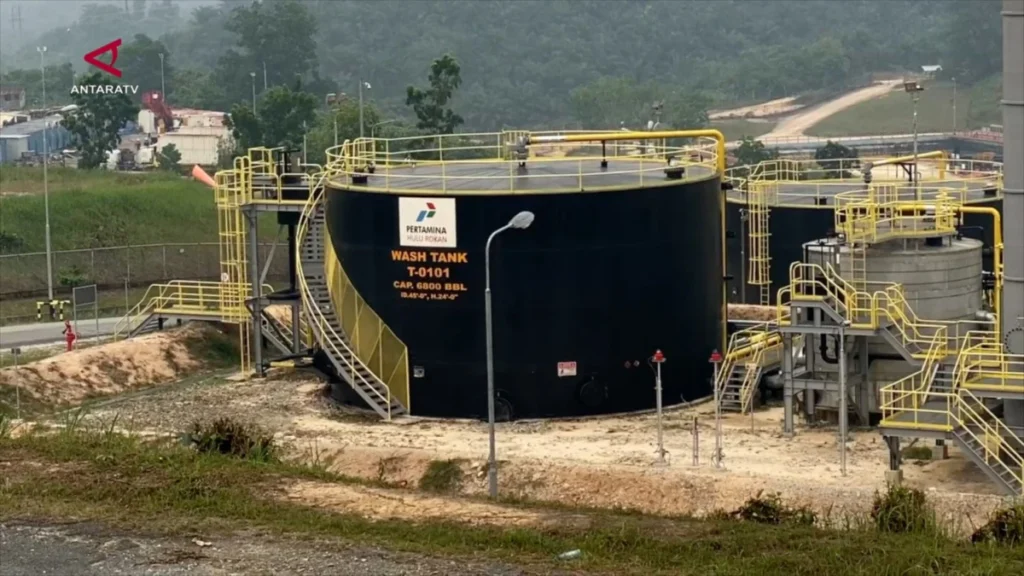
PEKANBARU, RIAU — In a decisive move to bolster national energy security and reverse natural production decline in legacy assets, PT Pertamina Hulu Rokan (PHR) has introduced "PHR24"—a breakthrough surfactant formulation designed to extract residual oil trapped deep within the aging reservoirs of the historic Minas Field in Riau Province.
Born from an intensive, two-year research and development initiative conducted directly within the Minas laboratory facilities, this homegrown technological marvel represents a paradigm shift in Indonesia’s upstream oil and gas sector. As the nation races toward the ambitious production target of one million barrels of oil per day (BOPD) and 12 billion cubic feet of gas per day (BCFD) by 2030, innovations like PHR24 underscore the critical intersection of advanced chemical engineering, scientific perseverance, and strategic resource optimization.
Main Facts: The PHR24 Breakthrough
The introduction of PHR24 marks a watershed moment in Enhanced Oil Recovery (EOR) applications within Southeast Asia. To understand the significance of this development, several core facts define the initiative:
- The Core Innovation: PHR24 is a specialized surfactant formula engineered to alter interfacial tension between crude oil and water, effectively "washing" trapped oil droplets from reservoir rock pores and mobilizing them toward production wells.
- The Origin Site: Developed entirely in-house over a rigorous two-year timeline by Indonesian petroleum engineers and scientists at the Minas laboratory in Riau.
- The Target Asset: The Minas Field, operated by PHR, is one of Indonesia’s largest and most prolific onshore oil fields, discovered in the 1940s and having produced billions of barrels over its lifetime.
- Strategic Alignment: The initiative directly supports the upstream petroleum sector roadmap mandated by SKK Migas (Special Task Force for Upstream Oil and Gas Business Activities) to achieve the 1 million BOPD national target by 2030.
- Multidisciplinary Collaboration: The project’s realization is credited to a collaborative team comprising Annisa Firdausi, Vera Lusiana, Andi Bagasela, and Roy Rosa Bachtiar, reflecting a robust integration of technical research, field application, and corporate communication.
Chronology: From Laboratory Curiosity to Field Application
The journey of PHR24 is a testament to methodical scientific inquiry and operational resilience. The timeline of its development showcases how long-term investments in research and development (R&D) yield tangible industrial results.
Phase 1: Identifying the Challenge (2024)
As primary and secondary recovery methods—such as natural pressure depletion and waterflooding—reached their natural economic limits in the mature Minas Field, vast volumes of heavy and medium crude remained permanently bound within the complex capillary networks of the reservoir rock. Recognizing that traditional extraction techniques were no longer sufficient, PHR’s leadership authorized a dedicated R&D initiative in early 2024. The objective was clear: formulate a cost-effective, environmentally compatible, and chemically stable surfactant tailored explicitly to the unique mineralogy, temperature, and salinity profile of the Minas subsurface environment.
Phase 2: The Minas Laboratory Trials (2024–2025)
For 24 months, a specialized team of reservoir engineers and chemists set up operations at the Minas laboratory. The process was far from straightforward. It required thousands of hours of core-flooding experiments, phase behavior tests, and thermal stability assessments.
- Trial and Error: Initial formulations either degraded under high subsurface temperatures or failed to achieve the ultra-low interfacial tension required to mobilize the crude.
- Refining the Molecule: Through iterative adjustments of surfactant concentrations and co-solvent blends, the team successfully synthesized a formulation that could withstand harsh reservoir conditions while remaining economically viable for large-scale deployment. By late 2025, the formula—officially designated as PHR24—passed all rigorous laboratory benchmarks, demonstrating high displacement efficiency in synthetic core samples representing Minas rock formations.
Phase 3: Pilot Implementation and Commercial Scaling (2026)
Following successful laboratory validation, PHR transitioned the project from theoretical science to operational reality in 2026. Pilot testing commenced in selected pattern areas of the Minas Field. Early indicators from these pilot wells showed promising pressure responses and incremental oil recovery rates, paving the way for wider deployment across the broader asset portfolio.
Supporting Data: The Science and Economics of Surfactant EOR
To appreciate the gravity of PHR24, one must examine the operational realities of mature petroleum basins. Primary recovery typically extracts only 10% to 15% of the original oil in place (OOIP). Secondary recovery methods, such as water injection, can push total recovery rates up to 35% or 40%. However, this leaves the majority of the oil—often exceeding 50%—trapped within the microscopic pores of the reservoir rock due to capillary forces.
How PHR24 Works at the Molecular Level
Surfactants (surface-active agents) are amphiphilic molecules possessing both hydrophilic (water-loving) and lipophilic (oil-loving) properties. When introduced into the reservoir via surfactant-polymer (SP) flooding:
- Reduction of Interfacial Tension (IFT): PHR24 drastically lowers the capillary forces holding the oil droplets to the rock matrix, reducing IFT by several orders of magnitude.
- Emulsification and Mobilization: The trapped oil is mobilized, coalescing into continuous banks that can be swept toward production wells by driving fluids.
- Wettability Alteration: The chemical formulation modifies the rock surface wettability, making it more water-wet and preventing the newly mobilized oil from re-adhering to the matrix.
Economic Viability for Legacy Assets
Importing specialized chemical EOR formulations from international service providers often incurs prohibitive capital expenditures, straining project economics—especially in mature fields with declining production curves. By developing PHR24 locally using regionally sourced chemical components and indigenous engineering talent, PT Pertamina Hulu Rokan has drastically reduced the cost per barrel of incremental recovery. This cost-efficiency transforms marginal, high-water-cut wells into economically viable production assets, extending the operational life of the Minas Field by decades.
Official Responses and Stakeholder Perspectives
The rollout of PHR24 has garnered significant attention and commendation from industry leaders, government regulators, and corporate executives alike, highlighting its importance to Indonesia’s energy landscape.
Corporate Leadership Perspective
Management at PT Pertamina Hulu Rokan emphasized that innovation is no longer optional for modern upstream operators; it is a fundamental survival mechanism.
"The development of PHR24 is proof that our local engineers possess world-class technical capabilities. We are not merely extracting what is easy; we are applying advanced science to unlock what was previously deemed unrecoverable. This milestone reflects our unwavering commitment to maintaining energy self-sufficiency for Indonesia," noted a senior engineering spokesperson for PHR.
Regulatory Alignment: SKK Migas Perspective
The special task force regulating Indonesia’s upstream oil and gas sector, SKK Migas, has consistently advocated for aggressive EOR deployment across mature Indonesian basins. Regulators have repeatedly stressed that meeting the 2030 national oil production target cannot rely solely on new exploration discoveries (wildcat drilling); it requires the revitalization of legacy giants like Minas, Duri, and other mature fields in Sumatra and Kalimantan.
Industry analysts note that PHR24 directly aligns with this mandate, serving as a blueprint for how state-owned enterprises can leverage domestic R&D to overcome complex subsurface challenges.
Implications for Indonesia’s Energy Security and Industry Future
The successful deployment of PHR24 carries far-reaching implications that extend well beyond the borders of Riau Province, touching upon macroeconomic stability, technological sovereignty, and environmental stewardship.
1. Reaching the 2030 National Production Target
Indonesia’s ambition to produce 1 million BOPD by 2030 is a critical pillar of national economic planning. As older fields experience natural depletion, production shortfalls threaten to increase reliance on costly crude oil imports, impacting the national trade balance and foreign exchange reserves. By unlocking millions of barrels of trapped reserves in the Minas Field through chemical EOR, PHR directly bridges the gap between current output and national production quotas.
2. Cultivating Technological Independence
For decades, the Indonesian upstream sector relied heavily on proprietary technologies imported from multinational oilfield service corporations based in the West or Asia-Pacific. The creation of PHR24 demonstrates a growing maturation within Pertamina’s technical ranks. By mastering surfactant chemistry and reservoir-specific formulation design in-house, Indonesian engineers are building intellectual property (IP) that can be adapted, refined, and potentially exported to similar mature fields across Southeast Asia.
3. Environmental and Sustainable Operations
Enhanced Oil Recovery, when executed responsibly, represents a highly efficient form of resource utilization. Instead of disturbing pristine ecosystems through aggressive greenfield exploration, EOR maximizes the output of existing infrastructure—pipelines, gathering stations, and processing facilities—already established within the Minas working area. Furthermore, modern surfactant formulations are engineered to be biodegradable and environmentally safe, minimizing subsurface contamination risks.
4. Setting a Precedent for Other Mature Fields
The success of PHR24 in the Minas Field serves as a proof-of-concept that will undoubtedly be replicated elsewhere. PT Pertamina Hulu Rokan operates numerous other legacy fields characterized by heavy crude and high water cuts. The methodologies, laboratory protocols, and deployment strategies perfected during the two-year development of PHR24 can now be customized for deployment across other blocks in the Rokan working area and beyond.
Conclusion
As global energy dynamics demand greater efficiency, technological innovation, and self-reliance, PT Pertamina Hulu Rokan’s introduction of PHR24 stands out as a triumph of domestic engineering. By looking inward, investing in rigorous laboratory research, and understanding the complex microscopic behavior of legacy reservoirs, PHR has breathed new life into the historic Minas Field.
As pilot applications scale into full commercial deployment throughout 2026 and the years leading to 2030, PHR24 will be remembered not just as a chemical formula, but as a critical catalyst that helped secure Indonesia’s energy future, drop by drop, barrel by barrel.