Environmental Justice or Revenue Seeking? The Broken Paradigm of Forest Fire Enforcement in Indonesia
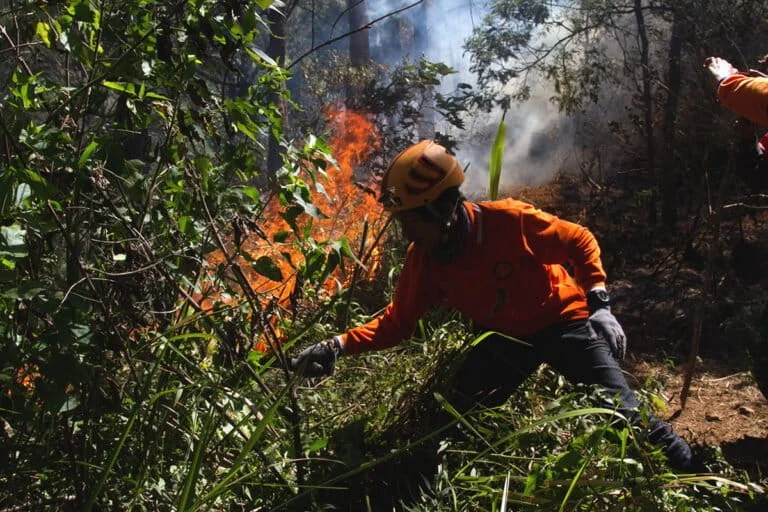
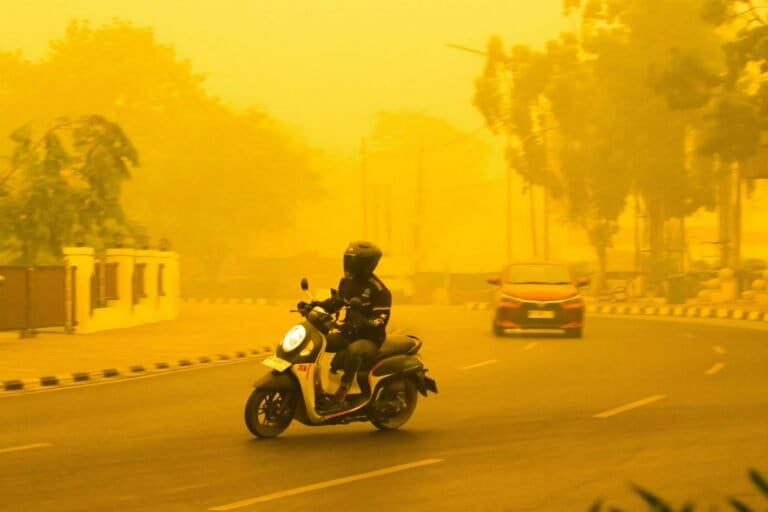
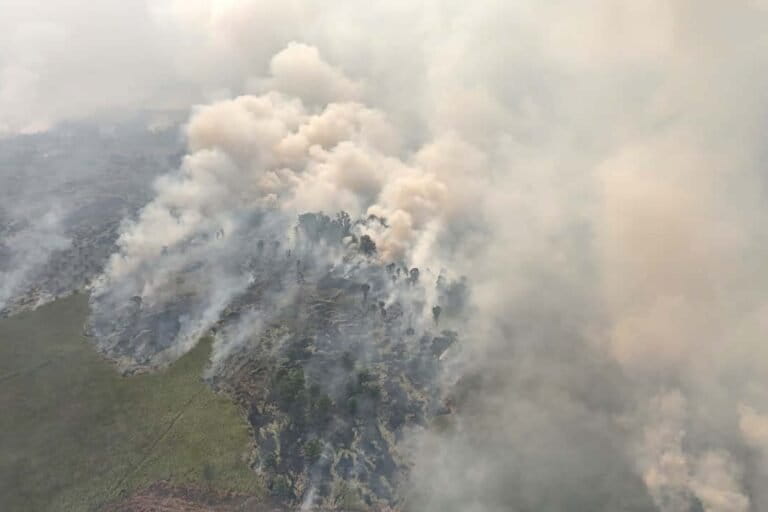
JAKARTA – Indonesia’s ongoing battle against forest and land fires (karhutla) is reaching a critical inflection point, not merely due to the intensity of the flames, but because of the fundamental failure of the legal system to prioritize ecological restoration and human rights. Experts, legal scholars, and environmental watchdogs argue that the current enforcement mechanism is dangerously skewed toward filling state coffers rather than healing the damaged landscape or providing justice for the millions of citizens suffocated by toxic haze.
The critique surfaced prominently during a high-level discussion on forest fire policy held in Jakarta on October 13, 2026, involving the National Commission on Human Rights (Komnas HAM). As the country continues to grapple with recurring ecological disasters, the consensus among observers is that the "punishment" phase of the law is disconnected from the reality of the crisis.
The Revenue-Oriented Trap: Why Fines Aren’t Fixing the Forest
Andri Gunawan Wibisana, a Professor at the Faculty of Law, University of Indonesia, highlights a systemic misalignment in how the government handles litigation against corporations responsible for environmental destruction. Currently, when the state sues a company for fire-related damages, the process is often treated as a revenue-generating mechanism for the government—specifically classified as Non-Tax State Revenue (PNBP)—rather than a surgical intervention for environmental recovery.
"Our expectation is that when the government files a lawsuit, the funds obtained should be explicitly ring-fenced for restoration," Wibisana stated. "Instead, we see a focus on calculating damages as a financial loss to the state, with no clear, measurable, or integrated restoration plan attached to the settlement."
Wibisana distinguishes between two types of losses that the current legal framework fails to properly address:
- Ecological Damage: The destruction of the land, soil, and ecosystem within the fire perimeter.
- Extraneous Losses: The collateral damage caused by toxic haze, including respiratory illnesses, economic stagnation, and the loss of property rights for communities living outside the immediate burn zone.
"If the government focuses solely on the burned land, a significant portion of the impact on society remains unaddressed," he warned.
The Anatomy of the Crisis: A Chronology of Systemic Failure
The history of forest fire enforcement in Indonesia has been marked by a shift from reactive firefighting to a more complex, albeit fragmented, legal approach.
- 2017: The Ministry of Environment and Forestry (KLHK) introduced Regulation No. 16/2017, establishing guidelines for the restoration of peatland ecosystems. This was intended to hold concession holders responsible for "primary restoration."
- 2019–2024: A five-year period of intense legal scrutiny saw the registration of 217 major environmental cases. However, data from the Indonesian Center for Environmental Law (ICEL) reveals that the vast majority of these cases targeted individual offenders rather than the corporations managing the vast swathes of land where the fires originated.
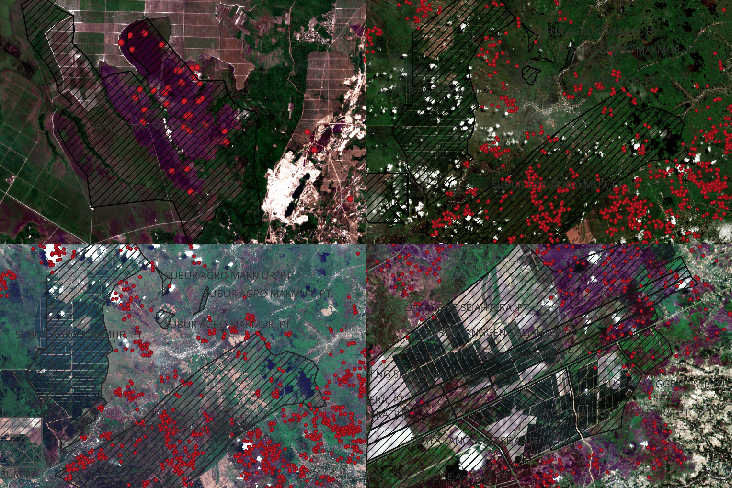
- 2026 (The Current Crisis): Between January and September 2026, environmental NGO Walhi detected fire hotspots across 854 concessions, including palm oil plantations, forestry permit holders (PBPH), and mining companies. Despite these findings, the pace of legal action remains sluggish, leading to a mounting death toll and public health crisis across Kalimantan and Sumatra.
Supporting Data: The Disparity in Enforcement
The data regarding who bears the brunt of the law is stark. ICEL’s analysis of legal proceedings between 2019 and 2024 highlights a disturbing trend:
- Environmental Protection Act: 22 cases were filed; 18 defendants were individuals, while only four were corporations.
- Forestry Act: 13 cases were filed; 100% of the defendants were individuals. Zero corporations were held accountable under this specific legal regime.
- Forest Destruction Prevention Act (P3H): 54 individuals were prosecuted compared to only six corporations.
- Conservation Law: 122 individuals were targeted, with zero corporations facing charges.
This data suggests that while corporations control over 37.6 million hectares of forest land, the law is disproportionately applied to the small-scale actors or individual inhabitants, rather than the major industrial players whose infrastructure—such as drainage canals—often creates the conditions for fires.
The "Strict Liability" Debate
Professor Wibisana emphasizes that under current civil law, the principle of strict liability should be the standard for fires on peatlands. The process of "draining" peatlands by constructing canals to facilitate the drying of the land is a deliberate act that makes the area a ticking time bomb for fire.
"In the context of civil law, we need to move past the debate of whether the land was ‘burned’ or ‘caught fire,’" Wibisana asserted. "If you drain a peatland, you are effectively creating fuel. Whether the fire was lit by a cigarette, a spark, or an intentional act is secondary to the fact that the company fundamentally altered the landscape, making it susceptible to such destruction."
Official Responses and the "Governance" Gap
Adam Putra Firdaus, Head of the Forestry and Biodiversity Division at ICEL, argues that the problem is not just legal; it is a fundamental governance crisis. The current regulatory framework treats environmental permits as mere "spatial allocation" tools, rather than instruments for ecological prevention.
"We have two competing regimes," Firdaus explained. "The environmental law regime sees permits as a way to mitigate impact, while the forestry regime sees them as a way to distribute territory. When these two collide, the environment loses, and the big corporations—who are given the lion’s share of land—are rarely held to the strict standard of the environmental law."
Furthermore, the inconsistency in language is telling. In the Law on Environmental Protection and Management (UU PPLH), the term "restoration" appears over 60 times. In the Forestry Law, it appears fewer than three times. This linguistic gap reflects a policy priority that favors exploitation over recovery.
Implications: The Need for an "Interim Loss" Model
The implications of this legal inertia are severe. Without a shift in how the state pursues damages, the cycle of fire will continue. Wibisana suggests adopting the American model of interim loss and compensatory restoration.
In this model, the state does not just sue for the cost of replanting trees. They sue for the "lost service" of the ecosystem—the carbon sequestration, water filtration, and air quality regulation that the land provided while it was degraded. If a peatland takes 100 years to recover, the "interim loss" must be compensated for every one of those years. This approach would make the cost of environmental negligence so high that it would force corporations to invest in fire prevention rather than paying fines as a "cost of doing business."
Conclusion: A Call for Fundamental Reform
As the 2026 fire season continues to impact the health and economic stability of Indonesian citizens, the call for reform is growing louder. The current approach of "sue, pay, and repeat" is not a strategy; it is a failure.
The path forward, according to experts, requires three essential steps:
- Harmonizing Regulations: Bridging the gap between the Environmental Protection Law and the Forestry Law to ensure that ecological restoration is the primary objective of any legal settlement.
- Corporate Accountability: Shifting the focus of law enforcement from individual small-scale actors to the corporate entities that control the vast majority of the land where these fires originate.
- Transparency and Human Rights: Ensuring that the affected communities are not just passive victims, but active participants in the justice process, with full transparency regarding the legal status of companies that have caused them harm.
Until the government prioritizes the lives of its citizens and the integrity of its ecosystems over the allure of non-tax revenue, the smoke will continue to rise. As Teo Reffelsen of Walhi aptly stated, "The responsibility of a corporation does not end with a fine. It ends only when the land, the air, and the people have been restored."