The "Seasonless" Crisis: Why Extreme Heat is Expanding Beyond Traditional Boundaries
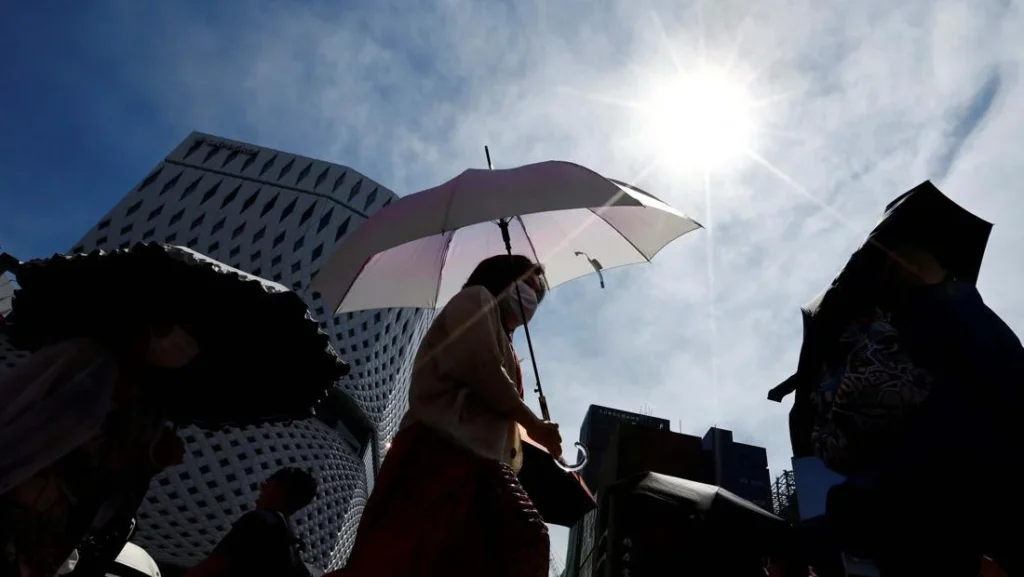
JAKARTA – The global climate narrative has long focused on the intensity of heatwaves—the record-breaking peaks that capture headlines every summer. However, a groundbreaking study analyzing 45 years of climate data suggests that the true danger lies not just in how hot the thermometer climbs, but in the growing unpredictability of when these heat events occur.
New research, published in the journal AGU Advances, reveals that extreme heat is increasingly breaking free from its traditional seasonal "calendar." Across nearly half of the world’s landmass, heatwaves are now occurring well before or after the periods traditionally considered "summer." This phenomenon, experts warn, creates a significant blind spot in global disaster preparedness, leaving societies vulnerable at times when they are least equipped to handle thermal stress.
The Core Findings: A Shift in Climate Rhythms
For decades, meteorologists and public health officials have relied on seasonal models to trigger cooling centers, heat warnings, and infrastructure management protocols. However, the study conducted by Catherine Ivanovich, a climatologist at NASA’s Goddard Institute for Space Studies (GISS), alongside Benjamin Cook (GISS) and Sonali Shukla McDermid (New York University), suggests that these static models are becoming obsolete.
The research analyzed global climate data from 1980 through 2024. By comparing the baseline decade of 1980–1989 with the most recent period of 2015–2024, the team observed a structural expansion of the "heat season."
"In some places, the expansion of the extreme heat period occurs most significantly in the spring, before the traditional summer begins," explains Ivanovich. "In other locations, this window is extending rapidly into the autumn months. The seasonal boundaries we’ve grown accustomed to are effectively dissolving."
Chronology of the Shift: From 1980 to the Modern Era
To understand the trajectory of this shift, the researchers utilized two distinct methodologies to define "extreme heat":
- Dry Heat: Measuring raw atmospheric temperatures.
- Wet-Bulb Globe Temperature: A complex metric that integrates air temperature, humidity, and solar radiation, providing a more accurate representation of how the human body experiences thermal stress.
The 1980s Baseline
During the 1980s, heatwaves were largely concentrated within predictable, short-lived peaks. In many regions, the transition between spring, summer, and autumn was marked by a distinct period of relief from extreme temperatures.
The 2015–2024 Reality
In the current decade, that "relief" is disappearing. The study found that:
- Dry Heat Extremes: Have expanded significantly across more than 50% of the Earth’s land surface.
- Humid Heat Extremes: Have expanded across slightly less than half of the landmass.
The most striking example cited in the study is Phoenix, Arizona. In the 1980s, the city recorded 183 days of extreme heat. By the 2015–2024 period, that number surged to 338. Most critically, during the 1980s, there were effectively no recordable extreme heat events after the summer season concluded. Today, roughly 6% of Phoenix’s extreme heat events occur in the post-summer window. In 2024, the city faced a relentless streak of 113 consecutive days above 100°F (37.8°C), followed by an unprecedented 21-day stretch of record-breaking heat extending into mid-October.
Regional Patterns: Not a Global Uniformity
The expansion of heat is not a homogenous global phenomenon; it is highly localized. The study highlights significant geographic variations in how the heat season is warping:
- Pre-Summer Expansion: Regions such as Western Europe, Southern Africa, and Northwestern India are seeing a trend where extreme heat begins to emerge up to two months earlier than historical norms.
- Post-Summer Expansion: Conversely, the Western United States, Eastern China, Northern Africa, and Eastern Europe are experiencing a "dragging" of the heat season, with temperatures remaining at dangerous extremes for up to two months longer than previously recorded.
This regional disparity is vital for local governments. A city in Western Europe preparing its heat mitigation strategies for June and July may find itself entirely unprepared for a heat spike in early May or late September.
Supporting Data: The Limitations of Simple Warming
A common misconception is that the expansion of heat seasons is simply a direct byproduct of rising global mean temperatures. While human-induced climate change is undoubtedly the primary driver, the researchers found that rising temperatures alone do not fully explain the asymmetry of the shift.
"We cannot attribute the entirety of this signal to climate change based solely on observational data," Ivanovich notes. "However, it is clearly a primary component of the story."
The study utilized two independent datasets—one from NASA and one from the European Centre for Medium-Range Weather Forecasts (ECMWF)—to validate the findings. Both datasets corroborated the shift, suggesting that the patterns are robust. However, because extreme heat events are, by definition, "rare," the statistical significance of these shifts in specific localities requires further investigation via climate modeling. Future research aims to run complex climate simulations to isolate how much of this seasonal stretching is due to anthropogenic warming versus natural climate variability.
Implications: The Multi-Hazard Trap
The extension of extreme heat into "shoulder seasons" (spring and autumn) carries profound implications for public safety, agriculture, and infrastructure.
1. Public Health and Human Physiology
The danger of heat is compounded by humidity. When temperatures remain high, the human body loses its ability to cool down through sweat. If heatwaves occur outside of the "summer season," the public is often caught off-guard. People may not yet have air conditioning systems serviced, public cooling centers may be closed, and health awareness campaigns—which usually ramp up in June or July—are not yet active.
2. Cascading Disasters
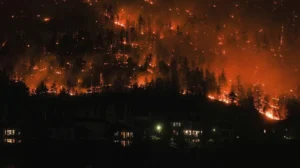
Perhaps the most alarming implication is the intersection of heat with other seasonal hazards. In the Western United States, an extended heat season overlaps with the peak of wildfire season, creating a lethal synergy: the heat dries out the landscape, making it more combustible, while simultaneously hindering firefighting efforts. In the Southeastern United States, late-season heat can coincide with the peak of hurricane season, creating a scenario where power outages from storms occur simultaneously with extreme heat, rendering air conditioning useless when it is needed most.
3. Agricultural Stress
Crops are sensitive to heat at specific growth stages. If a heatwave hits in early spring, it can devastate emerging crops that are not yet resilient. Conversely, a late-autumn heatwave can alter the harvesting cycle and damage yields. Because agriculture is so closely tied to seasonal planting and harvest calendars, a "seasonless" climate disrupts the entire food supply chain.
Conclusion: A Call for Adaptive Policy
The findings from the AGU Advances study represent a wake-up call for urban planners and climate policymakers. If the "season" for extreme weather is no longer a fixed interval, then the policies governing those seasons must also become dynamic.
"Panas ekstrem mulai menjadi sesuatu yang berbeda," (Extreme heat is beginning to become something different), as the researchers noted. As the data suggests, the world is moving toward a future where "heat season" is an increasingly vague term.
To combat this, the study recommends:
- Dynamic Alert Systems: Shifting from date-based heat warnings to meteorologically-driven, year-round alerts.
- Infrastructure Resilience: Updating building codes and energy grids to handle cooling loads that might peak in May or October rather than just July.
- Public Education: Moving away from the "summer-only" mentality regarding heat safety, encouraging communities to remain vigilant throughout the year.
As climate change continues to rewrite the rules of the natural world, the lesson from this study is clear: the environment is no longer adhering to the calendar. To protect vulnerable populations and global economies, our strategies for survival must be just as flexible as the weather they aim to mitigate.