Squeeze on the Skies: Iran’s International Aviation Faces Paralysis Amid Fresh US Secondary Sanctions
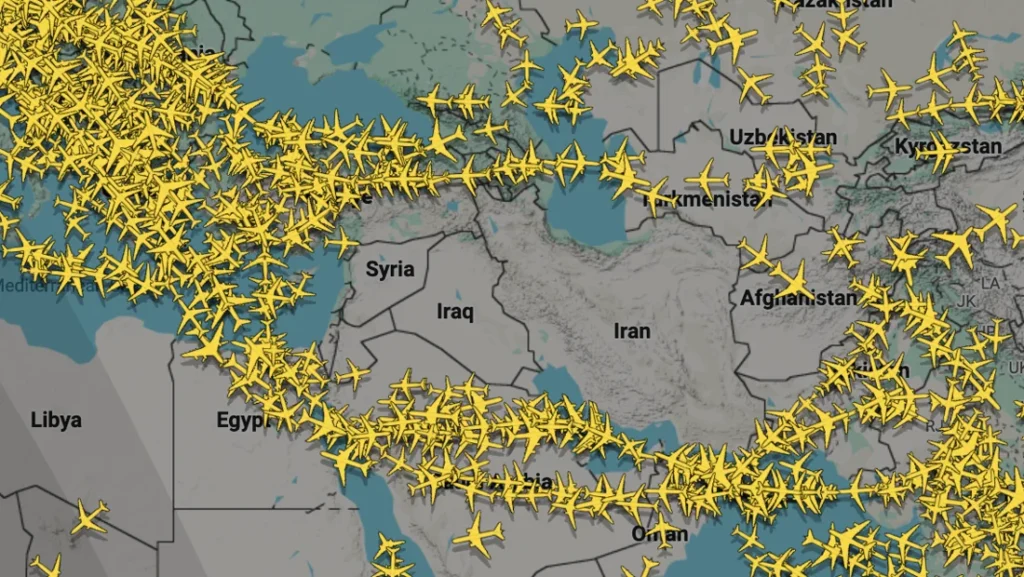
JAKARTA — Iran’s international aviation network is facing an unprecedented systemic crisis. Major domestic carriers have been forced to suspend a significant portion of their cross-border operations through Wednesday, September 23, 2026, caught in the crosshairs of aggressive, newly minted economic measures deployed by Washington.
The latest wave of disruption stems from a fierce geopolitical escalation following a grueling, nearly seven-month regional conflict. The United States, determined to compel Tehran into strategic submission, has widened its economic offensive. In the crosshairs this time are not just Iran’s shipping or financial sectors, but the global aviation arteries connecting the Islamic Republic to the rest of the world.
While the sweeping decrees issued by the U.S. Department of the Treasury have triggered widespread chaos, flight cancellations, and frantic re-routings, pockets of resilience—and outright defiance—remain. Certain corridors, most notably toward East Asia and select regional neighbors, continue to operate, highlighting the immense complexity and fractured enforcement of modern unilateral sanctions.
Main Facts
The core of the current aviation crisis centers on an ultimatum delivered by U.S. Treasury Secretary Scott Bessent. In a stark policy announcement on Monday, Bessent declared that Washington would aggressively pursue secondary sanctions against any nation, airport operator, fuel supplier, or ground-handling agency that services Iranian commercial aircraft.
- The U.S. Mandate: Washington has vowed to effectively "ground" Iranian airlines globally. Foreign entities caught providing jet fuel, landing rights, ground servicing, or ticket sales to Iranian carriers face severe repercussions, including potential expulsion from the U.S. dollar-dominated global financial system.
- The Ground Reality in Tehran: Major international routes operated by Iranian carriers have experienced massive disruptions. Destinations across the Middle East, the Caucasus, and Europe have seen rolling cancellations, throwing travel itineraries into disarray.
- The Exceptions: Despite the suffocating pressure, select international routes—particularly to China and parts of Central Asia and the Middle East—continue to function. Major carriers like Mahan Air and smaller regional operators like Varesh are navigating a high-stakes game of geopolitical cat-and-mouse to keep minimal connectivity alive.
- Human and Economic Toll: The restrictions drastically exacerbate the isolation of Iranian citizens, severely impairing their ability to travel abroad for medical, educational, or business purposes, or to return to their homeland. Travel agencies inside Iran have described a state of near-paralysis, opting to halt ticket sales entirely due to the extreme volatility.
Chronology of the Crisis
To understand how Iran’s aviation sector arrived at this precarious juncture, it is necessary to examine the timeline of escalation leading up to the September 2026 mandates.
Month -7 to Month -1: The Backdrop of Extended Conflict
For nearly seven months, intense geopolitical and military hostilities have simmered across the Middle East. While direct kinetic exchanges have periodically flared and receded, the economic warfare has remained relentless. Throughout this period, Iranian commercial airlines—already burdened by decades of pre-existing U.S. primary sanctions that prohibited the purchase of Western-manufactured aircraft and critical spare parts—relied heavily on aging fleets, alternative procurement channels, and regional diplomatic relationships to sustain operations.
Monday, September 21, 2026: The Treasury Ultimatum
U.S. Treasury Secretary Scott Bessent steps before the press to outline the next phase of maximum pressure against Tehran. In a hardline address, Bessent announces secondary sanctions explicitly targeting the global infrastructure supporting Iranian aviation. The message to international aviation hubs is explicit: service an Iranian plane, and risk total exclusion from the U.S. financial architecture.
Tuesday, September 22, 2026: Immediate Friction and Defiance
As word of the Treasury’s announcement reverberates globally, the first major diplomatic fracture appears. The People’s Republic of China publicly pushes back against the American directive, branding the secondary sanctions as illegal, unilateral, and an overreach of extraterritorial jurisdiction. On the ground in Tehran, travel agents report a surge of sudden cancellations for flights headed toward Western-leaning or risk-averse jurisdictions.
Wednesday, September 23, 2026: The Enforcement Threshold and Fragmented Skies
The formal implementation date of the strict enforcement measures arrives. Flight tracking data reveals a starkly polarized reality. While numerous regional flights to parts of the Middle East and the Caucasus are abruptly grounded, other flights—most notably long-haul operations to East Asia—defy expectations by touching down safely abroad. Inside Iran, the aviation market enters a deep freeze as travel agencies refuse to issue tickets, paralyzed by the fear of sudden mid-journey cancellations and regulatory penalties.
Supporting Data and Operational Status
Flight tracking aggregators, international airport schedules, and local travel testimonies paint a detailed picture of which routes have succumbed to the pressure and which ones are managing to persevere.
Suspended and Highly Vulnerable Routes
According to reports gathered from travel agencies in Teheran speaking under conditions of anonymity, the chilling effect of the secondary sanctions has hit regional connectivity hardest.
- Middle East & Caucasus: High-frequency routes connecting Tehran to Baghdad (Iraq), Muscat (Oman), Doha (Qatar), Tbilisi (Georgia), and Baku (Azerbaijan) have faced severe, rolling suspensions.
- European and Western Corridors: Pre-existing restrictions had already limited European access; the new directives effectively seal off any remaining grey-market or codeshare possibilities with Western-aligned nations.
Resilient and Active Corridors
Despite the sweeping threats issued by Washington, certain international pathways remain stubbornly open:
- The China Lifeline: China remains a vital economic and diplomatic anchor for Tehran. Flight tracking data from FlightRadar24 confirmed that on Wednesday, a Mahan Air flight—operated by one of Iran’s flagship commercial carriers—successfully departed Tehran and landed smoothly in Guangzhou, China. Furthermore, airport schedules in Tehran indicated that subsequent scheduled flights to Shanghai were slated for departure later that same day.
- Regional Outposts and Smaller Carriers: Operations to select destinations continue through careful navigation or the use of smaller, less prominent carriers. A Mahan Air flight originating from Kabul (Afghanistan) was tracked arriving in Tehran around midday. Meanwhile, smaller Iranian operators such as Varesh Air continued to maintain precarious connections to parts of Turkey and Armenia. Additional scheduled services to Najaf (Iraq) and Dubai (United Arab Emirates) remained on the board, though their long-term viability remains intensely precarious.
Official Responses and Diplomatic Friction
The U.S. Treasury’s aggressive strategy has triggered sharp divisions across the international community, pitting Washington’s enforcement apparatus against foreign governments eager to protect their sovereign trade relationships.
Washington’s Stance: Total Enforcement
Secretary Scott Bessent’s directive leaves no room for ambiguous interpretation. By explicitly threatening global supply chains, the U.S. is attempting to weaponize standard aviation logistics against Tehran.
"If they land, you cannot provide them fuel, you cannot provide them landing services, you cannot sell tickets to them, or you will be cut off from the dollar system," Bessent warned international stakeholders.
The strategy relies on the sheer dominance of the U.S. dollar in global finance. By threatening foreign airports, refueling consortia, and ticket distributors with financial excommunication, Washington aims to make servicing an Iranian airliner financially and operationally impossible, regardless of whether those foreign entities are based in allied or neutral nations.
Beijing’s Pushback: Rejecting Extraterritorial Reach
The most consequential geopolitical counterweight to Washington’s move has come from Beijing. The Chinese government formally announced its outright opposition to the U.S. sanctions, categorizing them as illegal and an abuse of international norms.
China’s refusal to bow to American secondary sanctions provides a crucial economic and logistical valve for Iran. By keeping ports of entry like Guangzhou and Shanghai open to Iranian carriers, Beijing not only preserves bilateral commerce and diplomatic ties but also deals a symbolic blow to the efficacy of Washington’s maximum pressure campaign. Other regional actors have maintained a cautious silence, quietly evaluating whether the risks of defying Washington outweigh the benefits of maintaining commercial ties with Tehran.
Implications of the Aviation Squeeze
The decision to target Iran’s international aviation network carries profound ramifications that extend far beyond the immediate logistical headaches of stranded passengers.
1. The Humanitarian and Social Toll
For ordinary Iranian citizens, the crackdown represents a severe tightening of an already restrictive cage. Decades of economic isolation have made international travel a precious commodity—whether for visiting dispersed family members, seeking specialized medical treatments abroad, or conducting essential cross-border business. With travel agencies paralyzed by fear and flight options evaporating, the ordinary populace bears the brunt of the geopolitical standoff. As one Tehran-based travel agent summarized the mood:
"The situation is unstable, and we are no longer selling tickets for the time being out of fear of cancellations."
2. The Limits of Unilateral Coercion
The ongoing flights to China and select regional destinations expose the inherent limitations of secondary sanctions in a multipolar world. While Western financial dominance remains a formidable weapon, major economic powers like China are increasingly willing to build parallel financial and logistical architectures to insulate themselves—and their trading partners—from U.S. jurisdiction. If secondary sanctions cannot achieve full compliance across Asia and the Middle East, the goal of completely "closing" Iran’s skies may remain an unrealized ambition.
3. Long-Term Viability of Iran’s Aviation Sector
Domestically, Iran’s airlines have long demonstrated a remarkable capacity for survival, keeping aging aircraft airborne through ingenious domestic engineering, cannibalization of parts, and gray-market procurement. However, cutting off international destinations threatens to starve these carriers of vital foreign currency revenues needed to sustain even basic maintenance. If regional neighbors eventually fold under U.S. pressure and deny landing rights, Tehran’s commercial aviation sector could face total domestic containment, turning the nation’s skies into an isolated island detached from the global grid.
As the week progresses, all eyes remain fixed on airport departure boards in Tehran and the diplomatic corridors of Washington and Beijing. Whether the fractured skies will hold together or give way entirely under the weight of American sanctions remains one of the defining economic questions of the current regional crisis.