
Procedural Irregularity? Legal Experts Question Febri Adriansyah’s "Summary" Suspect Designation
By Investigative Desk
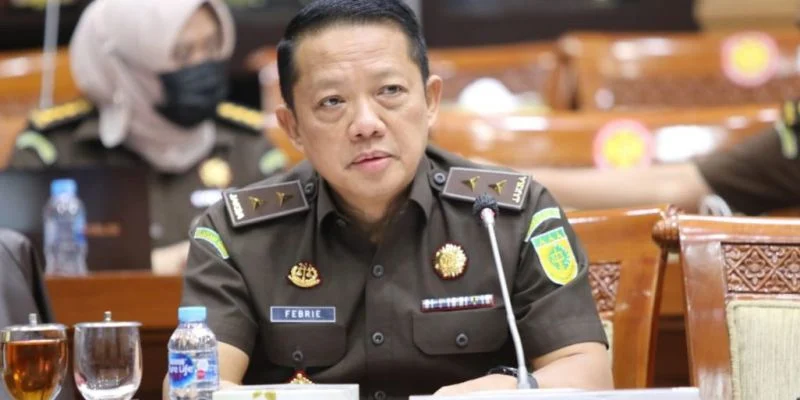
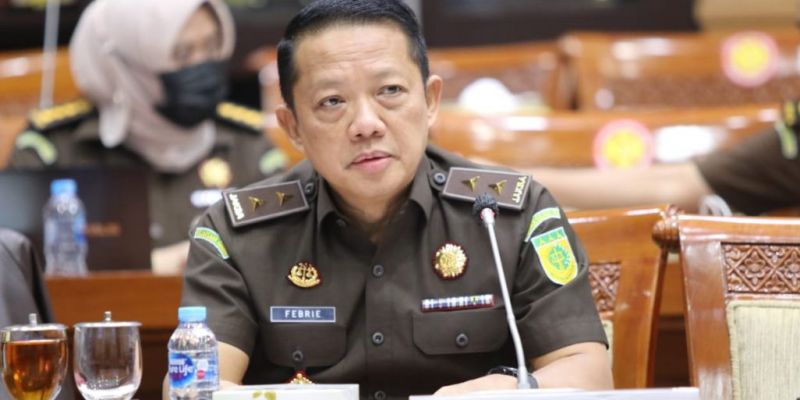
The legal community is currently abuzz with a contentious development involving the high-profile designation of Febri Adriansyah as a suspect in three separate cases of alleged corruption and money laundering (TPPU). The cases, which involve the coal procurement operations of state electricity provider PLN, the investment management of PT Asabri, and activities related to PT Krakatau Steel, have raised serious questions regarding the sanctity of due process in Indonesia’s criminal justice system.
The controversy centers on a fundamental procedural claim: Febri Adriansyah was named a suspect without ever being summoned, questioned, or clarified by investigators. This omission has sparked a firestorm of debate, with legal experts warning that such "summary" designations may fly in the face of established constitutional protections and the jurisprudence of the Constitutional Court (MK).
The Core Conflict: Constitutional Compliance and Due Process
At the heart of the dispute is whether a suspect can be legally designated without first being given the opportunity to provide a statement. Guru Besar (Professor) of Law at Al Azhar University Indonesia (UAI), Suparji Ahmad, has emerged as a prominent critic of the methodology employed in this case.
According to Suparji, the failure to examine a person before declaring them a suspect is a direct violation of the principles upheld by the Constitutional Court in its landmark ruling, Decision No. 21/PUU-XII/2014.
"The designation of Febri Adriansyah as a suspect in these three complex cases, without the benefit of prior examination or clarification, is highly problematic. It poses a significant potential contradiction to the Constitutional Court’s Decision No. 21/PUU-XII/2014 and the overarching principles of due process of law as enshrined in the newly enacted Criminal Procedure Code (KUHAP)," Suparji stated during an interview on Saturday, July 18, 2026.
Chronology of the Legal Debate
The designation of Febri Adriansyah has occurred against a backdrop of intensifying scrutiny over the management of state-owned enterprises (BUMN). The three cases—PLN’s coal procurement, PT Asabri, and PT Krakatau Steel—are each massive in scope, involving billions in public funds.
- The Pre-Designation Phase: Typically, criminal investigations follow a standard trajectory: intelligence gathering, preliminary inquiry (penyelidikan), and investigation (penyidikan). It is during the penyidikan phase that suspects are identified.
- The Notification of Suspect Status: Reports indicate that Febri Adriansyah was officially named a suspect in all three matters simultaneously or in rapid succession, bypassing the investigative stage where he would have been called as a witness.
- The Public Outcry: Legal observers noted that the speed and lack of transparency regarding the "conversion" of his status from a person of interest to a suspect triggered immediate legal scrutiny.
- The Expert Intervention: Professor Suparji Ahmad stepped forward to highlight that this "shortcut" is not merely a technical error but a constitutional failure that threatens the integrity of the entire investigation.
Understanding the Legal Precedents: The "Final and Binding" Ruling
To understand why this is a significant legal crisis, one must look at the legal framework governing suspect designation in Indonesia. Prior to 2014, investigators had broad, unchecked discretion to name individuals as suspects. This often led to accusations of abuse of power.
The Constitutional Court’s Decision No. 21/PUU-XII/2014 changed the legal landscape permanently. The ruling explicitly interpreted the terms "preliminary evidence," "sufficient preliminary evidence," and "sufficient evidence" within the context of the law.
"In its legal considerations and verdict, the Constitutional Court established that these terms must be interpreted as requiring at least two valid pieces of evidence, accompanied by the examination of the candidate suspect before they are officially named a suspect," Suparji explained.
This means that under Indonesian law, having two pieces of evidence is a necessary condition, but it is not sufficient on its own. The "sufficient" aspect also requires the investigator to treat the individual as a human subject who has the right to be heard before their legal status is fundamentally altered.
Supporting Data: Why "Candidate Suspect" Status Matters
Critics of the current investigation argue that while the KUHAP does not explicitly use the term "candidate suspect," the practice of calling someone as a witness first is the standard implementation of the Constitutional Court’s ruling.
The Necessity of Witness Testimony
When an investigator summons an individual as a witness, they are essentially providing that person with an opportunity to present their side of the story, offer exculpatory evidence, or clarify discrepancies in the investigation file. By skipping this step, the investigators have deprived Febri Adriansyah of a critical constitutional safeguard.
The Shift in Law: The New KUHAP (2025)
The legal debate is further complicated by the recent enactment of Law No. 20 of 2025, the "New KUHAP." This legislative overhaul was specifically designed to strengthen human rights protections, formalize the presumption of innocence, and guarantee a fair trial.
Professor Suparji emphasizes that the new law explicitly seeks to balance the authority of the state with the rights of the citizen. "The new law mandates a balance. It is no longer acceptable for law enforcement to chase ‘effectiveness’—by which they mean speed or convenience—at the expense of procedural justice. A case built on a flawed procedural foundation is, by definition, a weak case," he added.
Implications for the Indonesian Legal System
The implications of this incident are far-reaching, both for the specific cases involved and for the broader legal environment in Indonesia.
1. The Praperadilan Challenge
One of the most immediate avenues for recourse is the Praperadilan (pretrial motion). If a suspect is named without proper procedural adherence, their legal counsel can challenge the validity of the suspect status in court. If a judge finds that the investigators failed to observe the mandates of the Constitutional Court, the suspect status could be nullified. This would force the prosecution to restart the process from scratch, potentially damaging the state’s position in the PLN, Asabri, and Krakatau Steel cases.
2. Erosion of Public Trust
When high-profile corruption cases are handled with procedural haste, public trust in the judiciary and investigative bodies like the Attorney General’s Office or the KPK (as applicable) often erodes. The perception that law enforcement is "manufacturing" suspects rather than following evidence creates an environment of skepticism.
3. The Requirement for Consistent Explanations
Professor Suparji specifically addressed the issue of "Sprindik" (Investigation Order) changes. Often, investigators change the status of an individual in an internal document without explaining the shift in evidence.
"Aparatus law enforcement must provide consistent explanations based on the law," Suparji urged. "The certainty of one’s legal status is a constitutional right guaranteed by Article 28D paragraph (1) of the 1945 Constitution. Citizens have a right to recognition, security, protection, and fair legal certainty."
Conclusion: A Call for Procedural Integrity
The case of Febri Adriansyah serves as a litmus test for the effectiveness of the 2025 Criminal Procedure Code. If the state is allowed to bypass the mandate of the Constitutional Court simply to expedite corruption trials, the fundamental protections afforded to all citizens are diminished.
As the legal community watches the developments in the PLN, Asabri, and Krakatau Steel investigations, the central question remains: Is the state capable of pursuing justice for corruption without sacrificing the very laws that define a democratic, constitutional state?
"The strength of a law enforcement agency is not measured by the number of suspects it creates," Professor Suparji concluded, "but by its commitment to ensuring that every step taken is consistent with the Constitution. If they skip the procedure, they risk losing the case before it even reaches the courtroom."