President Prabowo Challenges Critics of Rice Prices to Experience Farming Firsthand
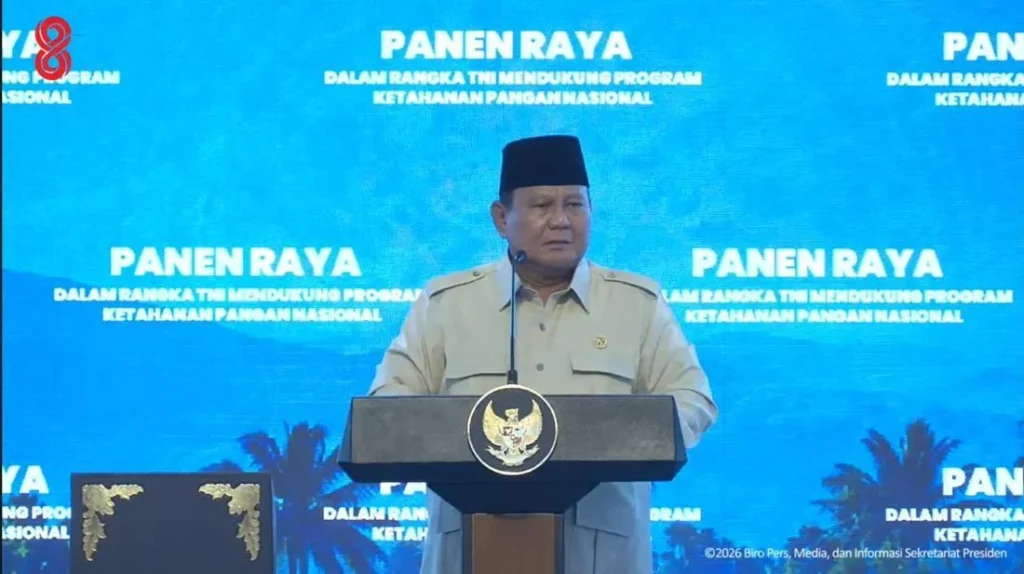
JAKARTA – In a firm and unapologetic defense of Indonesia’s agricultural sector, President Prabowo Subianto has issued a sharp rebuke to those vocal in their criticism of rising rice prices across the archipelago. During a nationwide simultaneous harvest event—a collaborative effort involving the Indonesian National Armed Forces (TNI)—President Prabowo asserted that critics who label the cost of rice as "too expensive" fail to appreciate the arduous labor and economic realities faced by the nation’s farmers.
Speaking at the event, which was broadcast live via the Presidential Secretariat’s YouTube channel on Friday, July 17, 2026, the President invited skeptics to step out of their offices and into the paddies. "To those who say rice is too expensive, I say: go join the farmers and plant rice yourselves!" he stated. "If farmers are not allowed to earn a decent income, then go ahead and grow your own rice."
Main Facts: The President’s Stance on Agricultural Fairness
President Prabowo’s comments strike at the heart of a long-standing economic dilemma in Indonesia: the balance between affordable food prices for urban consumers and the necessity of providing a living wage for rural producers.
The President emphasized that the perceived high cost of rice is not merely a market fluctuation, but a reflection of the hard work required to ensure food security for the country’s 280 million citizens. He argued that the narrative of "expensive rice" often ignores the welfare of the farmer. If the market price is suppressed, he warned, it is the smallholder farmer who bears the burden of the loss. By challenging critics to experience the agricultural process, Prabowo is effectively shifting the conversation from simple consumer economics to a broader call for empathy toward the agricultural labor force.
Chronology of the Statement
The controversy unfolded during a massive, coordinated effort involving the Ministry of Agriculture and the TNI to boost domestic production.
- Morning, July 17, 2026: The President arrived at the location for the Panen Raya (Grand Harvest), signaling the administration’s focus on national food self-sufficiency.
- The Address: During his keynote speech, President Prabowo addressed the ongoing discourse regarding the consumer price index and the cost of staple foods.
- The Challenge: The President issued his controversial invitation to critics to participate in the planting process, supported by an offer of land provided by the government.
- The Recognition: The event concluded with the President paying homage to the farmers and fishermen, labeling them the "true heroes of the nation."
Supporting Data: The Current State of the Rice Market
To understand the context of the President’s remarks, one must look at the data provided by the Ministry of Trade’s System for Monitoring Markets and Basic Needs (SP2KP). As of Friday, July 17, 2026, the national market data indicated a slight upward trend in prices:
- Medium-Grade Rice: The national average price stood at IDR 13,839 per kilogram.
- Premium-Grade Rice: The national average price was recorded at IDR 15,529 per kilogram.
- Market Volatility: Data shows a marginal increase of 0.01%, suggesting that while prices are not skyrocketing, they remain at a level that has triggered public concern among low-income households.
These figures represent a delicate tightrope for the Prabowo administration. While the government aims to keep inflation in check, it is simultaneously pushing for a "floor price" that guarantees farmers a sustainable profit margin.
Official Responses and the Government’s "Open Farm" Initiative
President Prabowo’s rhetoric was matched by a tangible policy offer. He declared that the administration, through the Ministry of Agriculture headed by Andi Amran Sulaiman and the support of the TNI, is ready to facilitate any critic who wishes to prove that rice production is "easy" or "cheap."
"The TNI will prepare the land for them, the Minister of Agriculture will prepare the land for them. Tell them to plant it themselves. It’s that simple," the President asserted, emphasizing that the government is willing to provide the resources for those who believe they can do better.
Minister Amran Sulaiman has been a vocal proponent of this "production-first" strategy, often working alongside the military to open new agricultural lands in regions previously deemed unproductive. This synergy between the military’s logistics capability and the Agriculture Ministry’s technical expertise is a hallmark of the current administration’s approach to national food security.
Implications: Food Security and National Sovereignty
The implications of this statement are significant, both politically and socio-economically.
1. Shifting the Narrative
By framing farmers as the "true heroes," the President is attempting to redefine the social contract between the urban middle class and the rural poor. The message is clear: the food on the table is not a commodity to be complained about, but the result of a grueling labor process that deserves respect and economic protection.
2. The Risk of Populism
Critics of the administration might argue that this "go plant it yourself" rhetoric is a dismissive populist tactic. In a democratic society, citizens have a right to question the cost of living, particularly when staple goods like rice comprise a large percentage of household expenditure. Dismissing these concerns could potentially alienate urban voters who are struggling with stagnant wages and inflation.
3. Focus on Self-Sufficiency
The underlying policy goal is undeniable: Indonesia is pushing for absolute food sovereignty. By making it difficult for critics to focus solely on price, the President is redirecting the national attention toward production. The government believes that if the nation can produce enough rice to reach a surplus, the price will eventually stabilize naturally without needing to squeeze the farmer’s profit.
4. The Role of the TNI in Agriculture
The involvement of the military in agricultural production is a controversial but long-standing tradition in Indonesia. Critics often raise concerns about the militarization of civilian sectors, while proponents argue that the TNI’s logistical reach is the only way to quickly scale up production in remote areas. This recent event confirms that the Prabowo administration intends to double down on this civil-military cooperation.
Conclusion: A Call for Empathy and Hard Work
As Indonesia navigates the complexities of a changing global climate and shifting trade dynamics, the issue of rice prices will remain a primary concern for the government. President Prabowo’s challenge to critics is more than just a soundbite; it is a manifestation of his administration’s philosophy: that national progress is built on the sweat and toil of its laborers.
While the debate over the price of rice will undoubtedly continue in the halls of parliament and on social media, the President has made his position clear. The path to a cheaper, more abundant rice supply is not through complaints, but through the hard, dirt-under-the-fingernails work of planting, harvesting, and supporting those who provide the nation’s sustenance.
For now, the government remains committed to its strategy of supporting farmers and incentivizing production, leaving the critics to either join the effort or accept the realities of the agricultural supply chain. As the President noted in his closing remarks, the farmers and fishermen are the "true heroes," and in the eyes of this administration, their contribution is far more valuable than the critique of the armchair observer.