
Skywriting Boredom: The Aviation Prank That Captured the World’s Attention
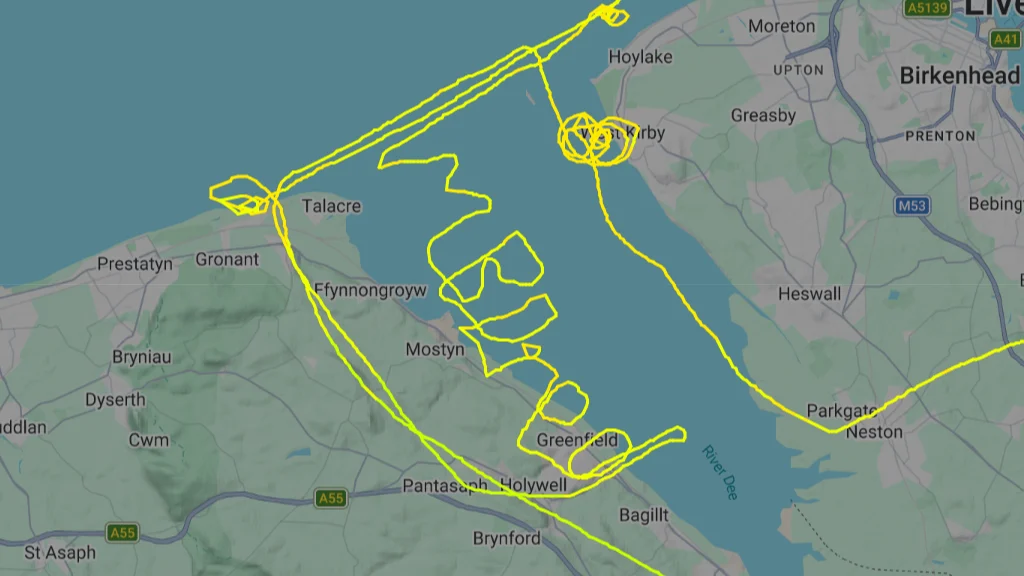
Jakarta – In the high-stakes, precision-oriented world of aviation, where every heading, altitude, and radio communication is strictly monitored, there is rarely room for whimsy. Yet, a flight instructor from the UK-based firm Ravenair recently proved that even the most disciplined professionals sometimes succumb to the universal human condition: boredom. In a viral incident that has captivated the global aviation community, a pilot successfully "skywrote" the phrase "I’m Bored" across the flight tracking map during a routine test flight, turning the sky above Northwest England into a canvas for his frustration.
The Main Facts: A Creative Departure from Routine
The incident, which took place on Saturday, July 18, saw an instructor pilot take a single-engine Piper Tomahawk aircraft into the skies over the United Kingdom. What was ostensibly a standard test flight—a routine necessity to ensure the airworthiness of a machine after maintenance—quickly transformed into a viral sensation.
As the aircraft traced its path, flight tracking software, most notably the industry-standard Flightradar24, began to pick up an unusual pattern. Instead of the typical straight lines and orderly banking turns required for engine tests and system checks, the pilot utilized the airspace above the Dee Estuary to meticulously draft the words "I’m Bored." The stunt lasted for approximately 20 minutes of intense, high-precision maneuvering, turning a mundane maintenance task into a piece of digital art that was visible to anyone watching the live feed.
Chronology of the Flight: From Liverpool to "Boredom"
The flight originated from the coastal city of Liverpool, a major hub in Northwest England. According to the flight logs and tracking data retrieved from Flightradar24, the aircraft departed from the airport with the intention of completing a routine two-hour test loop.
- Departure (Approx. 11:30 Local Time): The Piper Tomahawk lifted off from the Merseyside area, setting a course toward the Wirral Peninsula and the rural expanses of Cheshire.
- The Creative Phase (Approx. 12:30 – 12:50 Local Time): Upon reaching the airspace above the Dee Estuary, the pilot deviated from standard testing flight patterns. For the next 20 minutes, the aircraft performed a series of complex loops, turns, and traverses. To the untrained eye, it might have looked like erratic movement; however, when rendered on a two-dimensional map, the flight path revealed the distinct, legible script: "I’m Bored."
- Return and Landing (13:30 Local Time): Having completed his "message," the pilot resumed a standard flight trajectory, crossing back over the Wirral Peninsula and Wales before returning to the Merseyside base. The aircraft landed safely at 13:30, concluding a two-hour flight that was far from standard.
Supporting Data: The Mechanics of Aerial Calligraphy
Skywriting via flight paths is a unique sub-genre of aviation that relies on the precision of modern GPS-linked tracking systems. The Piper Tomahawk, a two-seat, low-wing training aircraft, is well-suited for this kind of maneuver due to its agility. However, executing such a message requires more than just a playful attitude; it requires significant flight-planning skill.
Aviation experts note that to create legible text at an altitude of several thousand feet, the pilot must maintain a constant speed while accounting for wind drift. Each letter requires a series of specific bank angles and coordinate adjustments. While the pilot may have claimed to be "bored," the act of drawing cursive text in the sky is mentally taxing. It requires the pilot to visualize the map from a top-down perspective, a skill that is arguably more difficult than traditional navigation.
Data shows the aircraft spent the majority of its time over the Dee Estuary, a body of water that provided the necessary "blank space" to perform the maneuvers without causing alarm to residential areas or violating controlled airspace regulations.
Official Responses: A Humorous Take on Discipline
The management at Ravenair, the aviation firm responsible for the aircraft, was quick to address the incident. Rather than issuing a stern condemnation, the company took a surprisingly lighthearted approach, recognizing the pilot’s technical prowess.
Wayne Barrett, the operations manager at Ravenair, provided insight into the pilot’s mindset. "I think the pilot was genuinely a little bit bored because it was only a test flight," Barrett remarked. "However, it was a pretty skillful flight. It takes a lot of concentration to spell those words out, so maybe he wasn’t bored at all by the end of it."
Barrett’s comments highlighted the irony of the situation: the pilot had to be entirely focused and engaged to complete the stunt, effectively curing his own boredom through the act of creating the message itself. When asked if the pilot would face disciplinary action, Barrett joked that the instructor would be spared from a formal reprimand. He confirmed that the aircraft had been returned to the hangar for post-flight maintenance and that the pilot, perhaps having earned a respite after his creative stint, was currently off-duty.
Implications: The Intersection of Technology and Transparency
This incident serves as a fascinating case study in the transparency of modern aviation. Before the era of live, publicly accessible flight tracking, a pilot could theoretically perform such maneuvers without the public ever knowing. Today, however, every deviation from a flight plan is recorded and broadcasted in real-time to enthusiasts, journalists, and the general public.
The "Flightradar24" Effect
The rise of platforms like Flightradar24 has turned aviation enthusiasts into "armchair air traffic controllers." This democratization of flight data has created a culture where pilots know they are being watched. For this particular pilot, the knowledge that he was being tracked likely added to the allure of the stunt. It wasn’t just an act of boredom; it was an act of performance art intended for an audience of thousands of digital observers.
Implications for Pilot Conduct
While Ravenair opted to treat the incident with humor, the broader aviation industry remains sensitive to public perception. In an era where air travel is under constant scrutiny regarding safety, carbon emissions, and noise pollution, stunts—no matter how harmless—can be a double-edged sword.
However, in this specific instance, the pilot operated within the bounds of a legitimate test flight. The aircraft was already airborne for maintenance purposes, meaning no additional fuel was wasted purely for the sake of the joke. This nuance is likely why the management was able to laugh it off. Had the flight been a commercial passenger service or a charter flight, the response from aviation authorities like the UK’s Civil Aviation Authority (CAA) would have been drastically different.
Conclusion: A Moment of Human Relief
In the end, the "I’m Bored" flight serves as a reminder that behind every cockpit door is a human being. The pressures of flight instruction—a repetitive, high-responsibility job—can indeed lead to moments of fatigue. By transforming his mundane test flight into a viral moment, the pilot provided a rare, relatable glimpse into the life of an aviation professional.
The story of the Ravenair pilot has become a classic example of modern internet culture, where the intersection of technology, boredom, and a bit of daring leads to global visibility. As the aviation industry continues to evolve, the "I’m Bored" flight will likely remain a hallmark of how digital tracking has forever changed the relationship between those who fly and those who watch from below.
The pilot is now back on the ground, the plane is safely tucked away, and for the thousands who saw his message, the sky will never look quite the same. It was a stunt that proved that even when you are thousands of feet in the air, you are never truly disconnected from the human need to express yourself—even if that expression is simply telling the world you have nothing better to do.