Preserving Heritage: The Enduring Legacy of Malay Hikayat in Modern Literature
Introduction: The Ancient Chronicles of the Nusantara
Long before the advent of modern printing presses, pocket-sized paperbacks, and digital e-readers, the Nusantara—the vast maritime region encompassing modern-day Indonesia, Malaysia, Brunei, Thailand, and the Philippines—thrived on an oral and manuscript tradition deeply rooted in storytelling. Among the most prominent cultural artifacts of this bygone era is the hikayat.
As a classical Malay prose genre, the hikayat serves as a cultural repository, preserving the history, morals, religious philosophies, and social structures of pre-modern Southeast Asia. Often synonymous with royal courts, majestic palaces, valiant warriors, and miraculous events, hikayat represents the pinnacle of classical regional literature. Today, as contemporary literature shifts toward hyper-realism and fast-paced thrillers, educators, linguists, and cultural historians are turning their focus back to these ancient texts to understand how they shaped regional identity, language, and moral consciousness.
Historical Roots and Chronology of the Hikayat Tradition
The evolution of the hikayat spans several centuries, heavily influenced by the waves of trade, migration, and religious diffusion that swept across the Southeast Asian archipelago.

Pre-Islamic and Hindu-Buddhist Influences
The earliest iterations of regional storytelling were heavily intertwined with indigenous folklore and epics imported from the Indian subcontinent, such as the Mahabharata and the Ramayana. During this period, which lasted roughly from the early centuries of the Common Era up to the 13th century, local courts adapted these epics to fit regional contexts. Stories such as Hikayat Seri Rama and Hikayat Pandawa Lima emerged, blending local animistic beliefs with Hindu-Buddhist cosmology.
The Islamic Golden Age in the Archipelago
With the arrival of Arab, Persian, and Indian Muslim traders and scholars, the landscape of regional literature shifted dramatically. The 13th to the 17th centuries marked a golden age for Malay literature, particularly with the rise of sultanates such as Malacca and Pasai. Hikayat compositions began to incorporate Islamic themes, values, and historical figures. Works like Hikayat Raja-Raja Pasai and Hikayat Amir Hamzah became instrumental in propagating Islamic faith and ethics, substituting Hindu deities with monotheistic moral frameworks while retaining elements of grandeur and heroism.
The Colonial Era and Archival Preservation
During the European colonial expansion led by the Portuguese, Dutch, and British, many hikayat manuscripts were collected, transcribed into Latin scripts (Romanized Malay), and archived in European libraries. Scholars such as H.C. Klinkert and R.O. Winstedt played a crucial role in cataloging these texts, ensuring their survival even as oral traditions began to fade in the wake of modernization and formal Western schooling systems.
Defining Characteristics of the Genre
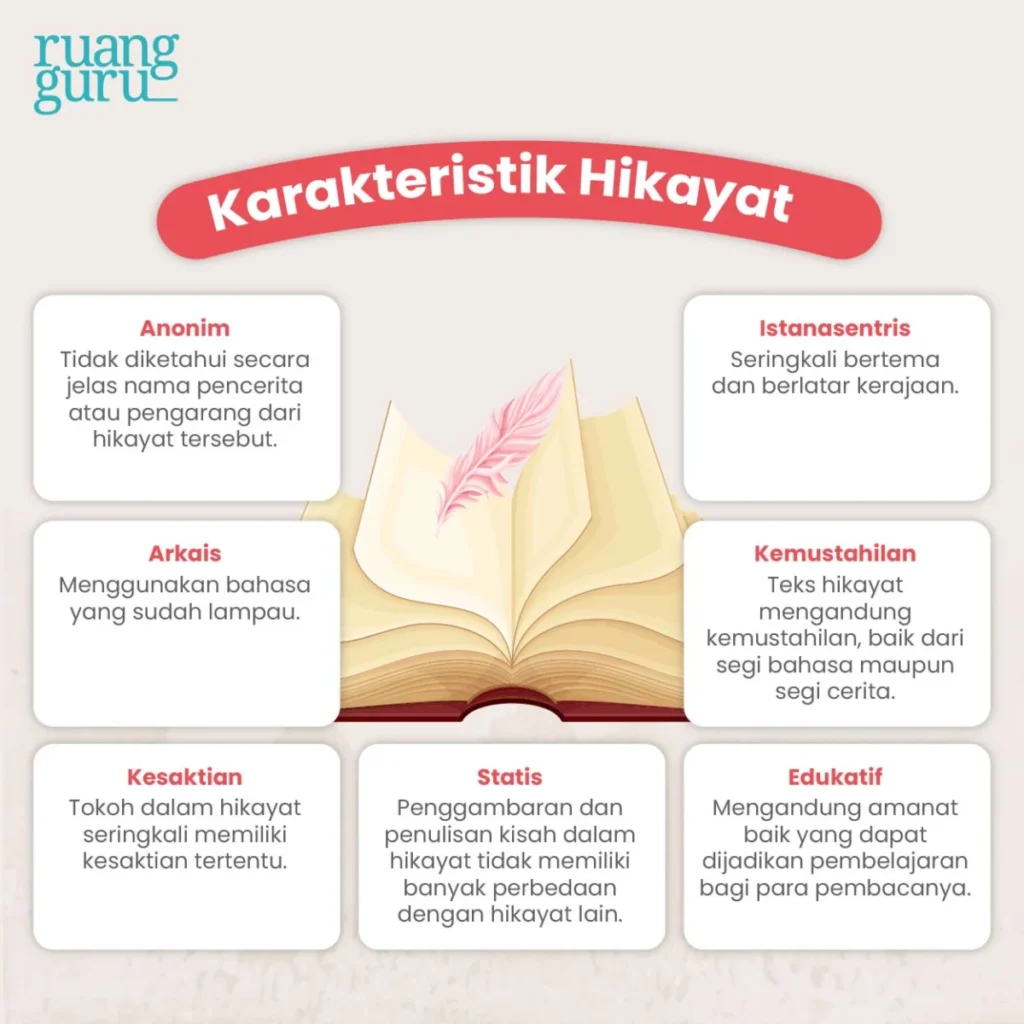
To distinguish a hikayat from a modern short story (cerpen) or novel, literary analysts look toward a distinct set of structural and stylistic characteristics that define the genre:
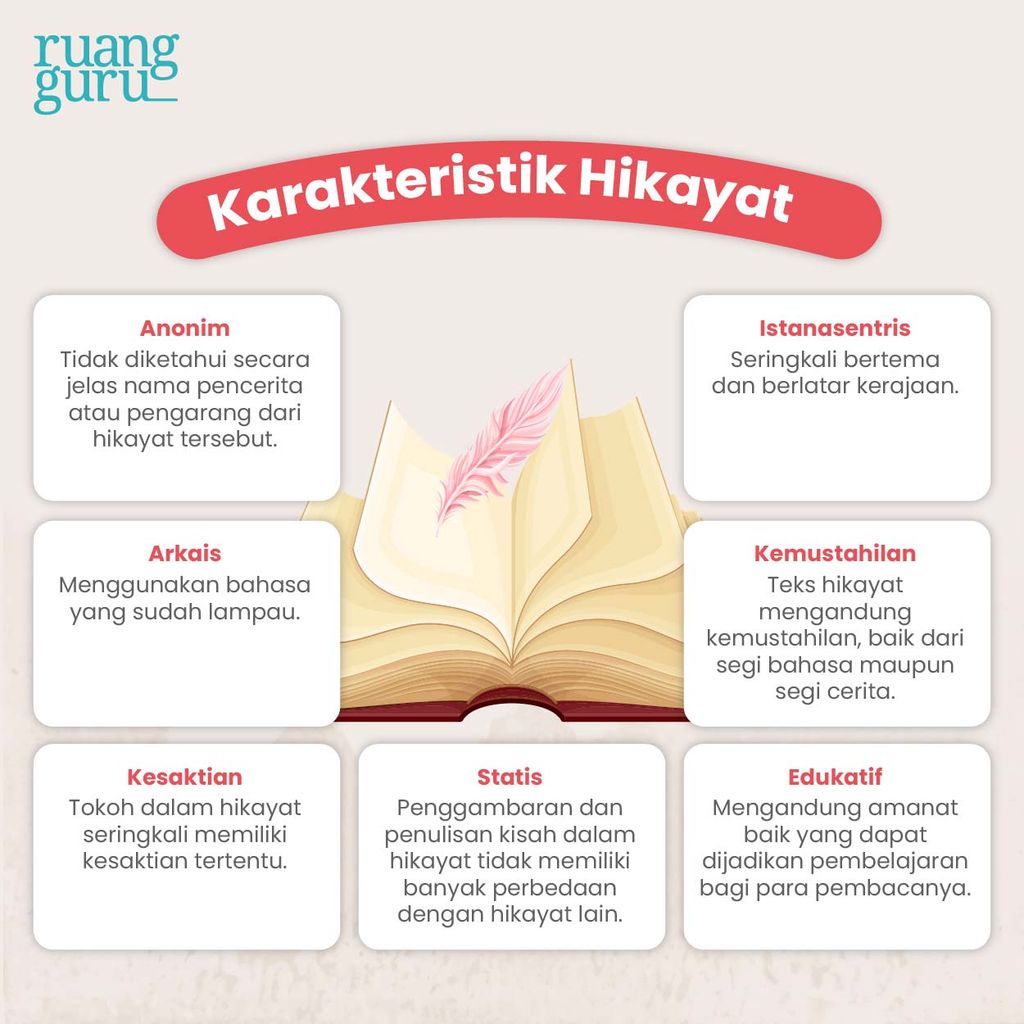
- Kemustahilan (Improbability / Fantastic Elements): Hikayat frequently feature elements that defy natural laws. Newborn babies might be born accompanied by divine weapons like swords and arrows, or princesses might emerge mysteriously from traditional drums (gendang).
- Anonimitas (Anonymity): Most classical hikayat do not bear the names of their authors. Because these stories were initially transmitted orally from generation to generation before eventually being transcribed by royal scribes, they belong to the collective cultural consciousness rather than an individual creator.
- Kesaktian (Supernatural Powers): Protagonists and antagonists alike often possess extraordinary powers or are aided by mystical items, such as magical garments that alter physical appearance or mythical beasts like the Garuda.
- Istanasentris (Palace-Centric): The primary setting of a hikayat is almost universally the royal court. The characters belong to the nobility—kings, queens, princes, princesses, and loyal courtiers—making the palace the epicenter of political intrigue and social drama.
- Arkais (Archaic Language): Hikayat employ classical, archaic vocabulary that is rarely, if ever, used in modern daily conversation. Words such as hatta (meanwhile/then), titah (royal command), upeti (tribute), and bejana (vessel) are hallmarks of the genre’s distinct linguistic flavor.
- Statis (Static / Formulaic Nature): Unlike modern fiction that prioritizes radical plot twists and narrative innovation, hikayat follow relatively formulaic narrative arcs. Plots, character archetypes, and moral resolutions across different hikayat share striking similarities.
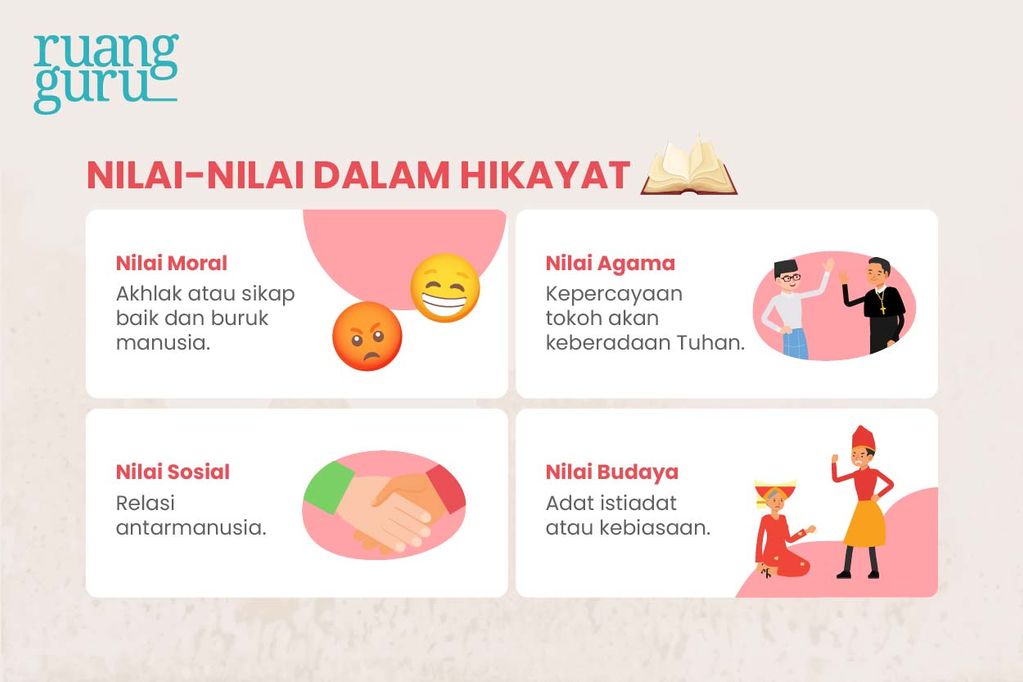
- Edukatif (Educational / Didactic): Despite their fantastical nature, hikayat are fundamentally didactic. They are designed to impart moral lessons, emphasize the importance of empathy, underline loyalty to the sovereign, and encourage virtuous behavior.
Typology and Classification of Hikayat
Literary scholars categorize hikayat through two primary lenses: Historical Origin and Content Focus.
1. Classification by Historical Origin
- Malay Hikayat: Heavily influenced by the assimilation of local culture and Islamic values (e.g., Hikayat Hang Tuah, Hikayat Indera Bangsawan).
- Indian-Influenced Hikayat: Characterized by Hindu-Buddhist themes adapted from Sanskrit epics (e.g., Hikayat Seri Rama, Hikayat Bayan Budiman).
- Arab-Persian Hikayat: Rooted in Middle Eastern Islamic traditions and folklore (e.g., Hikayat Seribu Satu Malam / 1001 Nights, Hikayat Bachtiar).
- Javanese Hikayat: Blending local Javanese traditions with Hindu-Islamic syncretism (e.g., Hikayat Panji Semirang).
2. Classification by Content Focus
- Historical: Fictionalized accounts woven around historical backdrops or real political events (e.g., Hikayat Patani, Hikayat Raja-Raja Pasai).
- Biographical: Focused on the life journey of a specific protagonist, whether real or mythical (e.g., Hikayat Abdullah).
- Religious: Centered on religious figures, miracles, or theological teachings (e.g., Hikayat Indera Putera).
- Event-Based: Dramatizing massive historical or catastrophic events embellished with miraculous interventions (e.g., Hikayat Tanjung Lesung).
- Romantic Fiction: Prioritizing romance and domestic drama within a historical framework (e.g., Hikayat Malin Kundang).
Supporting Data: The Anatomy of a Hikayat
From a structural standpoint, writing a traditional hikayat follows a predictable yet effective narrative framework designed to maximize emotional engagement and didactic impact:
- Abstraction (Abstraksi): The macro-overview or summary of the entire tale, laying down the premise that will later branch into specific events.
- Orientation (Orientasi): Establishing the setting—time, place, and socio-political atmosphere—to immerse the reader or listener into the world of the palace.
- Complication (Komplikasi): The escalation of conflict, where the main characters face trials, political betrayal, or supernatural threats.
- Resolution (Resolusi): The turning point where the conflict is resolved, typically through the triumph of virtue over vice or the deployment of supernatural aid.
- Coda (Koda): The moral conclusion containing the explicit or implicit message intended for the audience, summarizing the core values of the narrative.
Official Responses and Educational Integration
In recent years, educational authorities in Southeast Asia—particularly through curriculum reforms like Indonesia’s Kurikulum Merdeka—have made concerted efforts to reintegrate classical literature into secondary school classrooms.
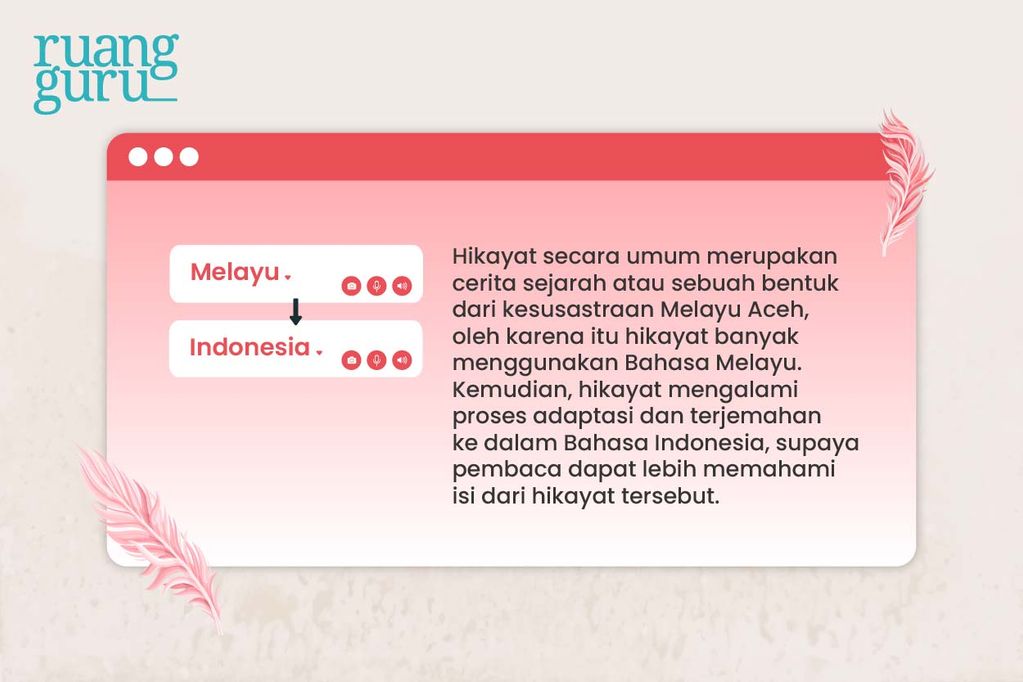
Cultural preservation ministries and educational bodies, such as Indonesia’s Ministry of Education, Culture, Research, and Technology, argue that teaching classical prose is essential for fostering national identity and historical literacy among Generation Z. According to curriculum developers, studying hikayat helps students appreciate the evolution of the national language (Bahasa Indonesia/Malay) from its classical roots to its modern standardized form.
Furthermore, academic institutions and digital learning platforms, such as Ruangguru, have increasingly digitized classical literature modules. By transforming traditional static texts into animated video summaries, interactive quizzes, and modern adaptations, educators aim to bridge the generational gap, making archaic texts accessible and engaging for digital natives.

Implications for Modern Society
The resurgence of interest in hikayat is not merely an academic exercise in nostalgia; it carries profound implications for contemporary society:
Cultural Resilience in a Globalized World
As global media consumption standardizes narratives across borders, engaging with indigenous literary traditions offers a vital counterweight. Hikayat remind contemporary readers of unique regional aesthetics, philosophical outlooks, and indigenous storytelling techniques that pre-date Western literary hegemony.
Moral and Ethical Anchors
In an era dominated by hyper-individualism and digital disconnection, the core moral values embedded within hikayat—such as collective responsibility, loyalty, humility, and the triumph of justice—provide a timeless ethical compass. The didactic nature of these stories serves as a gentle reminder of the communal bonds that tie societies together.
Inspiration for Modern Creative Industries
Far from being dead artifacts, hikayat continue to inspire contemporary novelists, filmmakers, and game developers. The tropes of magical realism, courtly intrigue, and mythical heroism found in classic texts provide a rich, untapped universe for modern fantasy and historical fiction genres, proving that the ancient chronicles of the Nusantara still hold the power to captivate modern imaginations.