From Trash to Treasure: The Creative Revolution of DIY Upcycling in a Sustainable Era
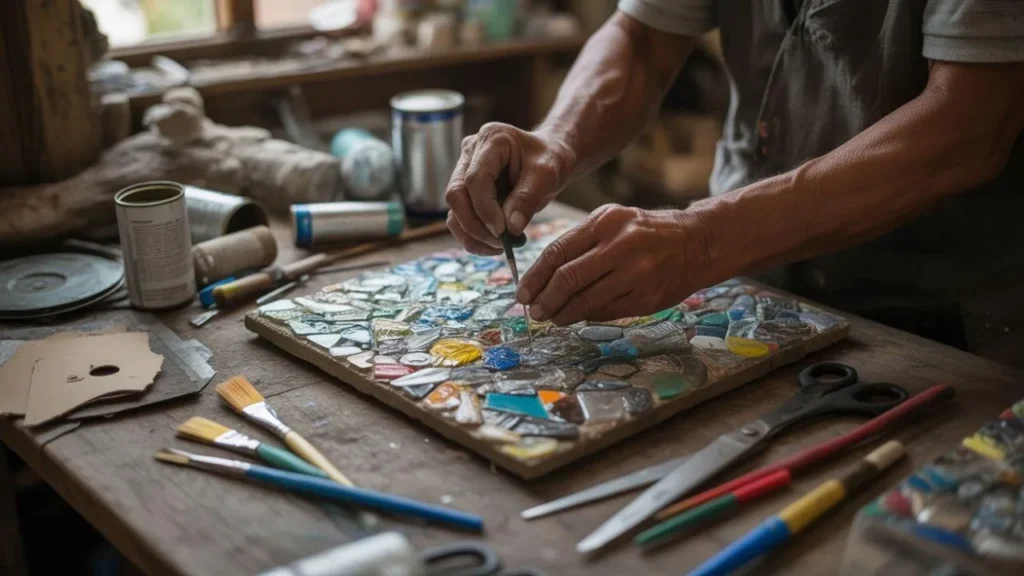
Jakarta – In an era defined by rapid consumption and an alarming surge in waste production, a quiet but powerful revolution is taking place within the walls of our homes. The practice of "DIY (Do-It-Yourself) Upcycling"—the art of transforming discarded items into functional, aesthetically pleasing, and valuable products—has transitioned from a niche hobby into a global movement of sustainability and creative expression.
As of October 2026, the intersection of environmental necessity and artistic ingenuity has never been more relevant. With household waste reaching staggering levels, the ability to repurpose plastic, cardboard, metal, and fabric is no longer just a craft; it is a fundamental skill for the modern, conscious consumer.
The Magnitude of the Waste Crisis: Why Upcycling Matters
To understand the urgency of the DIY movement, one must look at the data. According to reports from the Ministry of Environment and Forestry, Indonesia alone generated approximately 33.79 million tons of waste throughout 2024. A significant portion of this is household waste—items that, under different circumstances, could have served a second or even third life.
The environmental implications are severe. When we discard materials like PET plastic, metal cans, or processed paper, they often end up in overflowing landfills, contributing to methane emissions and long-term soil contamination. However, the paradigm is shifting. Experts now distinguish between "downcycling"—where materials lose value during recycling—and "upcycling," where materials are elevated into something of higher utility or aesthetic worth.
Gregg Beckham, a Senior Research Fellow at the National Renewable Energy Laboratory, notes that the future of waste management lies in these circular processes. By treating waste as a resource, individuals are effectively participating in a decentralized green economy.
Chronology of a Trend: From Necessity to Lifestyle
The rise of DIY upcycling did not happen overnight. Its trajectory can be traced through several key phases:
- The Early Adoption Phase (2020–2022): Triggered largely by global lockdowns, households were forced to look inward. With limited access to retail, people began repurposing household packaging, turning empty shipping boxes into home office organizers and plastic bottles into indoor planters.
- The Educational Explosion (2023–2024): Digital platforms began hosting massive repositories of "how-to" content. DIY, once passed down through family traditions, became democratized via short-form video tutorials, making the barrier to entry lower than ever before.
- The Economic Maturity Phase (2025–Present): Upcycling has entered the commercial sphere. The market for "upcycled fashion" and home decor is no longer just a hobbyist pursuit; it is a recognized sector of the global economy. Market intelligence firm Precedence Research estimates that the global upcycled fashion market, valued at USD 8.54 billion in 2024, is projected to soar to USD 20.65 billion by 2034.
The Toolkit of the Modern Upcycler
One of the most appealing aspects of DIY upcycling is its accessibility. You do not need a factory or a master’s degree in design to begin.
1. The Plastic Frontier
Plastic bottles are perhaps the most ubiquitous material in the modern home. Their structural integrity makes them ideal for vertical gardens, lamp shades, and decorative coin banks. The key to successful plastic upcycling lies in preparation—cleaning the adhesive residue and understanding how to safely cut and heat-mold the material.
2. Cardboard: The Infinite Canvas
With the boom of e-commerce, the average Indonesian household accumulates thousands of cardboard shipping boxes annually. Research indicates that approximately six million cardboard packages are processed daily in the country. Instead of breaking them down for the trash, savvy DIYers are using them to construct modular furniture, intricate wall art, and custom organizational systems. Cardboard is lightweight, sustainable, and entirely free.
3. Metal and Textiles: The Artisanal Touch
Old tin cans from canned food or dried milk are being reimagined as industrial-chic planters or desk organizers. Meanwhile, textile waste—specifically fabric scraps—represents one of the most significant contributors to environmental degradation. Producing the cotton for a single shirt requires an estimated 2,700 liters of water. By upcycling scraps into patches, bags, or decorative cushions, we effectively "save" that water, reducing the demand for new resource-intensive production.
Economic and Psychological Implications
The benefits of DIY upcycling extend far beyond environmental stewardship. There is a distinct psychological advantage to creating something with one’s own hands. In a digital world where physical labor is often automated, the tactile process of building something provides a sense of agency and accomplishment.
Financial Viability
For many, this is also a gateway to entrepreneurship. With a modest initial investment of roughly IDR 25,000 to IDR 50,000 for basic tools—a glue gun, scissors, and non-toxic paint—one can launch a micro-business. Platforms like Tokopedia, Shopee, and TikTok Shop have lowered the barriers for home-based creators to reach a national audience, while global marketplaces like Etsy allow artisans to export their upcycled goods to international buyers who prioritize sustainability.
Official Perspectives and Expert Insight
Environmentalists argue that we must shift our perception of "waste." Annie Leonard, a prominent voice in the sustainability movement, famously noted that there is no such thing as "throwing things away." When we discard an item, it merely moves to a new, often harmful location.
The DIY movement challenges the "take-make-waste" model. It forces the consumer to become a producer. Government initiatives and community-led "Bank Sampah" (Waste Banks) are now partnering with DIY influencers to host workshops, teaching the public that the most expensive materials are often the ones currently sitting in their trash bins.
Overcoming the "Perfectionism" Barrier
A common deterrent for aspiring upcyclers is the fear of failure or the lack of professional skill. However, experts emphasize that DIY is about the process of learning.
- Start Small: Begin with projects that take 30 to 60 minutes.
- The 30-Minute Rule: If a project takes longer than an hour on the first try, break it into smaller steps.
- Embrace Imperfection: The "handmade" aesthetic is currently highly valued in the global design market. Rough edges and unique textures are often seen as hallmarks of authenticity rather than flaws.
Looking Ahead: The Future of Circular Living
As we look toward 2030 and beyond, the DIY movement is expected to evolve alongside advancements in home-based 3D printing and bio-materials. However, the core philosophy remains the same: the most sustainable item is the one that already exists.
The transition to a circular economy will not be achieved solely by corporate policy or government regulation. It will be built in the workshops, garages, and kitchen tables of households across the nation. Every time an individual chooses to turn a plastic bottle into a garden planter rather than tossing it into a bin, they are actively participating in a global movement to reclaim the environment.
Frequently Asked Questions (FAQ)
Is DIY upcycling truly viable for beginners?
Absolutely. Most projects require nothing more than basic motor skills—cutting, gluing, and painting. The beauty of this hobby is that it grows with you. Start with simple tasks, and as you gain confidence, you can incorporate more complex techniques like structural reinforcement or electrical wiring for lighting projects.
What is the minimum investment required?
You can start with less than IDR 50,000. Basic supplies like a glue gun, high-quality adhesive, a craft knife, and basic paints are inexpensive and reusable. The primary raw material—the waste—is free.
Where can I sell my creations?
Digital marketplaces are the most effective way to reach buyers. For local sales, social media platforms (specifically Instagram and TikTok) are invaluable for showcasing the "before-and-after" process, which is highly engaging for potential customers. For those looking to scale, niche e-commerce platforms focused on sustainable goods offer a direct line to eco-conscious consumers.
Final Thought
DIY upcycling is more than just a trend; it is a shift in consciousness. It is the realization that we have the power to define the lifecycle of the objects we bring into our homes. By choosing to create, we stop being passive consumers and start being stewards of the future. The next time you hold an empty container in your hand, don’t see it as trash—see it as your next project.